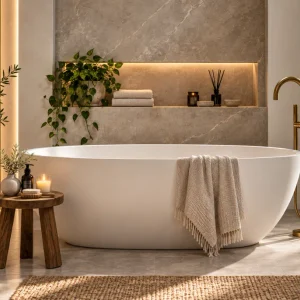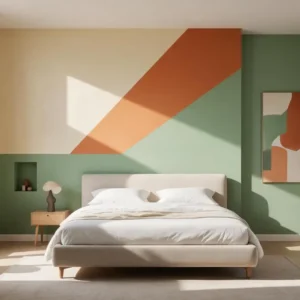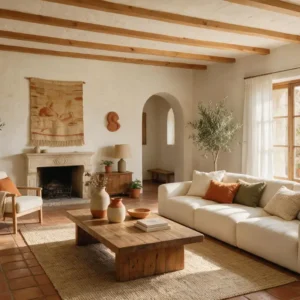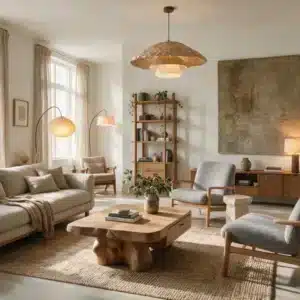
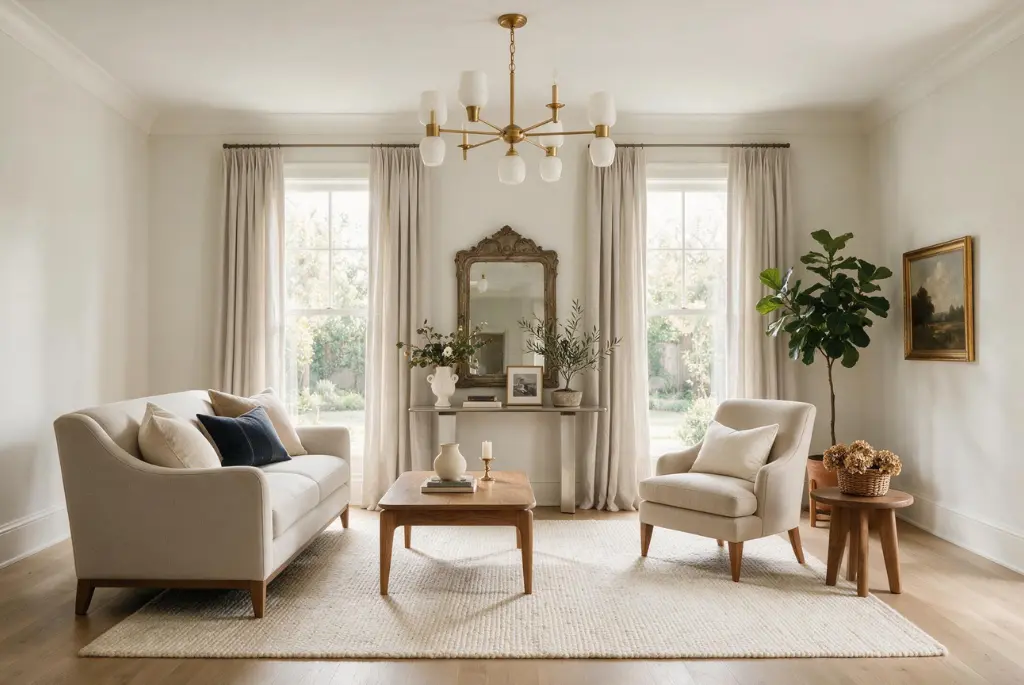
Walk into ten homes that call themselves “transitional” and you’ll see ten different color schemes. Ten different furniture mixes. Maybe an argument or two about what the word even means.
That’s not a flaw. That’s the whole point.
I have walked through living rooms over the years. The ones that actually work, the ones that do not feel like a showroom or a museum, always land somewhere in the middle. Transitional interior design sits there between the formality of traditional rooms and the cold edges of modern ones. Transitional interior design takes comfort from one side. Restraint from the other. The shift in design, toward not choosing one single rigid style and sticking to it no matter what has been happening for decades, shows no sign of slowing down.
Most homeowners already own half of what they need for this look. They just do not know it yet. I wrote this guide to walk you through what the term means. I will show you where this style splits from modern design. We will look at the elements that hold this style together. We will talk about the colors that carry this style. We will discuss the furniture that fills this style. Importantly, I will show you how to pull off this look without spending like you are furnishing a hotel lobby.
What Is Transitional Interior Design?
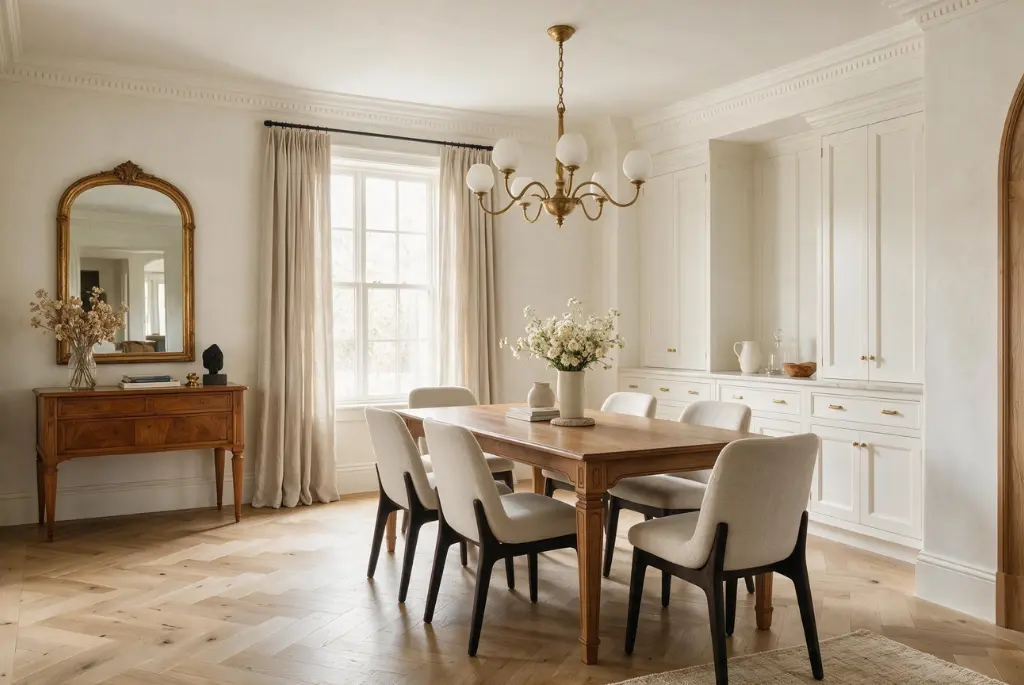
At its core, this is a blend. Warmth and craftsmanship from traditional decor. Clean lines from modern design. Neither one wins. Both get dialed back until they meet somewhere in the middle, and that middle ground is where the style actually lives.
The look traces back to the 1950s. Homeowners back then wanted something other than the stiff formality of a traditional parlor or the sometimes sterile feel of early modernism. So designers stopped picking sides. They started mixing pieces from both worlds into a single room, and it worked. That instinct never really left. If anything, it’s gotten stronger as people furnish homes slowly, over years, picking up pieces from different decades and price points instead of buying one matching set off a showroom floor.
At Interior Collective this is the question almost every client asks: what does “transitional” even mean for my house? The honest answer? It depends on what you own. It depends on what you like when nobody is telling you what is “correct.” Someone with an inherited wood dresser and a love for lined sofas is already halfway there. That person just has not put the wood dresser and the lined sofas together yet.
Some people confuse this with eclectic design. It isn’t the same thing. Eclectic mixing follows no thread at all; it’s closer to chaos with good lighting. This style always circles back to one calm base palette that ties every piece together, no matter which decade they came from.
The payoff, when it works? A room that feels curated, not overdone. Comfortable, not sloppy. Currently, without looking dated, the second a new trend shows up.
Transitional vs. Traditional vs. Modern Style
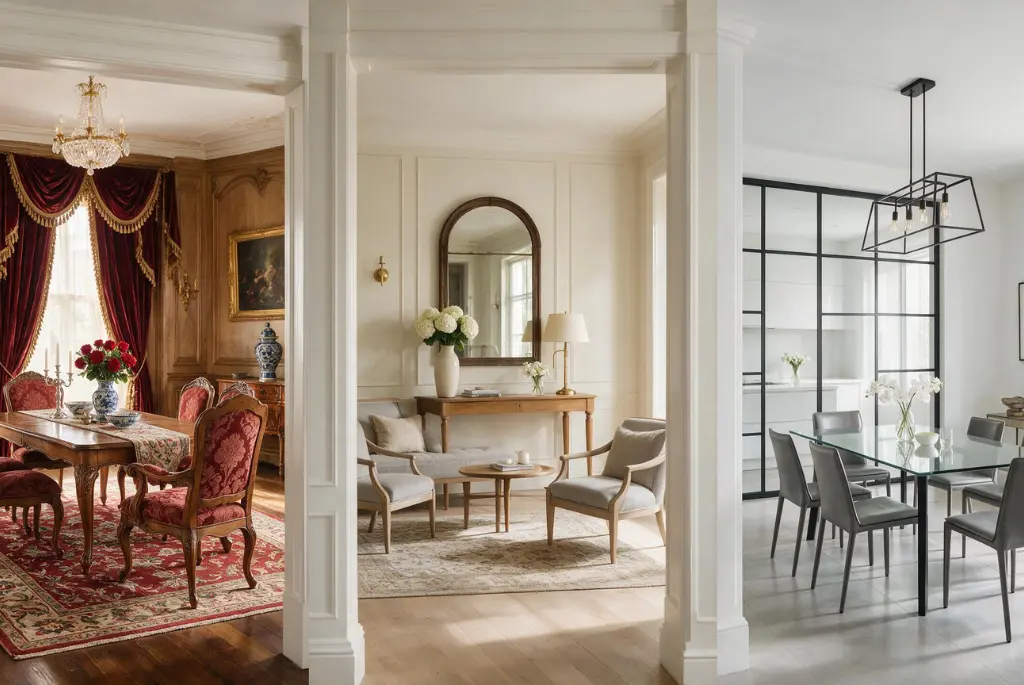
People ask me constantly where the actual lines sit. Fair question. Here’s how it breaks down on the details that matter once you’re standing in the room making real decisions.
| Feature | Traditional | Transitional | Modern |
| Color palette | Rich, deep tones, formal patterns | Soft neutrals with a few bold accents | Bold contrasts, black and white, primary pops |
| Furniture lines | Ornate, curved, carved details | Straight lines softened with curves | Sharp, geometric, minimal detailing |
| Fabrics | Heavy florals, damask, brocade | Textured solids, subtle patterns | Smooth, sleek materials, minimal texture |
| Ornamentation | Abundant, layered accessories | Edited, a few statement pieces | Sparse to none |
| Overall feel | Formal, historic, layered | Balanced, relaxed, welcoming | Sleek, clean, occasionally stark |
Traditional says “more.” Modern says “less.” This style says “enough.” That’s really it. It borrows warmth from one camp without the fussiness and clean lines from the other without the cold.
The transition in interior design toward blending two philosophies instead of committing to one is exactly why so many homes today resist being sorted into a single, neat category. And honestly, that resistance is a good thing.
Key Elements of Transitional Design
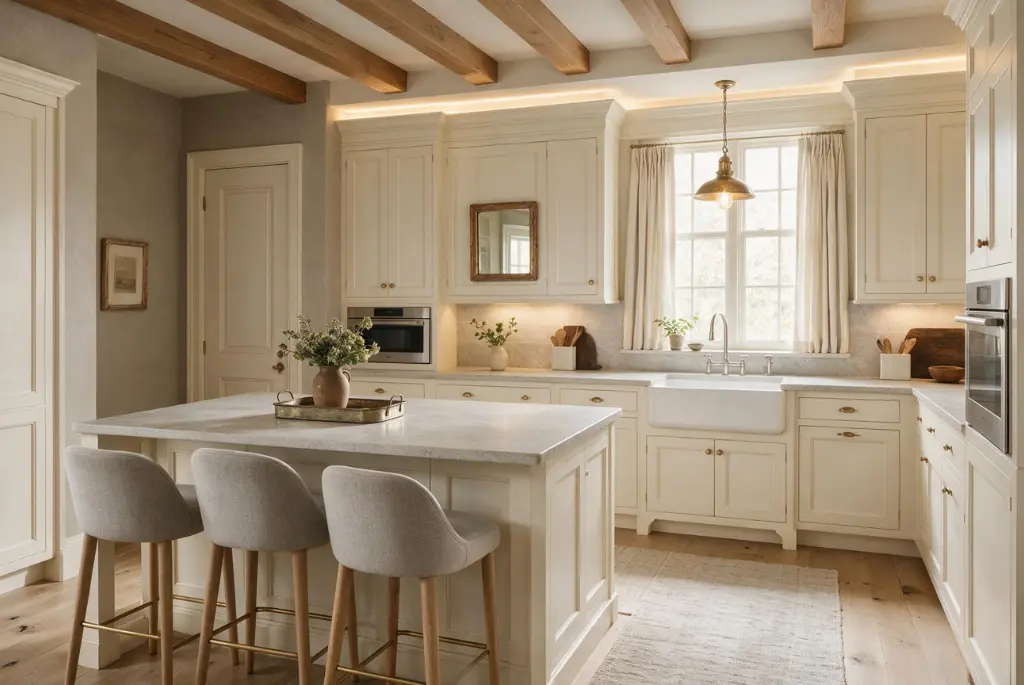
A few ingredients show up again and again in rooms that get this right.
- Neutral base, layered textures. Walls, big furniture, and rugs all stay muted. Texture does the heavy lifting, not color.
- Straight lines, softened. A sofa with a tailored frame but rolled arms. A rectangular table on turned legs.
- Old paired with new. An antique mirror over a streamlined console. A traditional wingback chair wearing a modern fabric.
- Restraint with accessories. Edited, not empty. A handful of pieces that earn their place beats a shelf crammed with knickknacks.
- Natural materials. Wood, stone, linen, and wool. Usually in their quieter, less carved forms.
Lighting counts too even though nobody ever lists lighting. I have found that a mix of overhead, table, and floor sources all warm does more for a room’s mood than any single piece of furniture ever could.
The backbone of interior design is restraint. I notice that it is tempting to add “one more” pillow. One more accessory. That moment is usually the time a room stops feeling balanced and starts feeling like clutter with good taste. So the old advice holds here better than almost anywhere else: fewer pieces, chosen with more care.
Best Color Palette for a Transitional Home
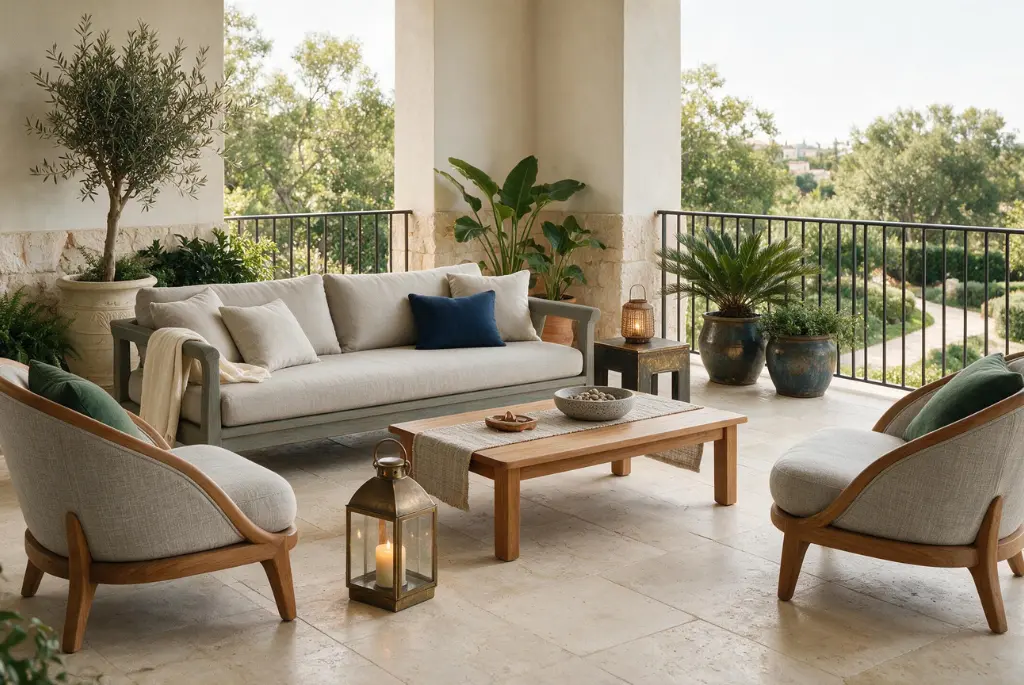
Color can be confusing for a lot of people. Mostly because “neutral” seems dull until you see it done right by someone who really understands how to use it. A transitional palette isn’t about being safe. A transitional palette is about creating a base so that a few bolder choices can really pop out, competing with each other for attention.
Common base tones:
- Warm white and cream
- Greige, that grey-beige hybrid you’ll find in almost every room like this
- Soft taupe and sand
- Light oatmeal and putty tones
Accent colors carry the personality:
- Deep navy or ink blue
- Forest or olive green
- Charcoal or soft black
- Warm brass, bronze, or aged gold metals
This shift, where people pick neutrals instead of just one main color, is truly what people mean when they talk about transitional interior design. Of making a room, around one “theme color” that looks old in five years, you get a base that keeps taking in new accent pieces without ever needing a repaint.
There’s a rough habit that holds up in most rooms: mostly neutral, a meaningful chunk of secondary tone, and just a touch of accent color or metal on top of that. Not a rigid formula. Just a habit. But it keeps a room from tipping too hard in either direction.
Furniture and Decor Ideas for the Transitional Look
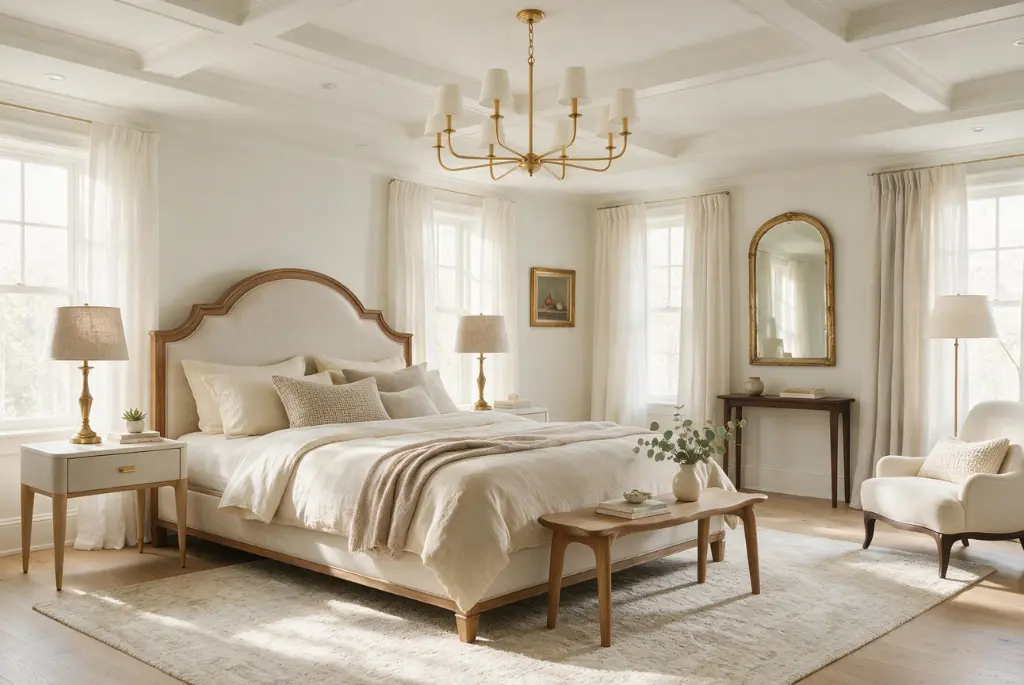
Some combinations that work well:
- A sofa that has a neat shape next to a chair that has a skirted bottom or legs that curve
- A table made from rough wood with chairs that are soft and covered in fabric
- A bed frame that is traditional with four posts or covered in fabric, along with small tables next to the bed
- A table that is smooth and simple with edges that curve naturally instead of being straight and square
A big carpet that holds the place where people sit also helps. Especially one that has a design that feels like a texture instead of something loud.
Lighting deserves its line here. A single statement fixture, such as a chandelier with clean lines and a warm metal finish, can do more for a room like this than a dozen small accessories combined. Add a couple of table lamps at the level for warmth.
Keep the decor light-handed. One or two pieces of art per wall. A mix of textures in the pillows and rug. Maybe one antique or vintage find that gives the room some actual history instead of a manufactured one. Designers at Interior Collective tend to tell clients the same thing: start with a single anchor piece, a rug, a sofa, or an heirloom table, and build every other decision around it.
Also read: How to Select Tiles for Living Room: What Nobody Tells You Before You Buy
How to Achieve Transitional Style on a Budget
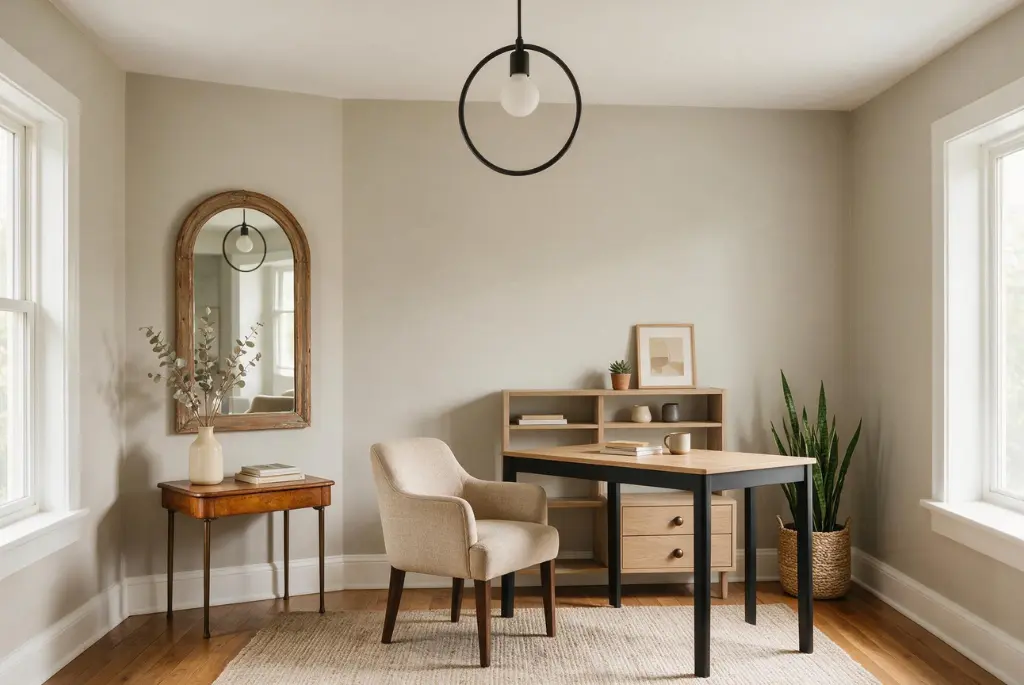
You don’t need a renovation budget to pull this off. Most of it comes down to editing what you already own and being deliberate about what comes next.
A practical approach:
- Start with what you own. Set aside anything overly ornate or overly stark. Look at what’s left. There’s usually more of a workable base sitting in that room than people expect.
- Paint before you buy anything. A coat of warm white, greige, or soft taupe resets an entire room for the cost of a few gallons.
- Swap hardware and lighting first. New cabinet pulls, a different fixture, and updated curtain rods, all of it shifts the feel without touching a single piece of furniture.
- Thrift the accent pieces. A vintage side table. An old mirror. A secondhand chair reupholstered in something simple. Character, for a fraction of retail.
- Spend where it counts. A well-made sofa or a good rug earns its cost because you’ll use it every single day. Save the splurge for what actually gets used.
- Edit before you add. Removing a few extra things from a shelf usually does more for the finished look than buying something new ever will.
Give it a season. Living with a room, instead of racing to finish it over one long weekend, is usually what separates a space that feels transitional from one that just looks unfinished.
None of this takes designer money. It takes patience and the willingness to sit with a room a while before deciding what it still needs.
FAQs
Transitional interior design is a style that mixes the feeling of fashioned homes with the simple look of modern spaces. Of following one strict set of rules, transitional interior design focuses on clean lines, comfy furniture, and a neutral base.
Traditional interior design often feels very formal and fancy by using colors and lots of carved wood details. Transitional interior design keeps some of that character. Removes the heavy decorations to create a lighter and calmer feel.
I think neutral colors like white, greige, or soft taupe work best for a base. You can then layer in some colors like navy, charcoal, or olive. Adding metals, like brass or bronze, also helps complete the interior design look.