

Walk into any well-designed room and notice what repeats. It isn’t art. It isn’t the lighting. It’s the cabinetry. The lines that stretch across the wall. The rhythm of panels opening and closing. The quiet symmetry. The types of cabinet doors you choose determine whether that repetition feels calm, bold, tailored, or relaxed.
Cabinet doors are rarely dramatic on their own. But multiplied across a kitchen or wardrobe wall, they become architectural. They influence scale. They frame shadows. They decide how much detail your eye absorbs before it rests. Choosing among the available types of cabinet doors is less about copying a style and more about understanding what the room can hold without feeling overwhelmed.
Understanding the Types of Cabinet Doors and Their Design Impact
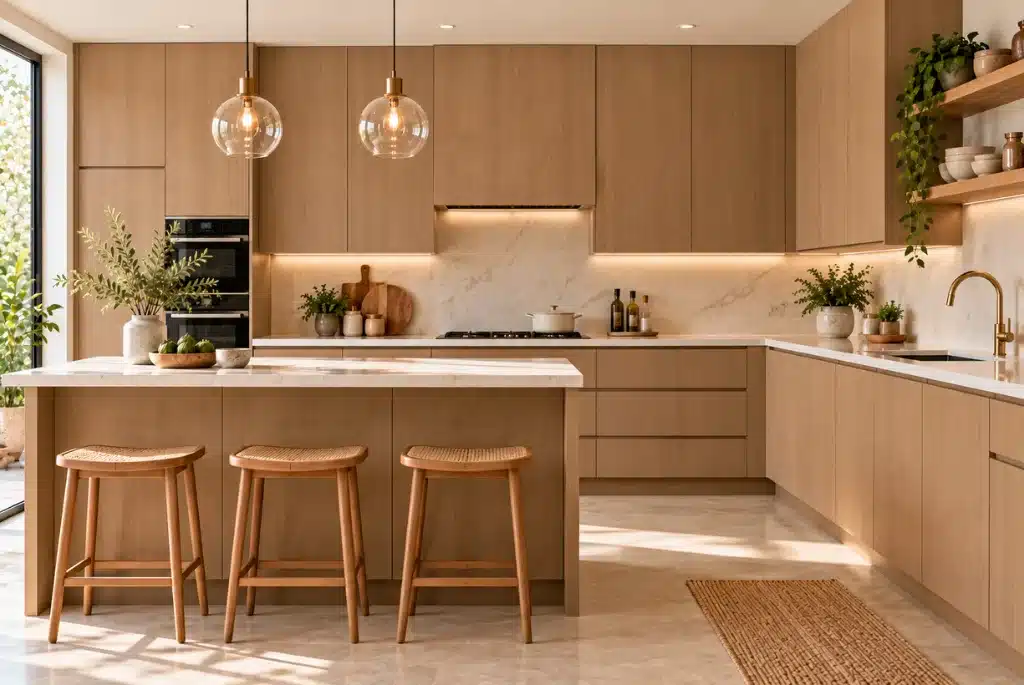
It’s easy to underestimate how different types of cabinet doors affect a space. A thin edge profile might appear subtle in a sample, yet when repeated across twenty cabinets, it defines the entire wall. A raised center panel casts shadow, while a flat surface reflects light evenly. These differences change how a room feels throughout the day.
In smaller spaces, certain types of cabinet doors can reduce visual weight. Clean, simple fronts often prevent the room from feeling busy. In larger kitchens with higher ceilings, more defined paneling may add needed structure so the cabinetry doesn’t feel lost.
Cabinet doors act like punctuation. Too much detail can feel like overuse of exclamation marks. Too little can feel unfinished. The balance sits somewhere in between.
Shaker Style: Simplicity That Never Fades
Among all types of cabinet doors, Shaker remains quietly dependable. Its construction is straightforward: a recessed center surrounded by a proportional frame. Nothing ornamental. Nothing excessive.
What makes it enduring is how adaptable it feels. Painted in white, it reads crisp. In a mid-tone wood, it feels comfortable. In darker shades, it takes on depth without heaviness.
Shaker doors don’t draw attention to themselves, yet they rarely feel outdated. They offer structure without drama, which is often exactly what a room needs.
Flat Panel (Slab) Doors: Modern and Minimal
Flat panel doors remove framing entirely. They are uninterrupted surfaces. Among contemporary types of cabinet doors, they feel decisive.
The absence of detailing shifts focus to finish and proportion. A matte finish softens the effect. A high-gloss finish sharpens it. A natural veneer introduces texture without visible edges.
Slab doors often suit modern interiors because they create calm repetition. There’s no pattern to break the line. In compact spaces, this continuity can make walls appear longer and cleaner.
Their simplicity demands precision. Every alignment becomes visible.
Raised Panel Doors: Depth and Detail
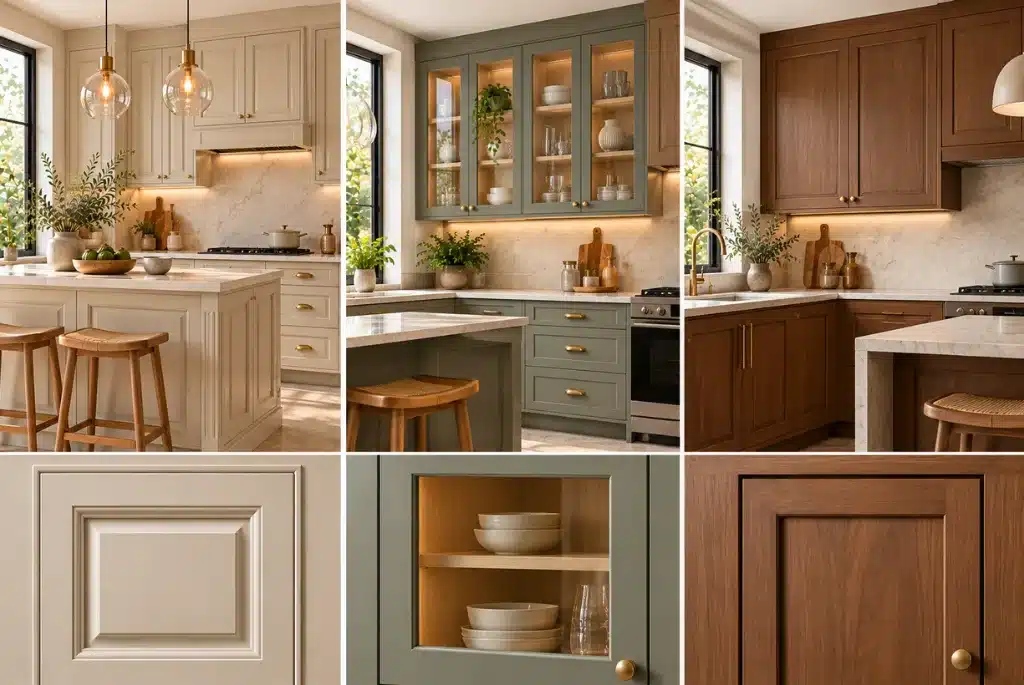
Raised panel doors introduce movement. The center panel projects slightly forward, catching light differently from the frame. Within traditional types of cabinet doors, this style carries weight.
In homes with decorative moldings or heritage character, raised panels feel integrated rather than added. They echo architectural lines already present in the room.
But context matters. In ultra-minimal interiors, raised detailing may feel misplaced. The success of this style depends on proportion and finish. When handled thoughtfully, it adds dimension without excess.
Glass-Front Doors: Openness and Display
Some storage benefits from being seen. Glass-front styles within the range of types of cabinet doors introduce transparency.
Clear glass works best when the contents are curated. Frosted glass softens visibility while allowing light to pass through. Ribbed or textured glass creates subtle distortion, turning stored objects into shapes rather than clutter.
Glass panels interrupt solid cabinetry walls, offering visual pause. Used sparingly, they prevent monotony without creating noise.
Inset Doors: Precision and Craftsmanship
Inset doors sit flush within the cabinet frame. There’s no overlay. The alignment must be exact. Among refined types of cabinet doors, inset styles reflect careful construction.
They are often associated with custom cabinetry because of the precision required. The finished look feels tailored and architectural.
Inset doors don’t exaggerate. Their appeal lies in alignment and proportion rather than decoration.
Exploring Different Types of Cabinet Doors for Every Room
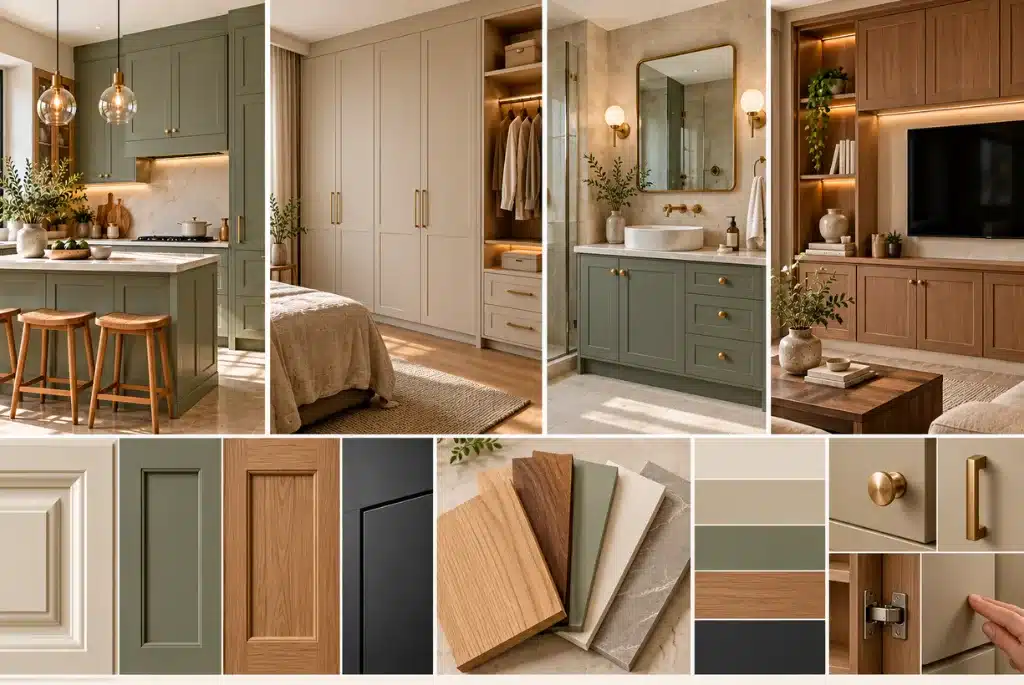
Cabinetry appears in more than kitchens. The different types of cabinet doors you select for a bedroom wardrobe may not suit a bathroom or study.
In bedrooms, softer tones and simple fronts can create restfulness. In bathrooms, moisture resistance becomes critical. In living areas, cabinetry may need to disappear into walls entirely.
Looking at the different types of cabinet doors room by room ensures each choice responds to function as much as aesthetics.
Uniformity across the house is not always necessary. Cohesion is.
Material Matters: Enhancing Types of Cabinets Doors
Material shifts perception. The same profile feels different in solid wood versus painted MDF. The types of cabinet doors chosen should align with how the space will be used.
Solid wood develops subtle variation over time. Veneers offer consistency. Laminates prioritize durability. Each material carries its own maintenance expectations.
When selecting among types of cabinet doors, think about longevity. Kitchens experience daily wear. Storage in quieter rooms may not.
Texture, weight, and resilience all matter in lived-in spaces. The types of cabinets doors used here should reflect both durability and visual balance.
Finishes and Colors: Bringing Cabinet Doors to Life
Color alters the mood instantly. A muted neutral softens detailed doors. A deeper shade emphasizes shadow lines. A natural wood finish highlights grain and variation.
The best types of cabinet doors respond to surrounding elements, flooring, wall tones, hardware finishes. Cabinets don’t exist independently. They interact with light throughout the day.
Instead of dramatic contrasts, subtle tonal shifts often feel more considered. Quiet combinations tend to age better than bold experiments.
Functionality: Hardware and Movement
Some types of cabinet doors feel complete with visible handles. Others benefit from concealed grooves or push-to-open mechanisms.
Hardware influences both look and feel. A heavier handle changes the door’s balance. Soft-close hinges add comfort without being visible.
Movement should feel fluid. Doors should align smoothly. The tactile experience matters as much as visual appeal.
Balancing Budget and Design
The types of cabinet doors you choose influence overall cost. Custom inset doors typically require more labor. Slab doors may reduce fabrication complexity.
Material selection further affects budget. Solid wood costs more than engineered options but may age differently.
Invest where the impact is daily. Not every space needs the same level of detailing. Thoughtful allocation often creates better results than uniform spending.
How Interiors Collective Approaches Types of Cabinet Doors
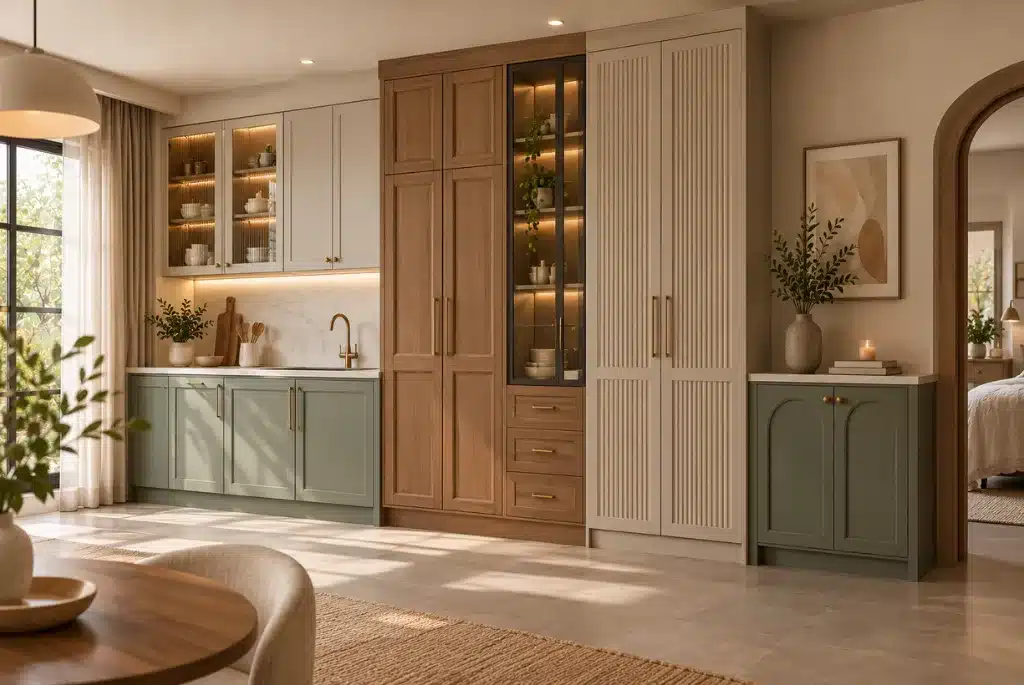
At Interiors Collective, cabinetry is treated as part of the room’s structure rather than surface decoration. The selection of types of cabinet doors begins with understanding proportion, light direction, and overall rhythm.
Instead of defaulting to what is popular, the process considers how cabinetry will look five or ten years from now. Durability, clarity of form, and balance guide decisions.
When cabinet doors align with the architecture, they don’t compete for attention. They belong.
Conclusion
Cabinet doors form the visual framework of many interiors. The right types of cabinet doors create rhythm without heaviness and detail without clutter.
By understanding the available types of cabinet doors, you make choices that support both daily function and long-term relevance.
Well-designed cabinetry rarely announces itself. It simply holds the room together. Choosing different types of cabinet doors with care ensures the space remains visually consistent over time.
FAQs
Shaker and flat panel styles tend to transition easily across changing design trends.
Consider architectural context, lighting, maintenance needs, and how frequently the cabinets will be used.
Flat panel doors generally require less cleaning detail than more intricate profiles.