Let me be honest with you. I’ve seen people spend weeks picking the perfect sofa, the right paint colour, the ideal curtains, and then rush through the tile selection in a single afternoon. And regret it for years.
Tiles are not just a background detail. In a living room, they’re the base of everything. Get them right, and the whole room comes together. Get them wrong, and even the most expensive furniture won’t save it. So if you’re currently staring at tile catalogues feeling completely lost, you’re in the right place. Let’s talk through this like two people who actually know what it’s like to renovate a home.
First Things First: What Kind of Room Are We Talking About?
Before anything else, think about how your living room actually gets used.
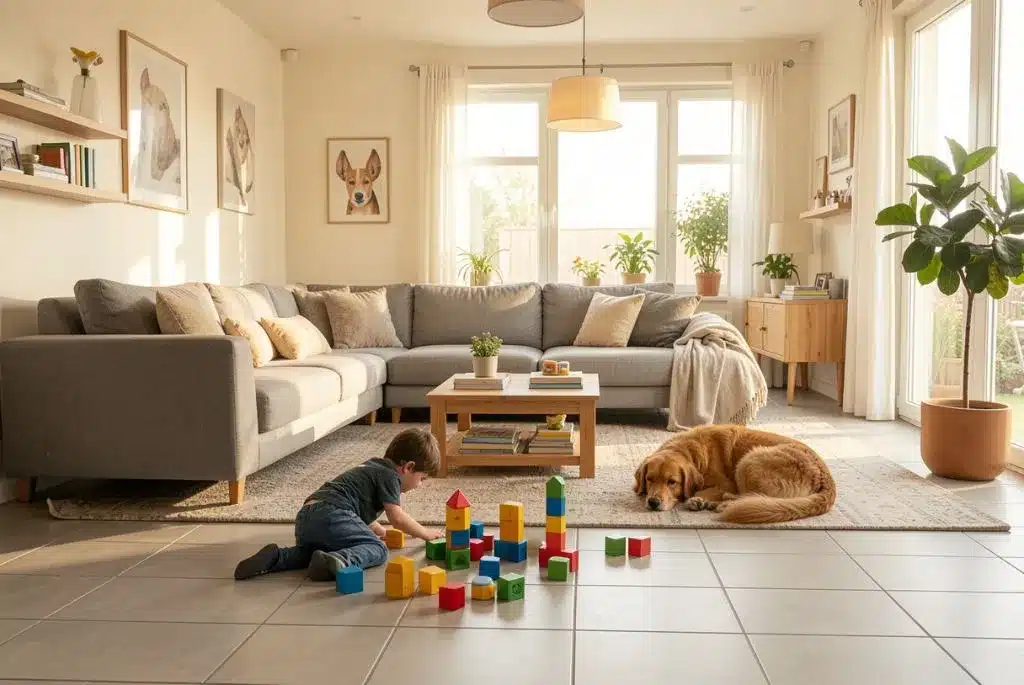
Is it a busy family space where kids run around, and snacks get dropped? Or is it more of a formal drawing room that mostly hosts guests on weekends? Do you have pets? Big, heavy furniture? Do you get a lot of natural light, or is it a darker room?
These questions matter more than you’d think. A glossy marble-look tile might look gorgeous on Pinterest, but in a home with two dogs and a toddler, you’ll be mopping it three times a day.
Knowing how to select tiles for living room spaces starts with being honest about your lifestyle, not just your taste.
Size of the Tile vs. Size of the Room
This is where a lot of people go wrong. They see a beautiful large-format tile at the showroom and buy it without thinking about whether it actually suits their room.
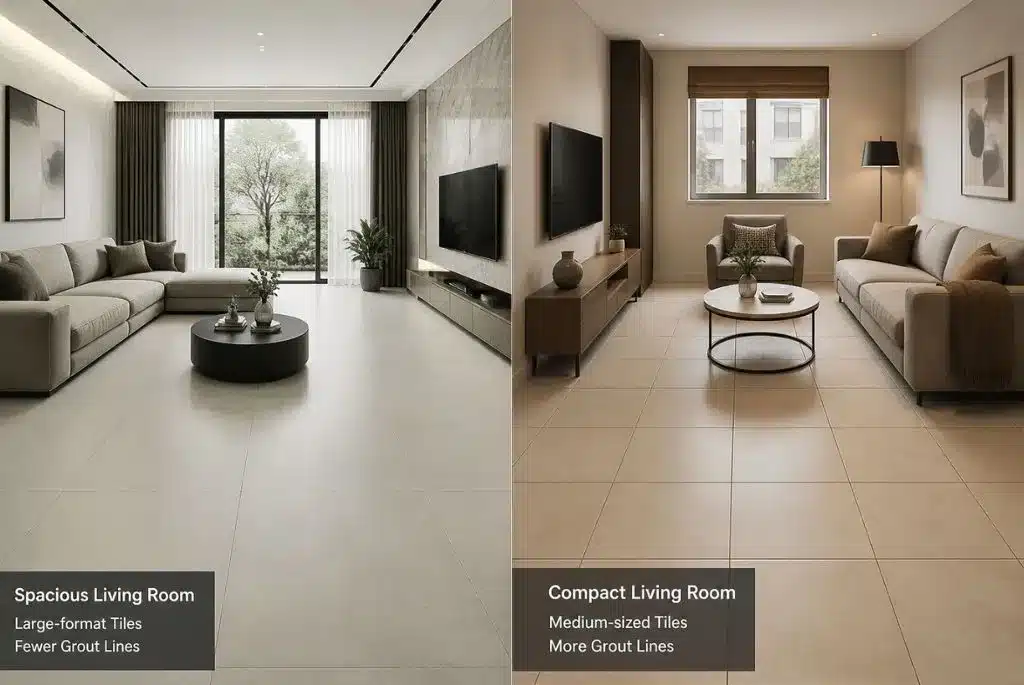
Here’s a simple way to think about it. If your living room is big and open, tiles of 60×60 cm or larger will look amazing. They create fewer grout lines and give the floor a clean, spacious feel. But if your living room is on the smaller side, those same big tiles can look awkward and out of scale.
For smaller rooms, 40×40 cm or 45×45 cm tiles usually work better. They’re proportionate and easier to install without a lot of awkward cuts near the edges.
Also consider the shape. Rectangular tiles laid in a diagonal or herringbone pattern can make a narrow room feel wider. It’s a small trick that makes a real difference.
Which Material Should You Actually Go With?

There are three main options most homeowners in India choose from, and each has a clear use case.
Vitrified tiles are probably the most popular for a reason. They’re tough, easy to clean, come in a huge variety of looks, and they don’t cost a fortune. If you want something that looks good and holds up well without a lot of fuss, vitrified is your safest bet.
Porcelain tiles are a step up in terms of hardness and durability. They’re denser than regular ceramic, more resistant to scratches and stains, and they handle heavy foot traffic really well. If your living room sees a lot of daily action, porcelain is worth spending a little more on.
Natural stone like marble or granite looks incredible, but be ready for the upkeep. It needs to be sealed; it can stain if you’re not careful, and polished stone can get slippery. It’s beautiful, but it’s high maintenance. Go for it if you’re prepared for that commitment.
How to Check Quality of Tiles (Don’t Skip This)
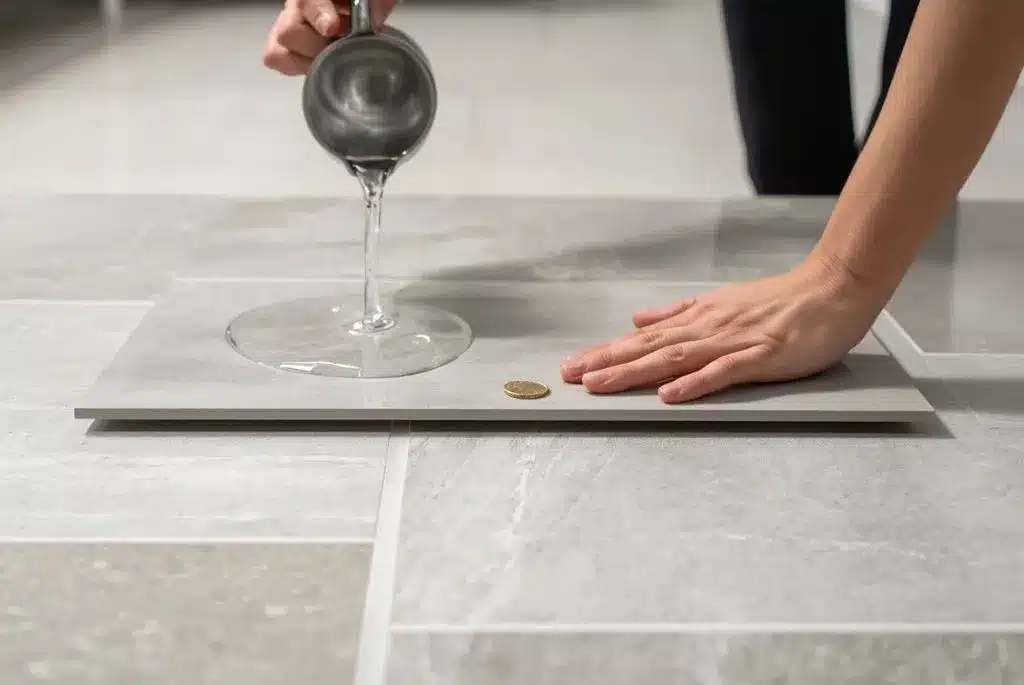
This is the part most buyers skip, and it’s the part that comes back to haunt them.
Knowing how to check quality of tiles before you buy is honestly one of the most useful skills you can have when renovating. Here’s what to actually do at the showroom:
Pour water on it. Seriously, ask the showroom staff to let you try this. Drop a little water on the tile surface. If it sits on top and takes time to absorb, the tile has low porosity and is good quality. If it soaks in quickly, the tile is porous and will be a nightmare to maintain.
Try scratching it. Use a coin or key and run it lightly across the surface. A good tile won’t scratch. If it does, the surface glaze is weak and will dull quickly with use.
Check two tiles together. Pick up two tiles and place them face to face. Run your finger along the edges. If they don’t sit flat against each other, or if one end rocks, the tiles are warped.
Warped tiles mean uneven flooring, and uneven flooring means you’ll notice it every single day.
Check the certification. Look for ISI or ISO certification on the box. It’s a basic thing, but it tells you the manufacturer meets a certain standard.
And one more thing: never buy in a rush. Take samples home. See how the tile looks in your actual room, under your actual lights. Showroom lighting is designed to make everything look good.
Matte or Glossy? The Honest Answer
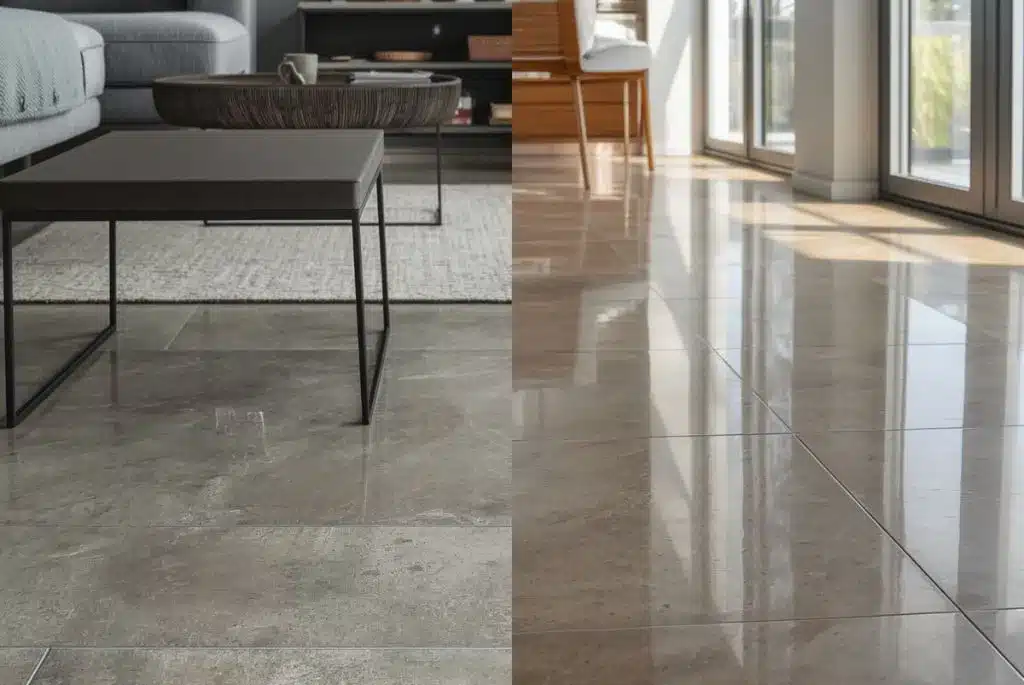
People always ask this, and the answer really depends on your home.Glossy tiles are beautiful. They reflect light, make the room feel brighter, and give a luxurious look. But they show every footprint, every dust particle, and every smudge. If you have a busy home, you’ll be cleaning constantly.
Matte tiles are much more forgiving. They hide dust and dirt better, they’re safer underfoot (less slippery), and they suit a wider range of interior styles. The downside is they can look a little flat in darker rooms.
If you genuinely can’t decide, try a satin or low-sheen finish. It’s a good middle ground. You get a bit of the glow without the constant cleaning.
What’s Trending? Latest Tiles Design for Living Room

Trends come and go, but some of the current latest tiles design for living room spaces are actually really timeless choices worth considering.
Right now, large-format porcelain tiles with a marble or stone look are everywhere. The technology has gotten so good that you genuinely can’t tell the difference from a distance. You get the luxurious look of marble without the price or maintenance.
Terrazzo is also having a big moment. Those speckled, confetti-like patterns look great in living rooms because they add character without being too loud. They work with almost any furniture style.
Wood-effect tiles are another great option if you love the warmth of a wooden floor but don’t want the upkeep. Modern wood-look porcelain is incredibly realistic and a lot easier to live with.
Colour-wise, warm neutrals are winning. Beige, taupe, sand, soft terracotta. These tones are replacing the cold whites and greys that dominated a few years ago. They feel warmer and more liveable, which is exactly what a living room should feel like.
What About the Walls? Try 3D Wall Tiles.
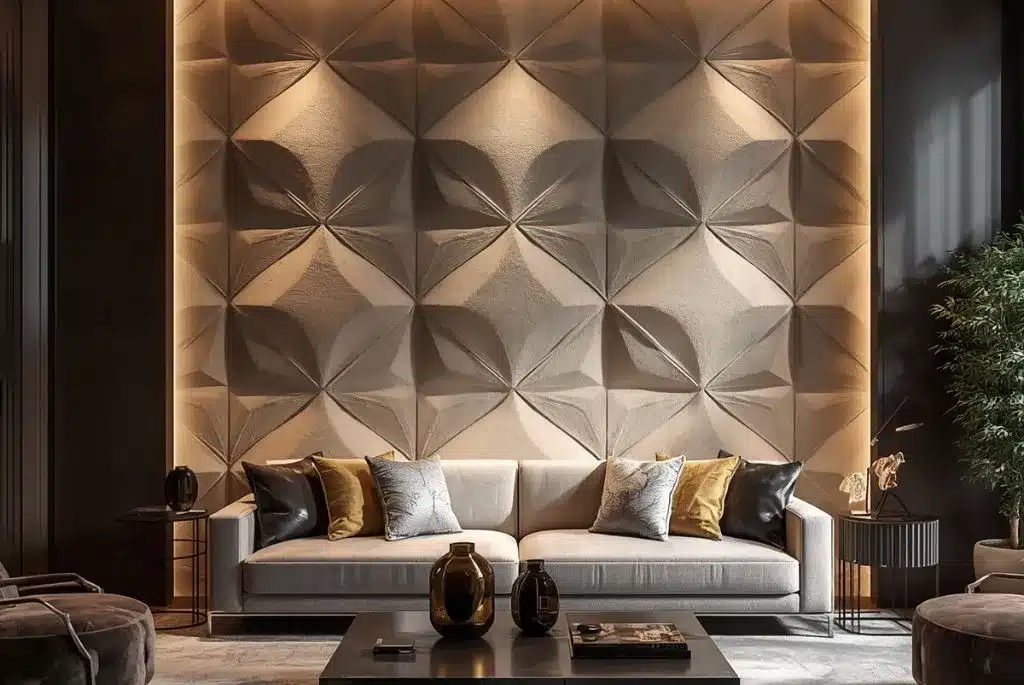
Most people only think about the floor and forget the walls entirely. That’s a missed opportunity.
3D wall tiles for living room accent walls are one of the easiest ways to add drama and texture without doing a full renovation. Unlike flat tiles, 3D tiles have a raised surface that creates depth and shadow. When light hits them, they look almost sculptural.
You don’t need to do all four walls. One feature wall, behind your sofa or TV unit, is enough. Go with a wave pattern, a geometric design, or a stacked brick effect in a neutral colour, and pair it with warm light. The result looks like something out of an interior design magazine, but it’s completely achievable.
Don’t Forget the Grout
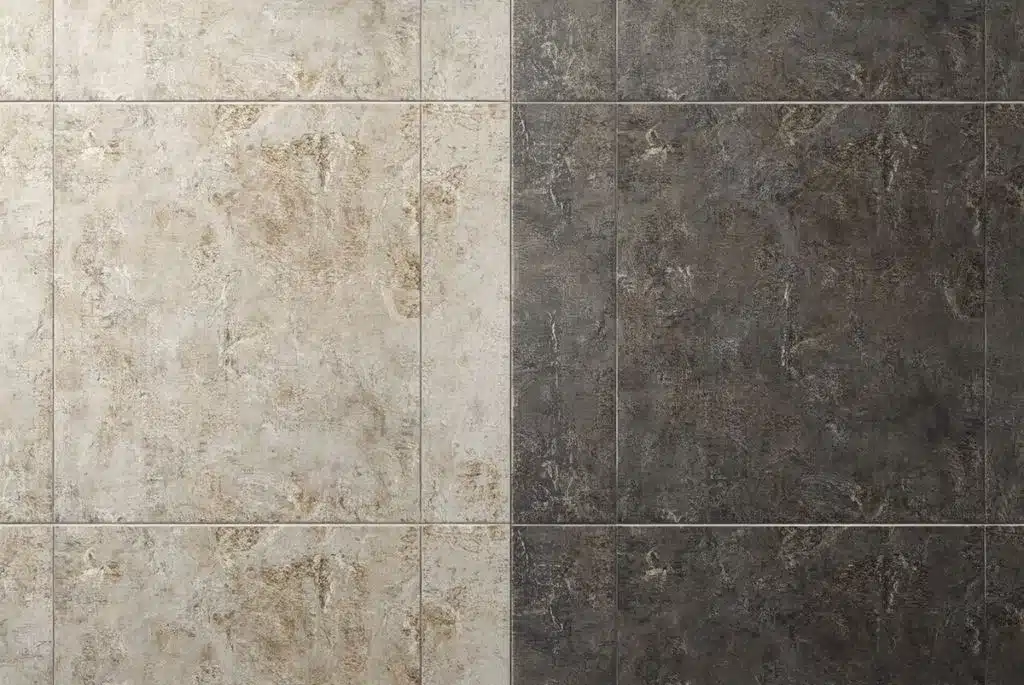
Nobody talks about grout, but it matters. If you use white grout with light-coloured tiles, the floor looks seamless and clean. If you use dark grout with the same tiles, suddenly the tile pattern pops and becomes a design feature.
There’s no right answer here, but think about it before you buy. Changing grout colour after the fact is not a fun project.
What It All Comes Down To

Here’s the thing about how to select tiles for living room spaces: it’s not complicated once you know what to look for. Think about your lifestyle first, your room size second, and your style preferences third in that order.
Don’t just buy what looks good in the showroom. Take samples home. Check quality properly. Think about maintenance. And don’t rush it. The tiles you pick will be there for the next ten to twenty years. A few extra hours of research is absolutely worth it.
Want more living room ideas? Browse our Living Room section for decor tips, furniture guides, and styling inspiration.
Frequently Asked Questions
Do the water absorption test, scratch it lightly with a coin, and check two tiles back-to-back for warping. Also look for ISI or ISO certification on the box. These four checks will tell you most of what you need to know.
Matte tiles are more practical for everyday use. They hide dust better and are safer underfoot. Glossy tiles look stunning but need more cleaning. A satin finish is a good compromise if you want a bit of both.
For a standard living room, 60×60 cm is a solid choice. Bigger rooms can handle 80×80 cm or even 120×60 cm. Just avoid very small tiles on the floor as they create too many grout lines and can make the space feel busy.