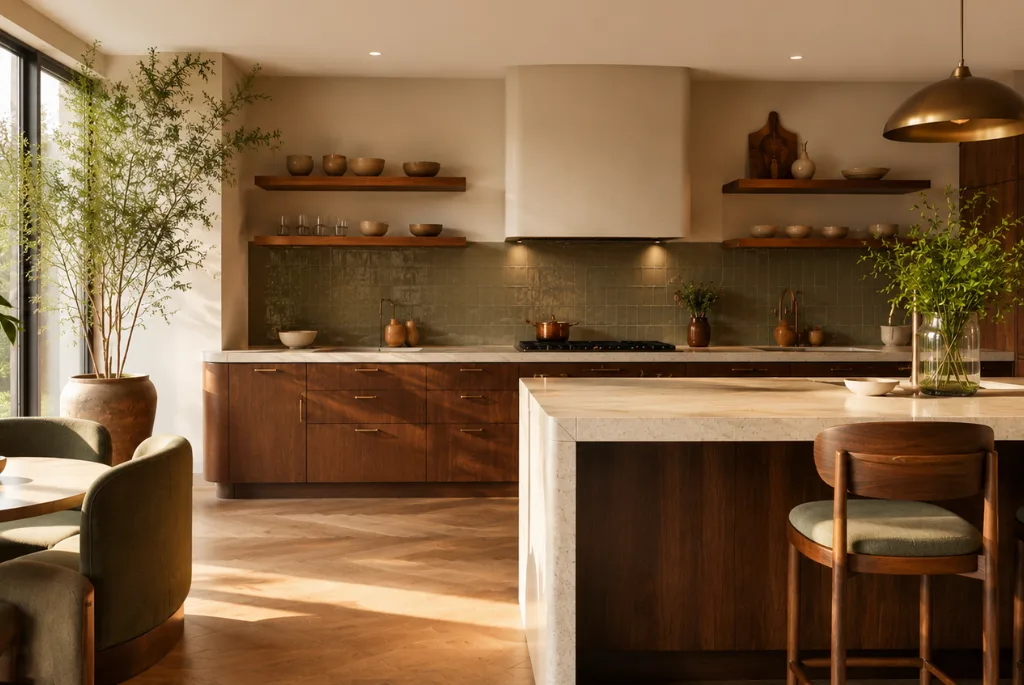
Design trends can come back around but look different over the years. The way a trend looks will never truly be the same as the last time you saw it. An example of design trends that are evolving and recycling are the 70s kitchen.
70’s kitchens have a very different style and feel compared to what modern kitchens look like right now (and the kitchens of the last few decades). Modern kitchens look very clean, but something actually very important has been lacking. That lack has been the hallmark of kitchens. Modern kitchens have beautiful, sleek, and shiny designs, but lack personality. The revitalization and introduction of personality to modern kitchens did not come from adding random decorations, but actually came from the 70’s kitchens.
70’s kitchens have a lot of furnishings, textures and colors that actually solve a lot of problems formed and present in modern designs and styles. 70’s kitchens and the style of homes during that time inspired a lot of homes in ways that made inviting spaces. Today’s styles inspired by kitchens of the 70’s have made them welcoming (as previously mentioned), while of course modernizing the style.
With the revival of 70’s kitchens has come the return of more earthy and natural styles as opposed to the cold, shiny and high gloss that modern kitchens have had for a long time. That has brought the return of more creative and natural backsplashes and lighting. These designs and styles have been timeless as opposed to being trends because they’ve been utilitarian and practical rather than strictly decorative.
An increased interest in 70s kitchens is more than a nostalgia trend. It’s a validation of honest materials and thoughtful craftsmanship and a rejection of the sterile, perfect, highly curated minimalist spaces.
Consider the design philosophies that brought us the influential 70s kitchen before you choose your paint, cabinets, and flooring. Understanding philosophies will help you make more intentional design decisions.
The Story Behind the Style
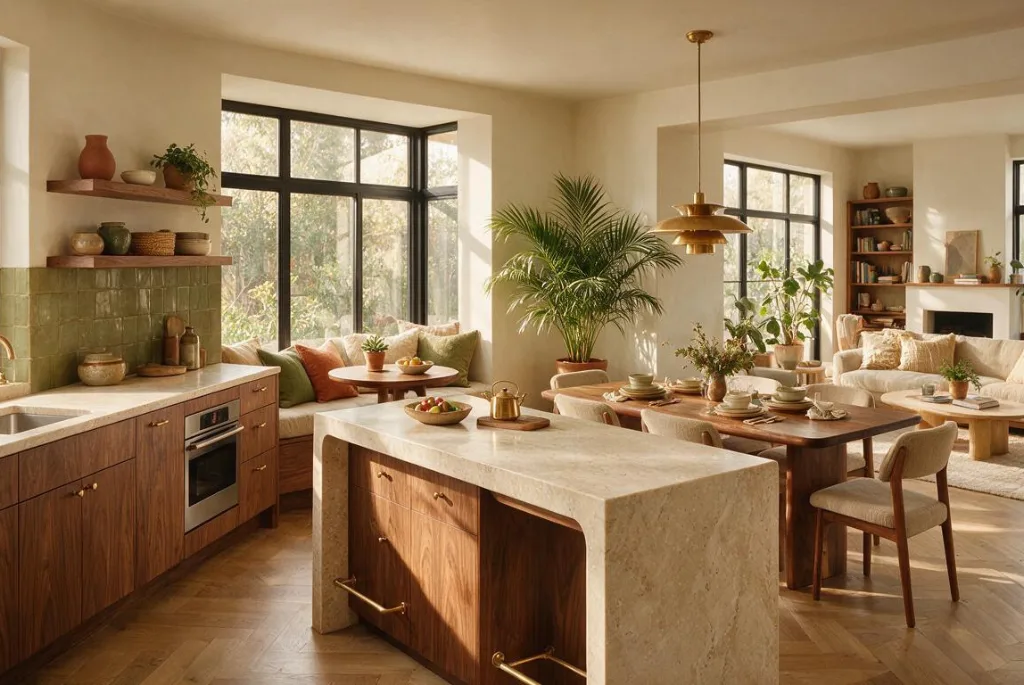
There’s a rich history behind every iconic interior style.
The 1950’s kitchen was designed for maximum efficiency. The 1960s pushed towards cleaner, modern lines. The 1970s welcomed a major disruption to traditional home structures. It was during this time that the open floor concept started becoming the standard. Families began to spend more time together. As a result, kitchen spaces shifted from a behind-the-wall work room to the home’s central social space.
This transformation brought consideration to kitchen design beyond merely making the space functional. Designing a kitchen space became about integrating a room that naturally served the purposes of cooking, dining, socializing, and even entertaining. To do this, the kitchen space had to be inviting. The space was designed with warmer tones, softer colors, and more inviting furniture.
All of these elements contributed to the kitchen space to make it less of a pass-through room that people merely walked in and out of, and more of a space that people spent time in. The seventies were the first decade to break away from superficial designs and focus on a style built around authenticity.
The trends favored a natural look for design elements. The wood remained in its natural state, as did the stone. Lighting served its purpose and also contributed to a design element. Color was also a consideration of the same mindset. Designers began looking towards nature for inspiration. The results were design choices that conveyed calm and a grounded connection to the earth.
It’s easy to see the seventies influence in interior design styles today.
With the demand for more comfort and warmth, the trade elements of interiors from the 70s are starting to appeal to more Buyers for more homes. 70s interiors had a lot of depth due to the natural materials and beautiful handcrafted finishes. The 70s provided a rich palette of natural materials to work with and colorways that are still relevant today. These colorways also have the quality of being more permanent than the transient seasonal colors.
We are not looking to explode the 70s all over again, but rather to appreciate the old 70s designs and bring them back in a more modern way that appreciates them for what they are.
The true essence of a gorgeous 70s kitchen cannot be found in one object or color. It would come down to a bunch of really thought-out designs that contain elements that would be unique to a fabulous and gorgeous 70s kitchen. Balance is of the utmost importance.
Design Principles
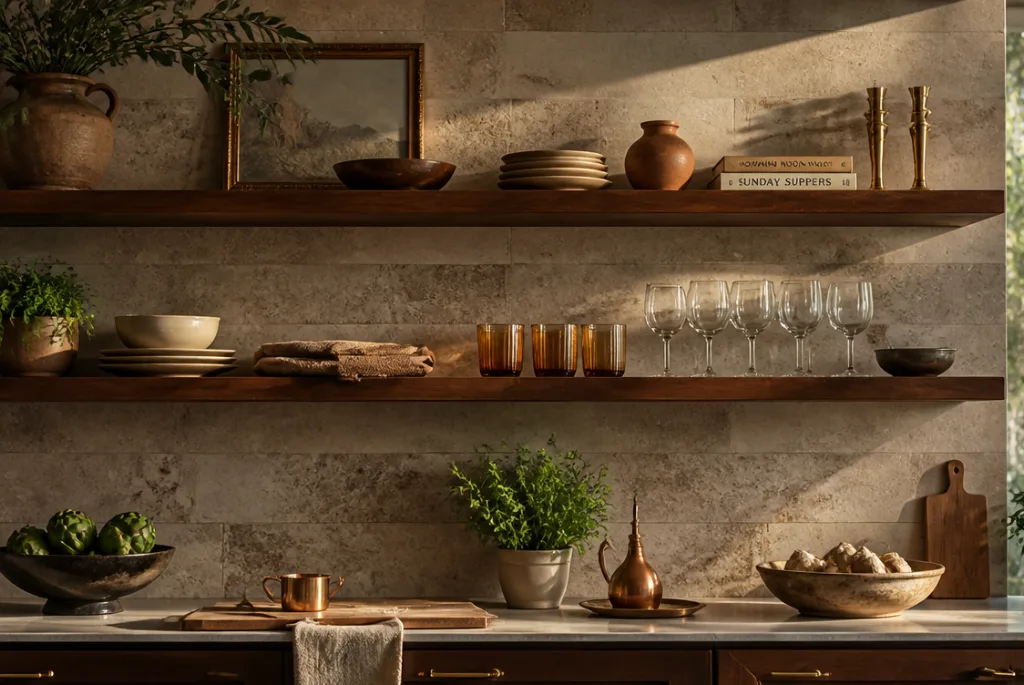
An easy way to recreate a vintage kitchen is to pull from vintage pictures. Pulling colors and furniture closely resembles what the kitchen would look like, but there is no creativity in this method. A much more challenging but fulfilling method is recreating kitchens based on their principles and what makes them memorable.
A kitchen from the 70s is not known for just the appliances or the cabinetry. It is emblazoned in history for the way in which everything was designed to flow cohesively. The designers of that time took great initiative to design spaces that would become the family gathering places of the home.
That same philosophy is still in play for kitchen design today, with only minor adjustments for the progression in modern design.
Prioritizing Comfort & Coziness
The kitchens of the 70s had a principal design philosophy of comfort from the moment you stepped in, with cozy elements throughout; something that is often lacking in a modern kitchen, which strives for a level of design that is “perfect”.
Modern kitchens often sacrifice comfort for glossed surfaces and a monochromatic palette, but 70s style kitchen often embrace as much warmth as possible. Timber finishes and earthy colors pair beautifully while maintaining a light, cozy feel and can stand in place of large, harsh, oversized elements.
Wood and stone surfaces allow the kitchen and space to feel varied, inviting, and warm throughout the day, even allowing hard edges and large spaces to feel intimate. This principle is one of the leading reasons the kitchen design from the 70s is a favorite of modern homeowners.
The Role of Nature in Design
Biophilic design is trendy now, but we were already implementing design principles centered around nature into our work in the seventies.
We turned to nature for our color palettes, rather than the fashion industry. Landscape elements helped us select color palettes for everything down to the last detail.
Timeless design is created with nature palettes. Elements such as timber, stone and brass are warm and inviting to complement dark timber.
Design elements used natural materials. Timber elements weren’t painted over. Stone was used in its natural state. Ceramics were used in their variegated and imperfect states. All of these materials created layered and calm interiors.
Textures tell the story of character and design.
Surfaces provide an element of character to a vintage kitchen. Having a wooden cabinet in your kitchen with an open wooden grain is more characterful than a laminate over a cabinet with a closed grain.
Ceramics that are handcrafted and slightly imperfect are better than mass-produced ceramics. Textiles such as linen and rattan add soft layers of texture without overwhelming a room.
Kitchens can draw a lot of inspiration from the textures of the 1970s, and for good reason. The layered textures of a 1970s-style kitchen only become richer with age and use. The patina of aged wood, the textured surface of metal that has been used for years, and the subtle wear of stone make the kitchen even more appealing as time goes on. When you compare that to most contemporary materials, there is really no competition.
The Kitchen Became the Heart of the Home
One of the biggest changes to the design of the kitchen in the 1970s was more of a social change than a design one.
People started to use their kitchens more than just a place to prepare meals. Kitchens started to become places to do homework, socialize with guests during and after dinner parties, and places where family members would gather throughout the day.
This change impacted how kitchens were designed and planned.
Separate areas for dining started to disappear.
Breakfast nooks became the norm and were no longer the lonely eating spaces.
Longer worktops became a design feature to promote and support a more social and collaborative style of cooking.
And most importantly, storage started to consider how the kitchen would be used throughout the day and not just for preparing meals.
The design and layout of modern kitchens are continuously evolving, but they still contain the philosophy that originated in the 1970s.
For example, multifunctional islands and other open-plan ergonomics that connect the kitchen to the living room can be found in many modern kitchens. When you consider these philosophies when designing a kitchen, the style becomes more important than deciding if a material or color is “retro.”
After outlining the fundamental details, the next most common area of focus is always the cabinetry. Of all the features, cabinetry has the most striking visual impact. It is the most important design feature for determining the overall decade of the kitchen, or whether the kitchen has a subtle nod to retro décor. Because of this, locating appropriate cabinetry is the next most important step for designing a kitchen that is simultaneously modern and timeless.
70s Kitchen Cabinets
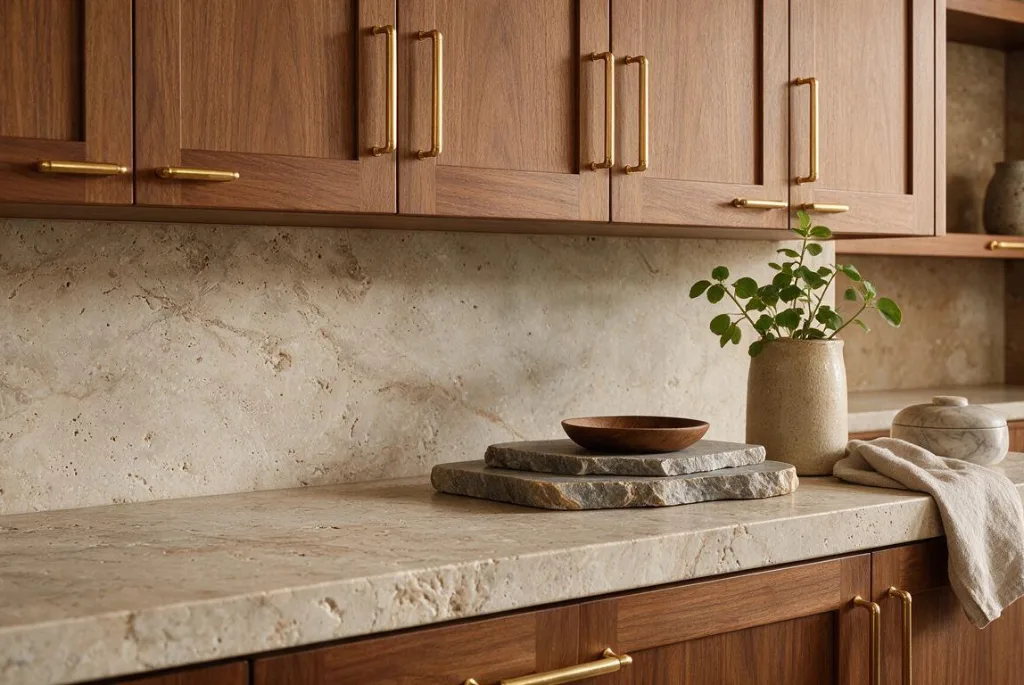
All kitchens have something that stands out and captures your attention, even before you notice the other elements in the kitchen, like the lighting or the flooring. In retro kitchens, the cabinetry is the standout element.
Cabinets are way more than just a place to store things. They help decide the color scheme and feel of the kitchen. Picking the correct 70s kitchen cabinets can help make the kitchen warm or modern and sleek.
A lot of modern kitchens don’t showcase the materials used to make cabinets and structures, and instead prefer a painted finish. Seventies kitchens were the opposite, and put the focus on craftsmanship. The wood used in cabinetry and structures was left as is and was considered a design element.
This idea is still relevant and used in a lot of modern homes. Homeowners are focusing more on creating spaces that are timeless and not on trends, and wood is always a better choice than modern finishes that are not timeless.
Choosing the Right Timber
The perfect retro-kitchen brings together balancing combinations of timber, and considers the architecture of your house, and the available natural light.
Rich walnut timber, being deep and dark, balances an entire kitchen and helps soften larger spaces. Its subtle sophistication helps room balance, and gets enhanced with age. It matures beautifully and brings a walnut complement to stone and neutrals and pairs with warm metal fixtures, enhancing the overall kitchen sophistication.
All the character that oak timber brings is a light and open kitchen. Its timber grain helps soften the kitchen space without bold colors, which helps create an inviting and welcoming kitchen atmosphere. It balances a kitchen space that’s small and needs a soft, inviting atmosphere.
Teak falls between the other two options. Its warm honey timber tints help balance open-planned spaces, and help bring harmony between the living spaces.
Timber tones and textures help create the kitchen atmosphere you want. The best choice is the timber that helps create harmony and balance in the kitchen space overall, and is not the most luxurious.
Simplicity Creates Timeless Cabinets
A more contemporary design influence from the 70s kitchen cabinets is their simplicity.
Kitchen cabinets from the 70s featured flat-panel cabinet doors. Unlike earlier cabinet designs featuring embellishing designs, flat-panel kitchen cabinet doors provided a more clean, uninterrupted surface and a more natural cabinet wood presentation.
Flat Kitchen cabinets from the 70s typically featured simple, undetailed designs, which contribute to the integration of 70s cabinets into more contemporary designs. Unlike cabinet designs of other eras, flat-front designs do not limit the other designs in the room.
Combining 70s style flat cabinets with contemporary design elements such as brass, stone, and other modern materials is sufficient to maintain contemporary design.
Kay’s and other designers build off the original simplicity of the flat-front design by incorporating more rounded design elements into the cabinets and the kitchen overall. These design elements pay homage to designs from the 70s, but do not completely replicate designs from that era.
The combination of contemporary design and some design elements of the 70s creates a kitchen design that is cool and modern while acknowledging its early design influences.
Hardware Should Complement, Not Compete
Cabinet hardware has the potential to unify a space and finalize a vision for an entire kitchen, which is why it’s often one of the last things decided on by homeowners.
In the 70s, kitchen hardware was seen as a complementary design element to the timbers used for cabinetry. Brass was the predominant choice of hardware. Brass looks pleasing with wood, and its patina only adds to the character of the piece.
Bronze has a similar effect and patinas like brass but is slightly darker. Ceramic hardware has a more handcrafted aesthetic and fits a home better with a vintage and rustic farmhouse or cottage style.
Any type of hardware finish can be used as long as it is the same for all other kitchen hardware.
Cabinet handles, faucets, and brackets can all be the same hardware finish and metal, which brings a sense of continuity to the kitchen. This gives the impression that the kitchen was designed and thought out, as opposed to an assortment of items and products that have been thrown together.
Harmonizing Display and Storage
It is a common misconception that a vintage kitchen design means no cabinetry. The best kitchens, vintage or not, have a combination of both.
Open cabinets allow for personalized organization of kitchenware and other items.
Balancing Display and Storage
One false assumption about retro kitchens is that they should have only open shelving instead of cabinetry. The best kitchens of the retro variety actually incorporate both.
Open shelving adds character. It offers a good spot for handmade ceramics, vintage glass, favorite cookbooks, and everyday dishware. These objects help the kitchen feel lived in. They also help break up long, monotonous runs of cabinetry.
Practical storage is still very important, and in modern times, it is even more important.
Whereas the families of the 50s had a small collection of kitchen tools and utensils, modern families have a large collection of kitchen appliances, utensils, cookware and pantry items. Kitchens with beautiful cabinetry but insufficient storage will become cluttered kitchens.
Clever designs use cabinetry to store items that are kept in the kitchen to help limit the clutter, while using open shelving to help personalize the kitchen. This design incorporates both style and function.
Designing for Modern Living
Modernized 70s style kitchens inspired by history should not be antiquated.
What was once solely a cooking space is now a multifaceted area for dining, working and socializing.
Cabinetry has evolved to fit these needs.
An integrated refrigerator allows wood surfaces to remain uninterrupted.
Deep pull-out drawers offer storage without compromising accessibility.
Aesthetically pleasing hidden pantry systems maintain order for everyday items while allowing the kitchen to maintain its visual cohesiveness.
Crafted cabinetry can conceal modern features such as recycling stations, charging stations and appliance garages.
The design spirit remains the same and actually strengthens it to show that aesthetics can be older and timeless while keeping modern features.
When paired with the right design, cabinetry from the 1970s creates a nostalgic look that can also ground the kitchen with a framework for modern color, lighting, flooring and décor.
Establish the personality of the space with the cabinetry and then finish the space with color and texture. Layers that can embody the earthy tones of the 1970s, like natural stone, can evoke the warmth and authenticity of the 70s and modern functionality.
Colours & Materials
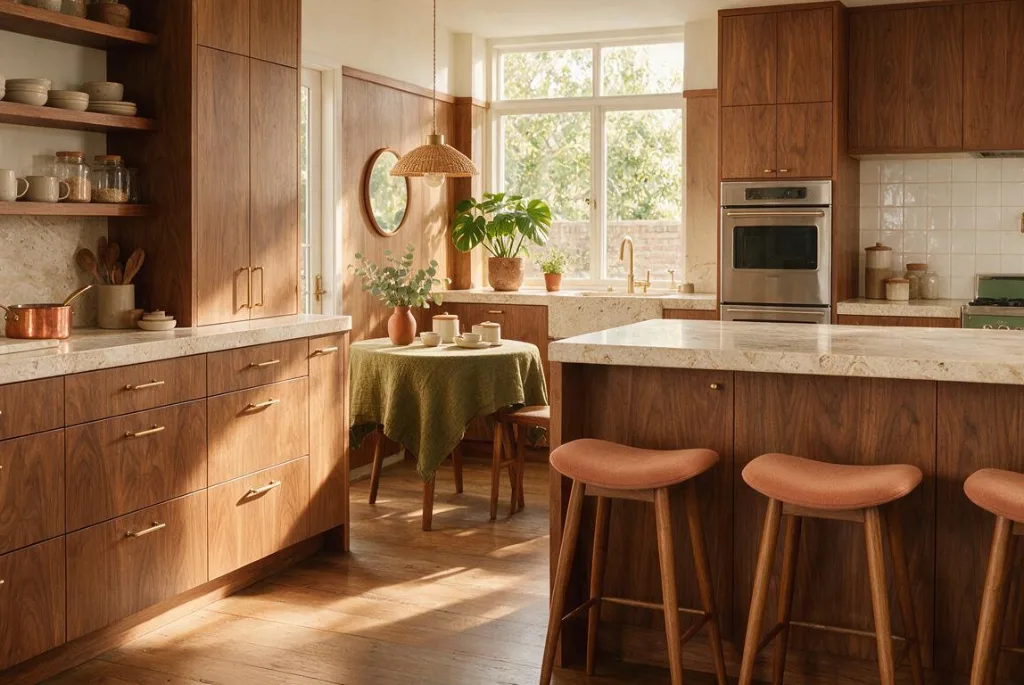
Next, the layers after the cabinets will determine the overall feel of the kitchen when you walk in. The colors and materials you choose go beyond decoration and affect the mood, the balance, and the overall quality of the kitchen.
One of the biggest reasons for the popularity of 70s-inspired designs is that they look well thought out, versus all 70s designs relying on a few big statement pieces. They balanced out the design through layering beautiful natural materials and colors. The balance achieved by finishes can really elevate a space.
It is safe to say that beautiful materials are far from scarce in today’s market; the real challenge is being able to combine all of these beautiful materials into a cohesive design that does not feel dated. Balance is key, not layering the same materials.
Building the Colour Palette
With the cabinetry being the most noticeable part of the kitchen design, the next essential element is the layer that sets the overall feeling of the kitchen. Color and material choices work together to design a room and can affect the mood, balance, and overall longevity of the room.
The big appeal of 70’s style kitchens is that they used an endless variety of design features, none of which were the standout focal element. They used different colors, textures, and various natural materials, all in a style that complemented the kitchen design, to balance the space. Everything was intentional.
The real struggle for designers nowadays is that there are many beautiful interior design materials and features, and knowing how to uniquely combine them all, while not being overly consistent with previously designed kitchens that are now outdated. The balance is really going to be the most important feature, not the integration of a million features.
Choosing Materials That Age Beautifully
The main thing that differentiates a timeless kitchen from a trendy renovation is how they age.
A lot of modern kitchens now use materials that look perfect when first installed—the best interiors designed with a seventies vibe age beautifully.
- Timber gets darker with age.
- Brass develops a dark and soft patina.
- Natural stone remains beautiful and develops character.
- Ceramics and handmades gain character with imperfection.
These materials age beautifully and keep their elegance. This is the reason why timeless kitchens carry a retro vibe. As a vintage kitchen gets older and more beautiful, it becomes a place for family. The right materials and natural choices can make a space warm, strong and inviting. Vintage ceramics soften edges and add warmth and texture.
These materials all play their part in the kitchen and are inviting and comfortable. This attitude fits with the new trends around sustainability. Vintage, natural materials last and are much more economical than modern materials.
Countertops & Backsplashes
Cabinets set the tone for the kitchen, but they are incomplete without the finishing touch that comes from the countertop and backsplash.
The selection of these surfaces is not solely based on aesthetics. Designers and clients must think about the functionality of the kitchen and how these surfaces will be used.
Natural stone offers a seamless integration of cabinetry and is one of the strongest design options.
Deep charcoal soapstone offers a dramatic contrast with walnut cabinetry and design, while developing an even stronger contrast with use.
The earthy hues and subtle textures of Travertine lend warmth and a stronger integration of design for homes with a Mediterranean or more organic design.
When used with dark cabinetry to control the design palette, marble, used sparingly, offers balance and elegance.
For lower maintenance options, modern quartz surfaces can mimic the design of natural stone and remain incorporated in the design of the kitchen.
Textured use of backsplashes should be given equal consideration.
Instead of the commonly used glossy or overly bright subway tiles, designers now incorporate a variety of surfaces such as ceramics, clay tiles, and zellige, which introduce subtle variation and contrast.
These contribute a depth and dimension that are often lacking in mass-produced tiles.
Creating visual harmony among the surfaces of the countertop and backsplash will highlight cabinetry and decorative elements instead of featuring disparate finishes.
Also read: Grey Kitchen Cabinets: A Thoughtful Choice For Kitchens That Age Well
Flooring That Grounds the Space
Believe it or not, design decisions for a certain space can be influenced by the flooring for that space.
Even the most beautiful kitchens would be a disappointment if the flooring is disconnected from the other areas.
Rustic terracotta is special in that it stands out while providing color and texture at the same time.
Timber is another popular classic. Wood flooring is particularly fitting for large, open floor plans since it can help the various spaces look visually connected and continuous.
Stone flooring is also a great option if you’re looking for something a bit more industrial while remaining warm and somewhat “organic”.
In a smaller kitchen, like a typical 70’s style kitchen, large, neutral tiles are a great way to maintain the warm, earthy style while making the room more spacious. Large floor tiles also mean there are fewer grout lines to break the cabs up and are more continuous.
No matter the flooring you do decide on, stay away from the “latest trends”. Flooring typically lasts through several renovations, so choosing flooring with a classic style will keep the kitchen timeless.
With the right combinations of color and texture, the kitchen can truly come to life. Add your touch to the cherry wood, vintage green, and soft orange that reflect the 70s house interior kitchen. Check out these ideas for inspiration when planning your kitchen.
FAQs
Instead of bright artificial tones, 70s kitchens drew inspiration from nature for their palettes. Using a combination of olive green, avocado, yellow, orange, brown, cream and wood, 70s kitchens strayed from relying on artificial tones. Now, those colors are used sparingly to create more moder
You can achieve a more contemporary look without installing new cabinets. Replacing your 70s kitchen cabinets with modern cabinetry can be skipped entirely if your solid wood cabinets are in decent shape. A new backsplash, updated textured countertops, modern lighting, and updated hardware can all modernize your kitchen without taking away its character.
When creating a new look for your kitchen, try focusing on the tips and tricks instead of the vintage trends of the 70s. Using warm wood, earthy color cabinetry, and natural materials will help. Plus, you need to balance these with uncluttered and modern styles. This will help your kitchen have the warmth and character of the 70s while being modern and up to date.