There’s a certain kind of house that stops you mid-scroll. Clean lines, unexpected materials, windows that seem too large to be real. You don’t know exactly what it is about it, only that it looks like it belongs to someone living about fifteen years ahead of the rest of us.
That’s the appeal of a futuristic house. And the good news? You don’t need a sci-fi budget or a plot of land in the Swiss Alps to pull it off. The ideas behind these homes are more accessible than they look.
Here’s what actually makes a home feel genuinely forward-thinking, and what’s just expensive theatre.
What Makes a Futuristic House Actually Futuristic
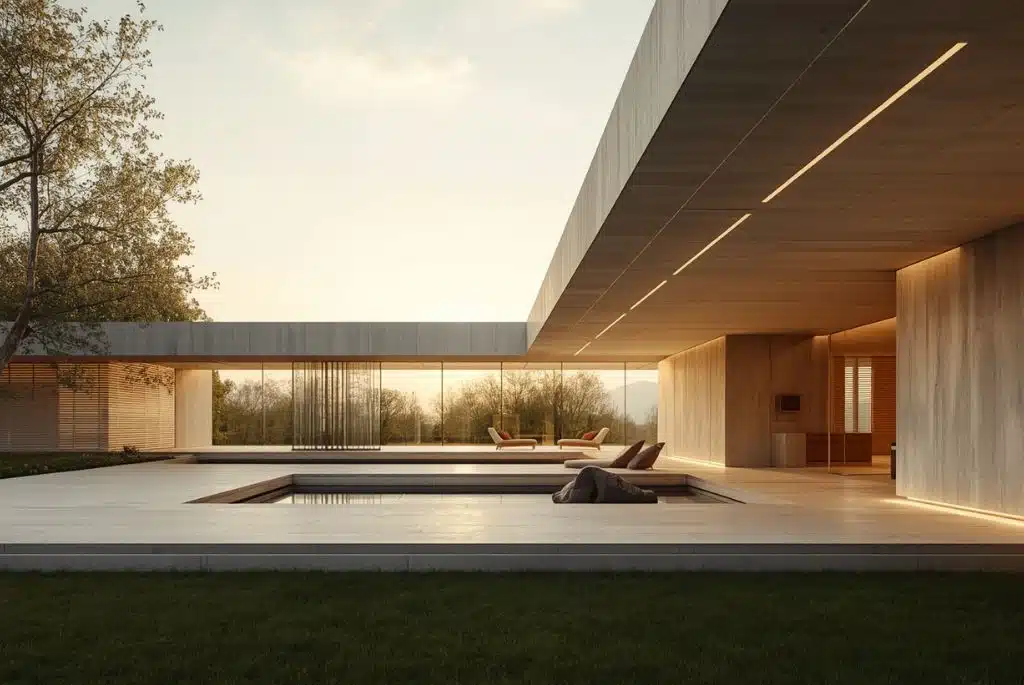
Most people get this wrong. They think futuristic means white walls, LED strips, and a voice-activated everything. That’s not it.
The homes that genuinely feel ahead of their time share a few specific qualities. They use materials in unexpected ways. They let light do heavy lifting. And they treat technology as something that disappears into the architecture rather than sitting on top of it.
Think about the Farnsworth House, or more recently the projects coming out of firms like BIG (Bjarke Ingels Group) or Kengo Kuma. What makes those buildings feel timeless and forward-looking at once is restraint. Nothing is there without a reason. Every surface, every opening, every threshold has been considered.That’s the real starting point for futuristic homes.
Materials That Define the Look
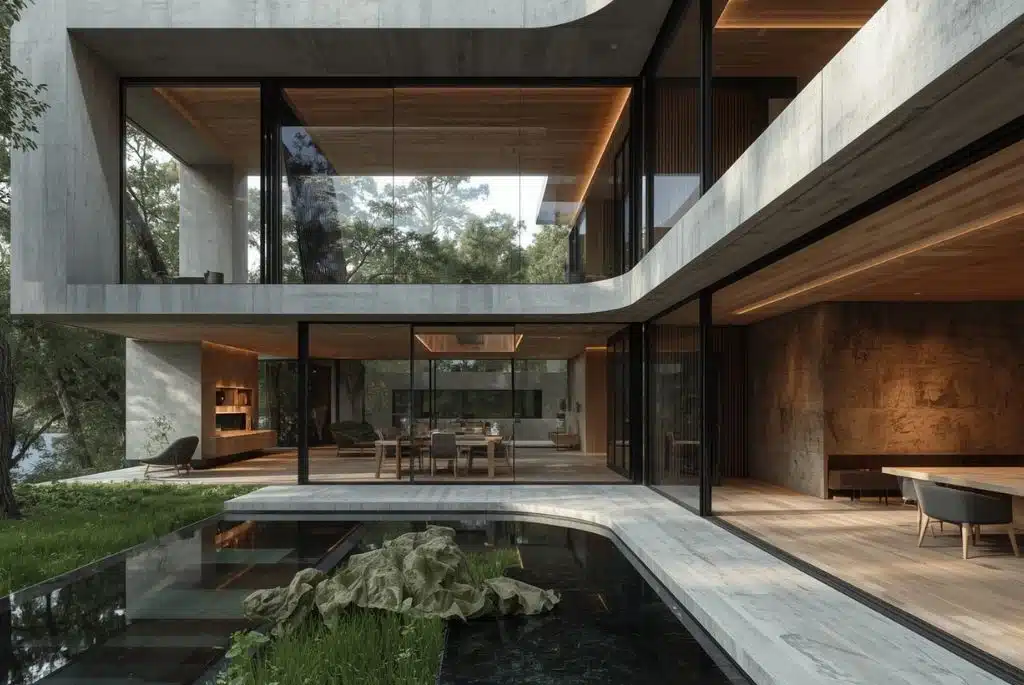
If you want a space that reads as genuinely contemporary, the materials list matters more than almost anything else
Concrete, but make it warm. Raw concrete has been a staple of forward-thinking architecture for decades, but the way it’s being used now is different. Polished concrete floors with underfloor heating. Exposed concrete ceilings softened by timber accents. Concrete that’s poured in curved, organic forms rather than flat slabs. This works better than marble in modern homes because it doesn’t compete with the architecture.
Cor-Ten steel on exteriors. That warm, rust-toned weathering steel you see on some of the best futuristic building designs isn’t just an aesthetic choice. It’s self-protecting, low-maintenance, and it develops character over time. Paired with floor-to-ceiling glass, it hits a sweet spot between industrial and warm.
Fluted glass partitions indoors. Fluted or reeded glass is having a moment right now, and for good reason. It divides spaces without blocking light, adds texture to what would otherwise be a plain panel, and photographs beautifully in any direction.
Sintered stone surfaces. Porcelain and sintered stone like Dekton or Lapitec are showing up in the most serious kitchen and bathroom designs right now. They’re more heat-resistant than quartz, essentially indestructible, and come in large-format slabs that can be cut to almost any shape.
Layouts That Feel Ahead of Their Time
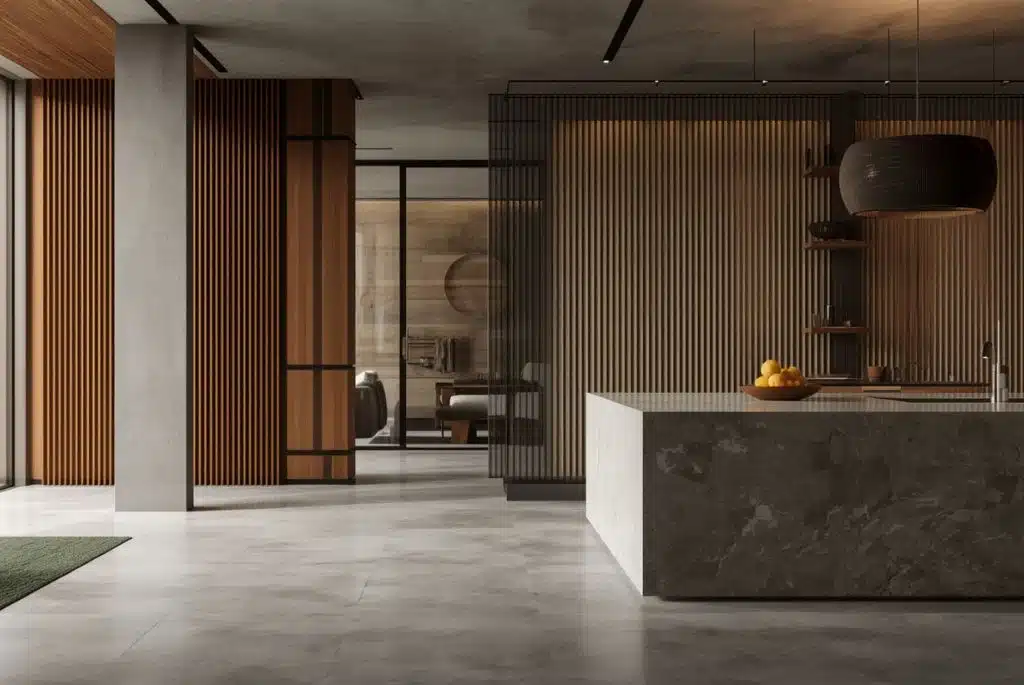
Futuristic modern homes tend to reject the old floor plan logic. Separate rooms for separate functions. A hallway that leads to a corridor that leads to another corridor. None of that.
Instead, the layouts that feel most contemporary share a few moves:
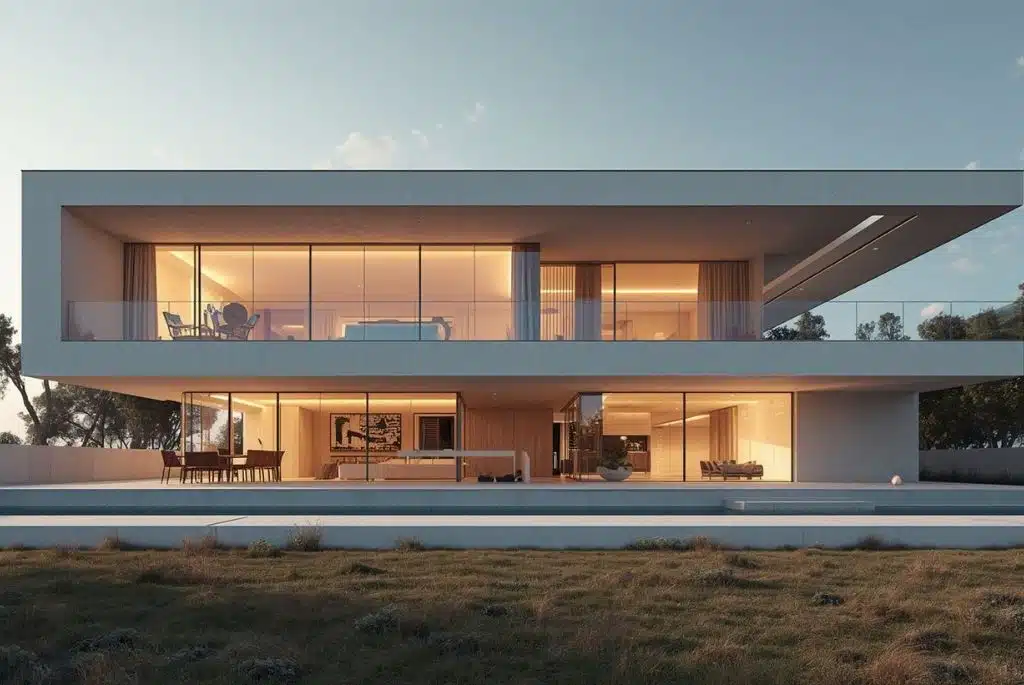
The disappearing threshold walls of sliding or pivot glass that open a living space completely to an outdoor terrace or courtyard. When those panels are open, you can’t tell where the house ends and outside begins. This works best with a single continuous floor material running from inside to out.
Volumes within volumes rather than rooms separated by walls, you get a large open space with smaller volumes inside it. A bedroom pod. A study that’s a raised platform. A kitchen that’s a self-contained island unit with everything hidden inside. The ceiling might drop over one area and rise dramatically over another.
Vertical light wells futuristic houses pull light down from above as much as from the side. A narrow slot skylight running the full length of a corridor. A double-height atrium at the centre of the plan. These moves completely change how a house feels throughout the day as the light tracks across it.
Smart Home Tech That Actually Belongs
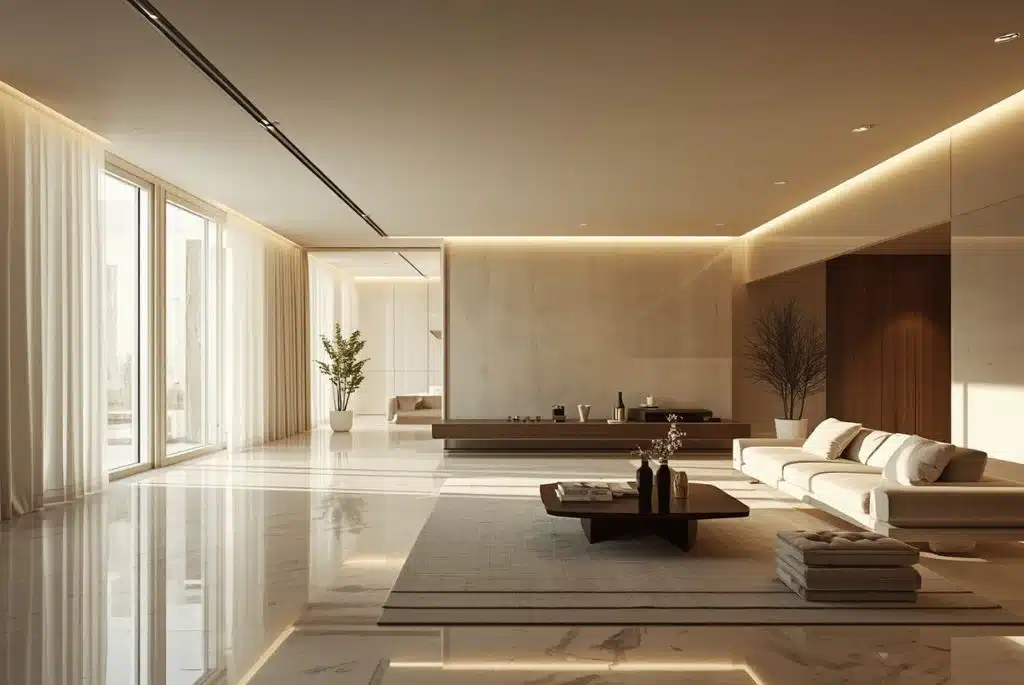
The mistake most people make with smart home technology is treating it like an add-on. You finish the house, then bolt on the smart speakers and the automated blinds and the app-controlled lighting.
In the best futuristic homes, the technology is specced before the walls go up. Invisible speakers recessed into ceilings. Motorised blinds that sit inside the window frame. Lighting that shifts colour temperature from morning to evening automatically. A heating system controlled by occupancy sensors rather than a thermostat you have to remember to adjust.
None of this needs to be visible. That’s the point.
Visual Ideas Worth Stealing Right Now
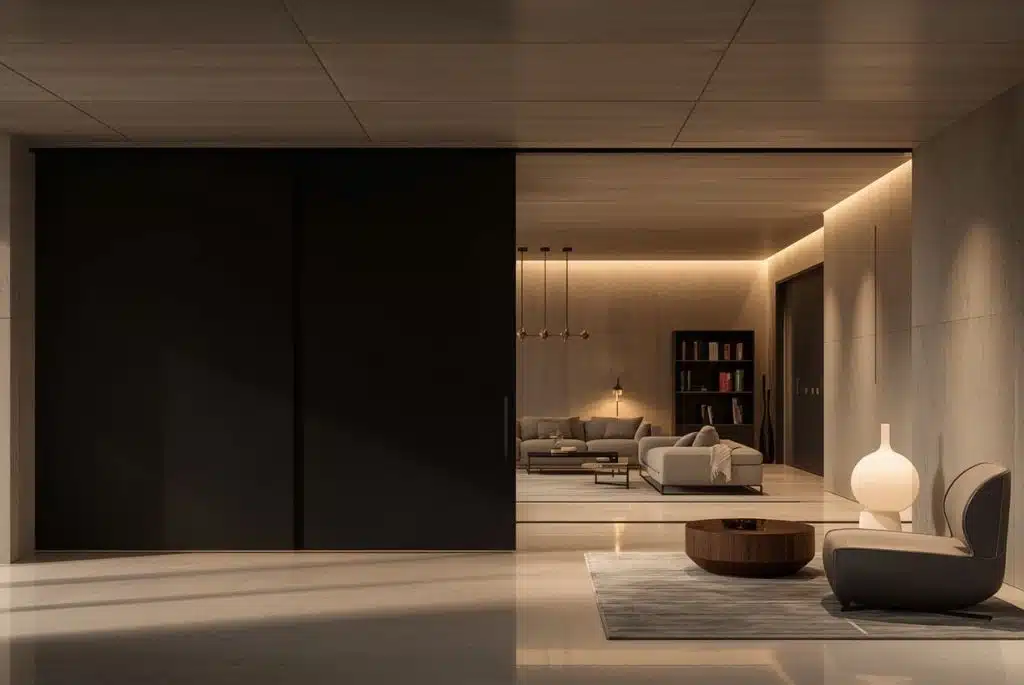
Even if you’re not building from scratch, there are things you can do that borrow from the best futuristic house design thinking:
Replacing internal doors with oversized pivot doors in a dark finish a black steel-framed pivot door reads as completely different from a standard flush door. It changes the whole character of a room transition.
Running one continuous material across a wall and ceiling taking a limewash plaster or a large-format tile up and over the ceiling in a bathroom or alcove creates the kind of seamless envelope you see in the best futuristic homes.
Choose furniture with a single finish story; the interiors in the most striking futuristic houses use three materials maximum. Everything else is a variation of tone or texture within those three.
Put your lighting inside the architecture, not on top of it recessed linear lighting in a ceiling slot. An LED strip tucked behind a floating vanity. Light that you feel but can’t quite locate.
The One Thing Worth Remembering
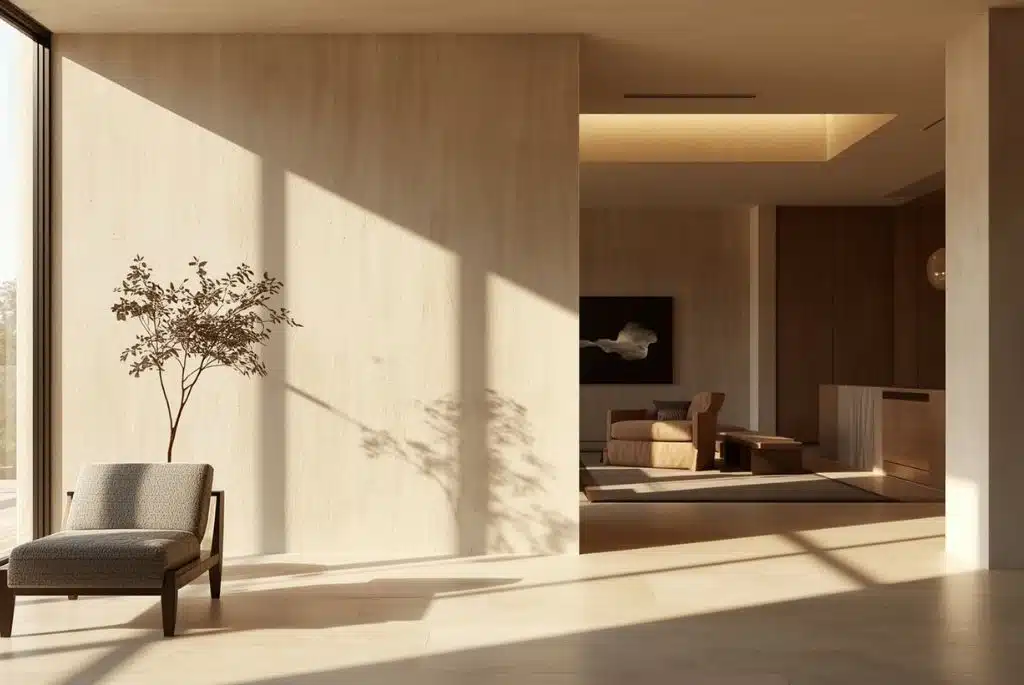
What you’re really doing when you design a futuristic house is stripping out everything unnecessary and being very precise about what stays. It’s not about gadgets. It’s not about a specific colour palette. It’s about a level of intention that most houses don’t have.
The homes that genuinely feel forward-looking ten or twenty years from now will be the ones that were thoughtfully edited today. That’s always been the difference between design that lasts and design that looks expensive for a moment.
The future, it turns out, is mostly about knowing when to stop.
Explore more architecture and home design ideas in our Architecture section.
Frequently Asked Questions
It’s less about one specific look and more about a set of decisions made together. Clean, uncluttered forms. Materials used in unexpected ways, like concrete paired with warm timber, or glass walls that fully retract. Technology that’s built into the architecture rather than added on top. And above all, restraint. The homes that feel most genuinely futuristic are the ones where nothing unnecessary made it through.
They can be, but not always for the reasons people assume. The cost usually isn’t in the gadgets or the flashy finishes. It’s in the precision. Seamless material transitions, bespoke joinery, large-format glazing, and custom pivoting doors all require skilled trades and careful coordination. That said, many of the ideas behind futuristic modern homes- open layouts, vertical light wells, a restrained material palette- cost nothing extra if you plan for them from the start.
Modern design is a historical style rooted in the mid-20th century. Clean lines, function over ornament, open plans. Futuristic design takes those principles and pushes further, incorporating advanced materials, integrated technology, and spatial ideas that challenge how we think rooms should work. A modern home feels timeless. A futuristic house feels like it’s already living slightly ahead of now.