Homes can have a unique ability to alter your pace.
Sunlight shows the rich patterns of the oak floors that have held the weight of generations. The kitchen table offers an easy appreciation for the beauty of nature with its bouquet of roses and is accompanied by a chair that will embrace you for a lifetime and books for timeless wisdom. All of these things coexist in this cottage with a purpose that is evident, but designed with modesty.
This is one of many examples of the beauty of the structures found in the English countryside.
The country home, first constructed for the countryside laborers, has become a source of inspiration the world over. These designs are not solely inspired by the visible wooden structures or nature’s patterns adorning the indoors. These designs inspire the community around the world to appreciate the natural materials and craftsmanship that breathe character and life into every space at a pace that is always cherished.
Perhaps this is the reason the style feels more relevant now than ever before. With trends that come and go in the blink of an eye, social media feeds that are perfectly curated, and mass-produced furniture, homeowners are more interested in having unique spaces over perfectly curated ones. The English cottage is the perfect style, because it is always timeless and never looks impertinent. People are always going to want something like the English cottage, because it is warm and has a lot of personality.
If you are looking to change your home, whether that is a country house you already own, a new home you are looking to build, or your current home and looking to add more personality to it, the English cottage style is a great inspiration for that. The English cottage style teaches that the best homes are not the most beautiful or the most expensive. It is the homes that tell the best stories.
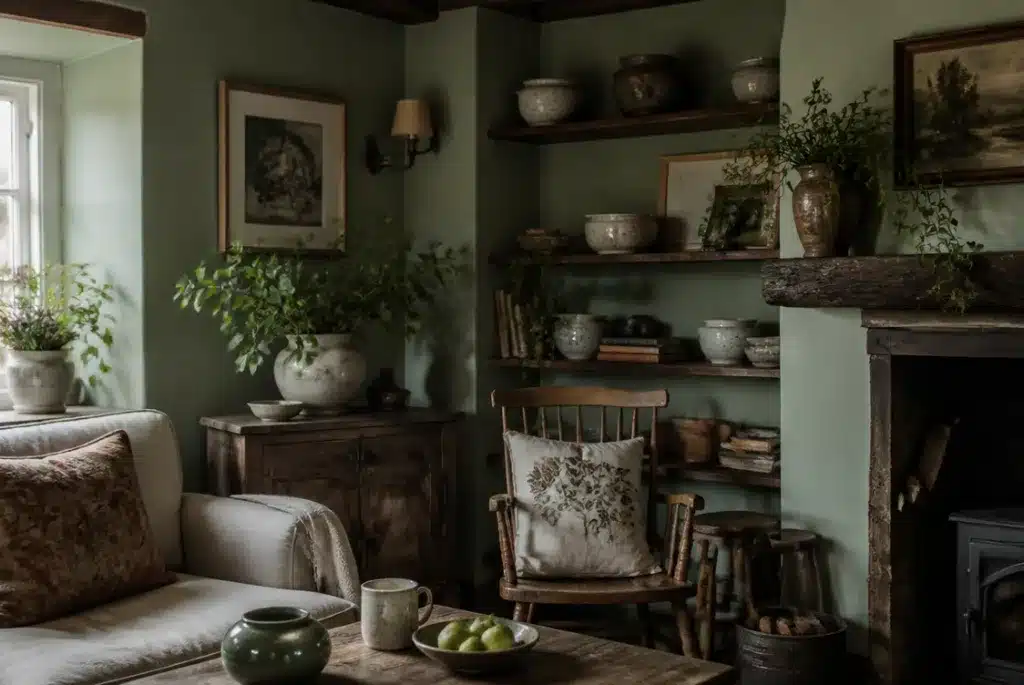
What Is an English Cottage?
An English Cottage is meant to conjure images of the English countryside. The earliest cottages date back centuries and used the resources around them to supply building materials. Limestone, timber, flint, bricks, and thatch lined the first cottages. The first cottages built were the first homes meant to withstand the comfort of the changing of the seasons while being built to withstand the wear of everyday life.
Somehow, these cottages became household design icons.
Compared to townhouses or English Country houses, cottages seem to have a design that welcomes intimacy. Cottages invite their visitors with small rooms and low ceilings. The delightful irregularity of the layout of a cottage provides a viewing seat for the garden and a gathering fireplace. The design of a cottage is not based on minimum requirements but on generations of craftsmanship.
Embracing design philosophies over perfection seems to be a unifying philosophy of English Cottages, seen in the cozy interiors and natural fabrics. English Cottages have layered fabrics and proudly displayed handmade ceramics.
The English Cottage style and philosophy embrace and decorate with timeless antiques and evolved nature-inspired design instead of the newest trends.
Why Everyone Is Falling in Love with the English Cottage Again
For many decades, people have longed for interiors that show their aspirations. In the last 10 years, the design of our homes has shown that we have a new relationship with our homes, allowing for the work, rest, and play that we all need. For this reason, we don’t just build beautiful homes anymore; we build homes that we love.
The current interest in the English cottage is a sign of this.
Minimalist and beautiful homes focus on a design that is clean and easy. The English cottage encourages you to enjoy life throughout your home. They encourage you to spend your mornings eating breakfast, your afternoons curled up reading by the fireplace, and your evenings filled with meals shared around a large table with friends.
The English cottage design has plenty to do with the rising trend of slow living. Rather than replace your décor and furniture, many are slowly choosing pieces that tell a story. Antique furniture and décor, woven textiles, vintage markets and handcrafted ceramics embrace the spot of the English cottage while showing that they are here for the long haul.
Further showing that English cottages embrace their surroundings are their large windows that frame the changing seasons like living artwork. Nature seems like an extension of the home, rather than decoration. It is used in many forms throughout the design.
It’s worth noting that the popularity of “cottagecore” on social media has introduced many people to this romantic aesthetic. Yet authentic English cottage interiors are far more nuanced than a collection of floral prints and vintage teacups. Their beauty comes from architectural integrity, thoughtful layering, and generations of craftsmanship, not from recreating a picture-perfect fantasy.
That distinction is what makes the style endure long after fleeting trends fade.
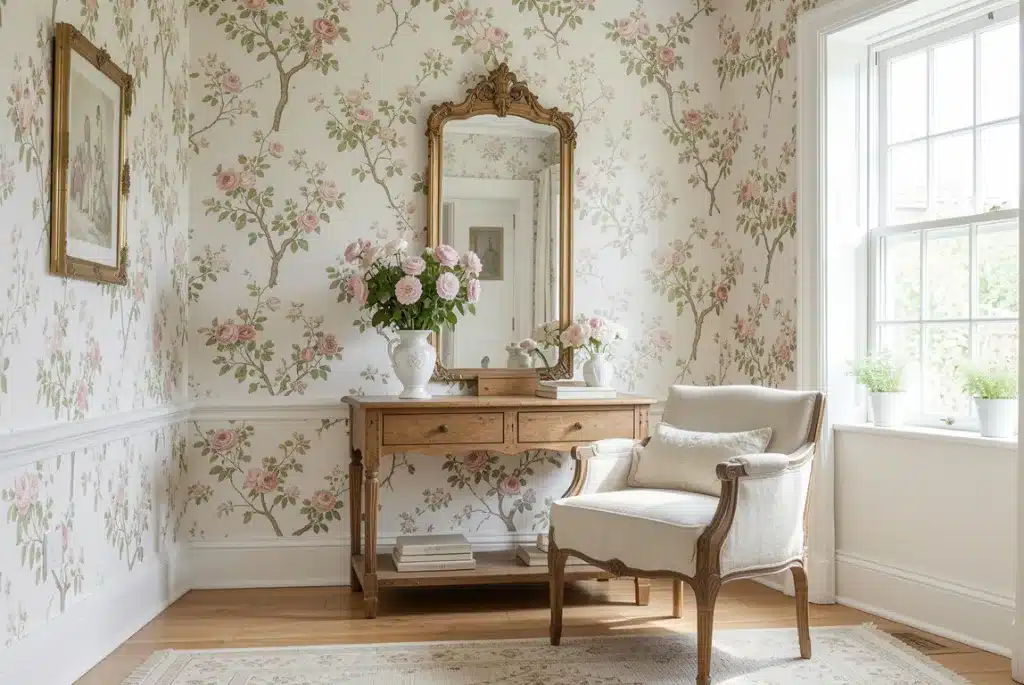
The Architecture That Gives an English Cottage Its Soul
The appeal of an English cottage starts even before one enters it. The architecture speaks of craftsmanship and building using local materials. It reflects homes that fit naturally into their surroundings.
As opposed to more recent developments, where conformity usually reigns supreme, each traditional cottage is unique in its way, giving it its special allure.
Storybook Exteriors with a Charm All Their Own
Imagine an English cottage, and it will come to mind in terms of a home surrounded by flowering gardens, covered with ivy, and smoke billowing out of the ancient brick chimney.
Although it might seem like it, most of the architectural features mentioned above came about for practical reasons and not out of pure decoration.
The steep roof allowed rainwater to run off fast during wet seasons in England. Thick walls of stone or bricks provided natural insulation, small paned windows used the technique of making glass at that time, and chimneys were necessary, as the fireplace provided heat in the home.
In short, this is how unique homes are formed.
- English cottage architecture typically features:
- Steeper-pitched gable roof constructed using slate, clay tiles, or traditional thatch.
- Exterior walls made from stone, brick, wood, or lime rendered which age gracefully.
- Dormer windows and traditional casement windows with divided panes.
- Timber entrance doors often adorned with climbing roses, lavender, or wisteria.
- Brick chimneys form an integral part of the house’s profile.
Rather than going for grandeur, they create something much more lasting – a sense of welcome.
Imperfection – The Key to Success?
The most important message that we can take away from English cottages is that perfectionism is overrated.
Explore an old English cottage, and you will soon realize that many things about it would have been fixed had it been constructed today. The floorboards have a slight tilt. The ceiling beams have evidence of craftsmanship from years past. Walls are crooked, and doorways are misaligned.
But it is those imperfections that make the house so charming.
They call it “patina,” that richness which builds up as a result of age and use. A table made out of oak wood will become richer through years and years of being touched by family hands than a replica that is newly bought. Brass will get that subtle shine, which is impossible to produce in any other way but with age. Stone-made fireplaces look even more beautiful with each winter.
An English cottage is not trying to hide those marks of living from us.
This idea of appreciating the age and craftsmanship of an old house is getting more and more popular in contemporary interior design, too. People stop tearing off old wooden beams and stop repairing things to make them look perfect.
The most beautiful houses are always those that are not flawless.
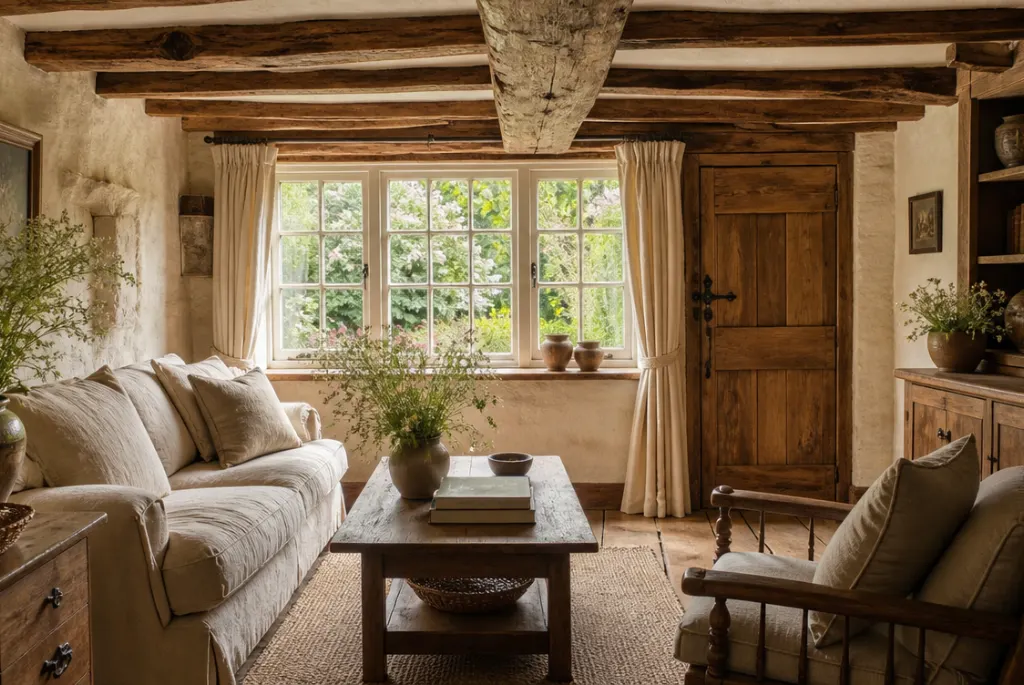
The Interior Design Secrets That Make an English Cottage Feel So Inviting
Whereas the design defines the character of the English cottage on the outside, the design of the interior gives the cottage a pulse.
When entering an English cottage which has been skillfully designed, it is possible to realize that there is absolutely no hurry or coordination in any way. The rooms look like they have been created organically, and there is a natural layering of textures and objects, as well as the use of comfortable furniture.
This is not achieved by putting old and flower-filled items all over the house.
Colours Inspired by the Countryside Landscape
The colors of English cottages do not vie for attention; rather, they reflect the landscape outside the windows.
One can think about the subdued green of the moss on a rainy day, the white of ancient limestone walls, the pale blue of the overcast sky, and the ochre of dry fields of wheat. All these natural, earthy tones create rooms that look calm through all seasons.
Commonly used colors are
- Sage and olive green
- Cream and ivory
- Dusty blue
- Buttery yellow
- Terracotta
- Mushroom grey
- Subdued blush pink
Instead of being painted in the same colour, rooms in English cottages vary slightly in their colour palette. A kitchen painted in sage green can blend with a buttery dining room, while a dusty blue bedroom provides calmness. All the colours are connected through their connection with nature.
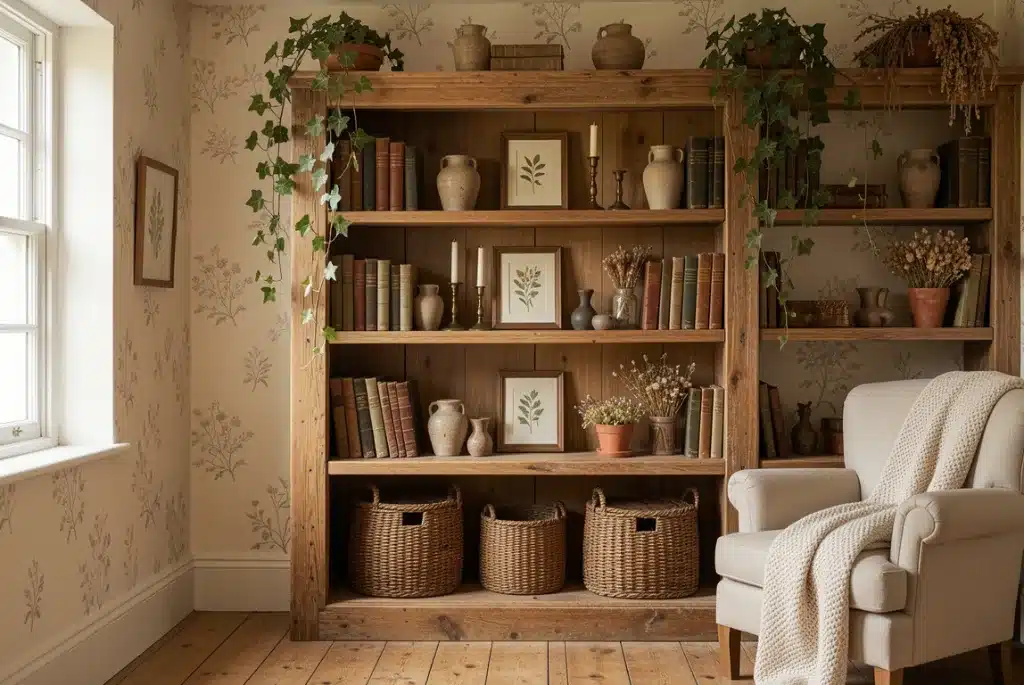
Materials Which Become More Beautiful Over Time
True authenticity requires genuine materials.
While contemporary interior design trends focus on the glossiness of materials and synthetic surfaces, the English cottage style values materials that become more beautiful as they grow old.
Years of treading on solid oak floors make them more beautiful. Linen curtains get softer with each wash. The handles made of brass become mellow with time, and handmade ceramics have small imperfections that make them unique.
Some of the best-loved materials include:
- Solid oak and reclaimed wood
- Limestone and slate
- Linen and cotton
- Wool blankets
- Handmade ceramics
- Rattan and wicker
- Brass and iron hardware
These materials are not only beautiful; they can also be touched.
Designing Each Room the English Cottage Way
Each room within an English cottage serves its function.
It is not about getting the perfect styling from the magazines, but rather making sure that each ritual is performed comfortably.
Living Rooms Where You Want to Spend More Time
The best living rooms of English cottages always allow you to relax.
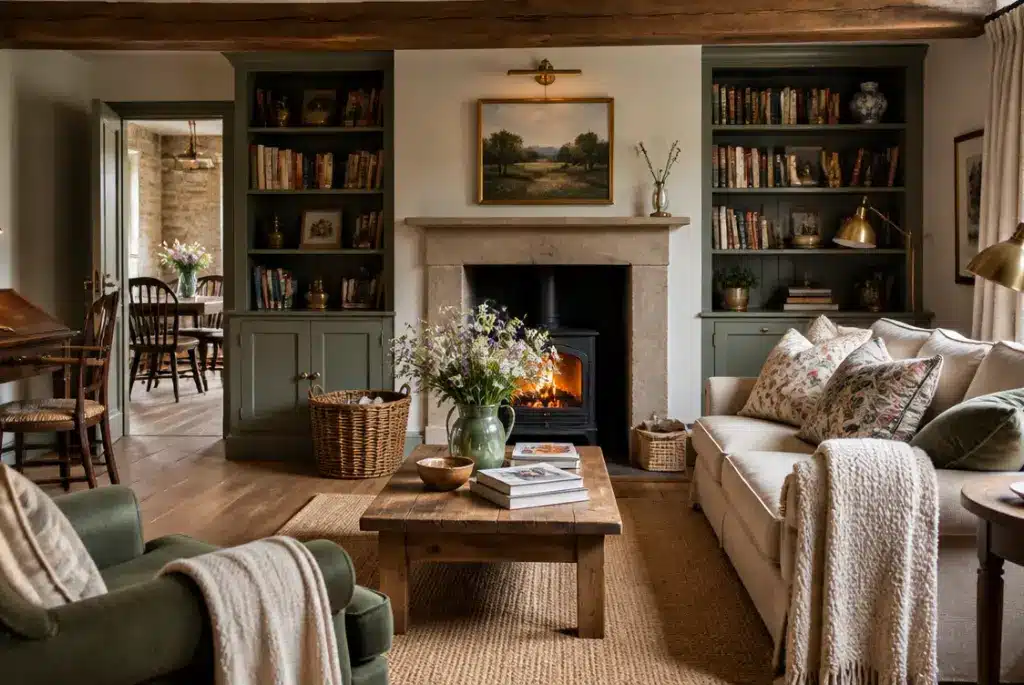
There is an inviting sofa near the fireplace filled with linen and knitted pillows. There are built-in shelves packed with well-worn books along with the family pictures and ceramics. There is a vintage coffee table with all the traces of tea drinking and family board games.
The lighting is no less important. Instead of having only one light source in the ceiling, the lighting in cottage interiors comes from table lights, wall sconces, and candles.
The atmosphere of English cottages is relaxing.
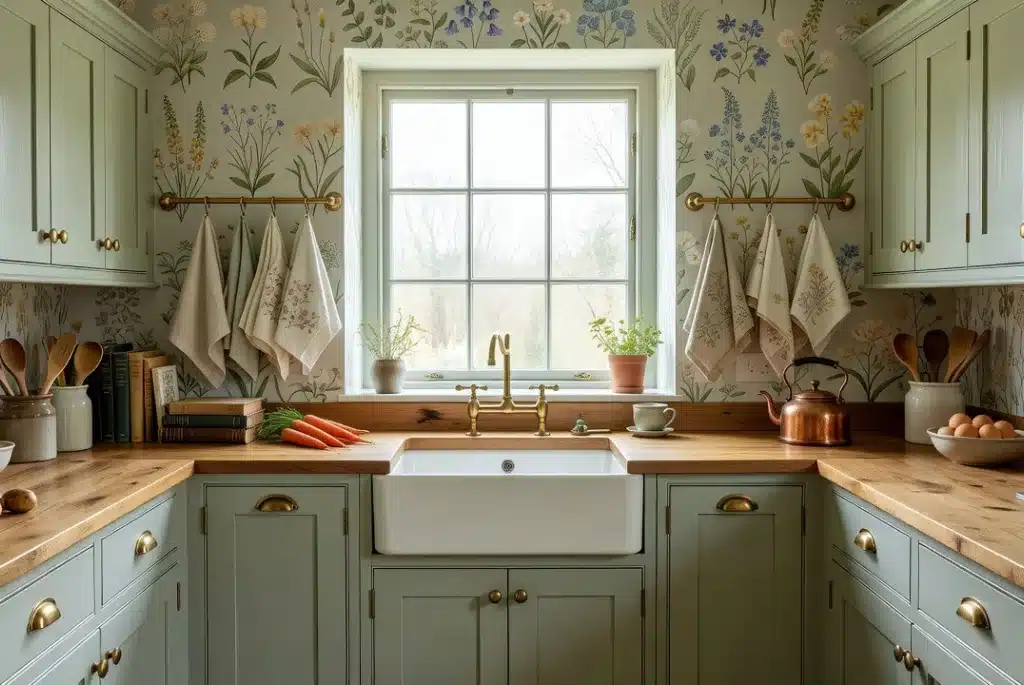
English Kitchens That Look Like the Heart of the Home
Well before the open-plan concept became popular, the kitchen was always the heart of any English cottage.
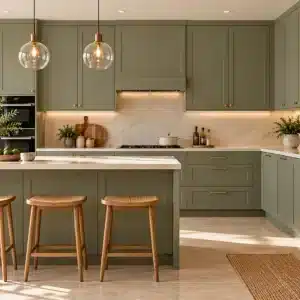
The use of traditional shaker cabinetry is a key characteristic because of its elegance and timeless appeal. Add natural wood countertops, a classic butler sink, brass fixtures, and open shelving holding functional ceramic crockery, and you have created an instant homey atmosphere.
Rather than concealing everything in cupboards, the English cottage kitchen makes the ordinary things look good. Copper cookware is hung overhead, pantry goods are stored in glass canisters, and wooden chopping boards lie around tiled wall surfaces.
Herbs and fresh-cut flowers from the garden round off the picture perfectly.
Comfortable Bedrooms Rather Than Perfect Ones
The cottage bedroom ought to be such a cozy space that one feels like getting into a book immediately after entering it.
The bedding consists of cotton bed sheets, duvet covers made of linen, quilts, and pillows covered in different materials. Antique nightstands, antique lamps, and paintings on wardrobe doors help decorate the bedroom without overdoing it.
Rather than striving for symmetry, the bedroom interior looks more relaxed and natural. One may have a comfortable chair in a corner, a pile of books on the floor, or a basket with extra blankets in the bedroom.
Bathrooms with Classic Charm
English cottage bathrooms combine functionality with elegance.
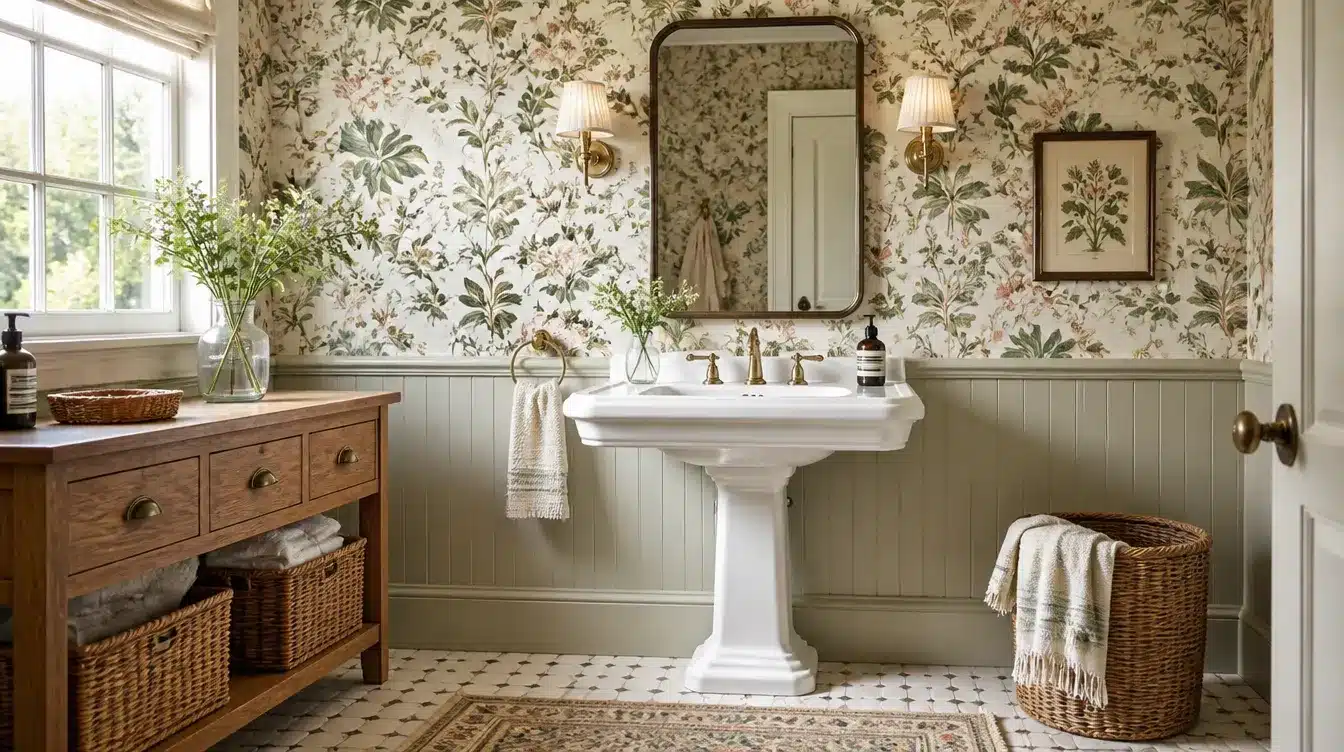
Bathtubs that stand alone, marble or stone finishes, beadboard paneling for walls, and classic brass fixtures provide a timeless background. Woven baskets, soft towels, and green plants provide warmth without any additional adornment.
Even the tiniest bathroom can be converted into a peaceful experience with natural elements and appropriate lighting.
Modern English Cottage House Plans Blend Tradition With Contemporary Living
Whereas historic cottages have been inspiring homeowners throughout the years, modern architects are now giving this style a new look to suit modern times.
Most of the english cottage house plans keep the charisma of old cottages intact in their exteriors, yet they come up with bright and efficient interiors. An open kitchen replaces the enclosed kitchen, large windows allow maximum sunlight, and the design also uses energy-efficient construction for comfortable living conditions.
The result is a house that keeps the tradition alive without forgetting its modern needs.
In the same way, many a english cottage style house plan includes traditional architectural elements like pitched roofs, brick facades, dormers, and timber details. Yet, they provide spacious interior space along with enough room for storage and workspace.
It is this combination of nostalgia and practicality that makes english cottages timeless.
For homeowners who are building their houses from scratch, the right selection of english cottage design house plans can help them in this regard.
English Cottage vs Modern Farmhouse vs French Country
| Feature | English Cottage | Modern Farmhouse | French Country |
| Overall Mood | Cosy, layered and collected | Bright, open and rustic | Elegant, refined and relaxed |
| Colour Palette | Soft earthy greens, creams and muted blues | Crisp white, black and natural wood | Warm neutrals, stone and gentle pastels |
| Furniture | Vintage pieces mixed over time | Clean-lined rustic furniture | Curved silhouettes with decorative detailing |
| Materials | Stone, oak, linen, wool and brass | Reclaimed wood, metal and concrete | Limestone, oak, iron and natural linen |
| Design Philosophy | Character through age and craftsmanship | Simplicity with rustic charm | Sophisticated country living |
While all three styles celebrate natural materials, the English cottage feels the most intimate and emotionally layered, favoring collected character over polished perfection.
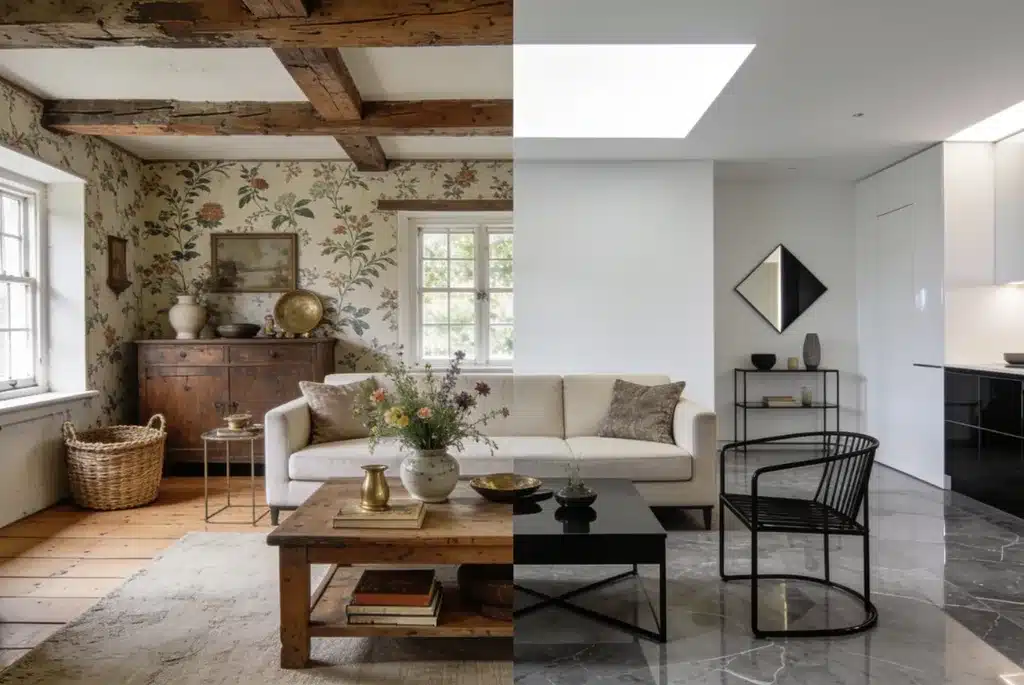
Five Design Mistakes That Instantly Ruin the English Cottage Look
One of the most misunderstood aspects of the interiors of cottages is their supposed lack of style or excessive embellishments. In actuality, less can be just as good as more in a well-designed cottage.
Things to avoid:
- Buying all items at one time. True cottages take time to develop rather than happen in one big shopping excursion.
- Coordinating every furnishing item. A collected house is much more exciting than a planned one from a showroom.
- Excessive use of flowers. Floral designs can be beautiful, but only when balanced by stripes, plaids, solids, and fabrics.
- Failing to consider lighting. Cool white LED lighting will immediately strip your cottage of its character. Layer in warm lighting.
- Assuming that clutter adds character. Every item needs to either serve a purpose or have a story.
Also read: Tudor Architecture: History, Meaning, and Modern Living
Designer Secrets for Creating an Authentic English Cottage
Learn from examples of houses created by famous interior designers, and you will see that they do not use only luxurious furniture. The atmosphere is what really matters.
Several rules make the house unique:
- First comes architecture, then comes décor. Make use of the existing elements such as beams, fireplaces, wooden floors, or stone walls as much as possible.
- Use textures rather than colors. Combining linen, wool, oak, and brass can add layers.
- Combine vintage and modern items without turning your house into a museum.
- Instead of putting ornaments on each shelf, put there your books, artworks, and objects that are interesting to you.
- Use flowers, branches, and greenery to make your house closer to the natural environment around it.
- Make some space to breathe. Not all walls should be decorated.
The most outstanding English cottages were not designed but discovered.
The true charm of an english cottage comes from much more than its charming design or vintage-style interior. This type of architecture allows you to remember that imperfections are what make your home special.
The charm of the english cottage consists of old and well-finished wooden beams, a favorite chair near the fireplace, linen curtains that are rustled by the afternoon wind, and rooms filled not with new things but with memories. Everything in this kind of a home is about slowing down, sitting down, enjoying and appreciating the small things of daily life.
No matter if you search for english cottage house plans, compare english cottage style house plans, admire classic english cottage homes, or even develop your project based on english cottage design house plans – always keep in mind the idea behind these homes. Build your house in time and choose materials that become better with age. Collect things that tell stories about yourself rather than following new trends.
Because the best interiors will never be new ones, they will be those that seem to belong to another era and were cherished for many years.
FAQ
Definitely. The modern-day English cottages are a perfect fusion of classic architecture and open space along with energy efficiency, spacious kitchens, and storage facilities.
The use of nature-derived colors such as sage green, cream, dusty blue, terracotta, mushroom grey, olive, and butter yellow gives the cozy and inviting feeling that is created in English cottages.
Add natural elements, layer linens and wool textiles, combine antique and modern furniture pieces, add warm ambient lighting, and decorate with meaningful decor and fresh flowers or greenery. Minor adjustments can bring out the English cottage charm without extensive remodeling.