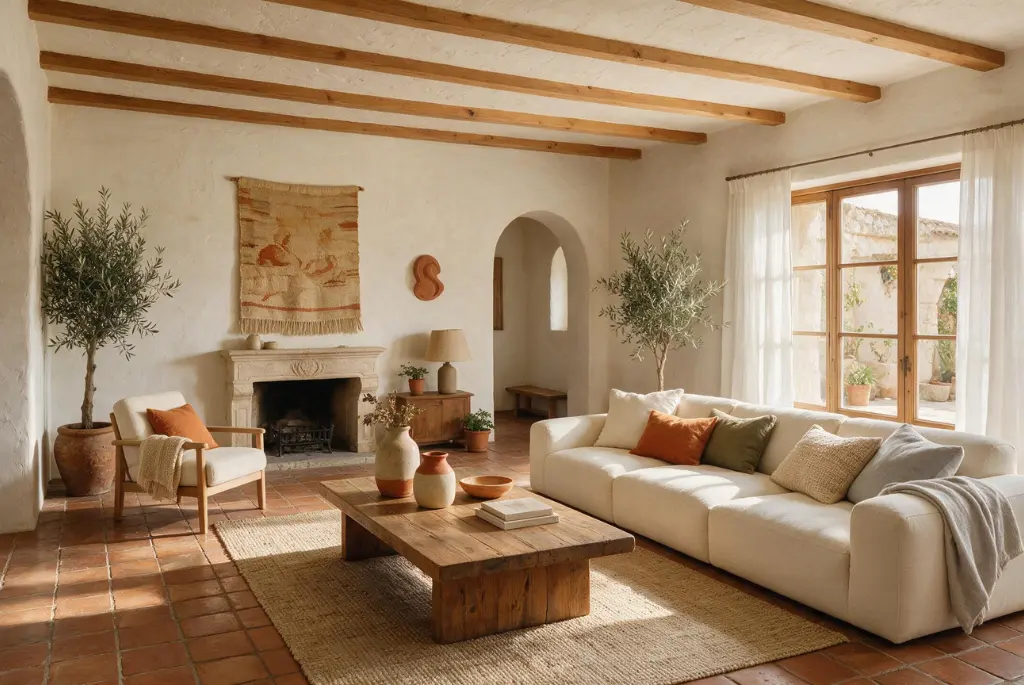
Some interiors look finished the moment the furniture arrives. Others become more interesting with time. A worn wooden table, a slightly uneven plaster wall, handmade pottery on an open shelf and sunlight moving across a terracotta floor can give a room the feeling that it has always belonged there.
That quality is at the heart of modern Spanish interior design.
It is not about recreating an old Spanish villa or filling a contemporary apartment with arches and terracotta tiles. Instead, the style takes familiar Spanish architectural details and combines them with cleaner furniture, simpler layouts and a more relaxed approach to decoration. Natural materials, earthy colours and craftsmanship remain important, but the overall result feels lighter and more current.
Perhaps that is why the look feels so comfortable in contemporary homes. It has character without becoming overly formal, and warmth without sacrificing simplicity.
Where Old Meets New
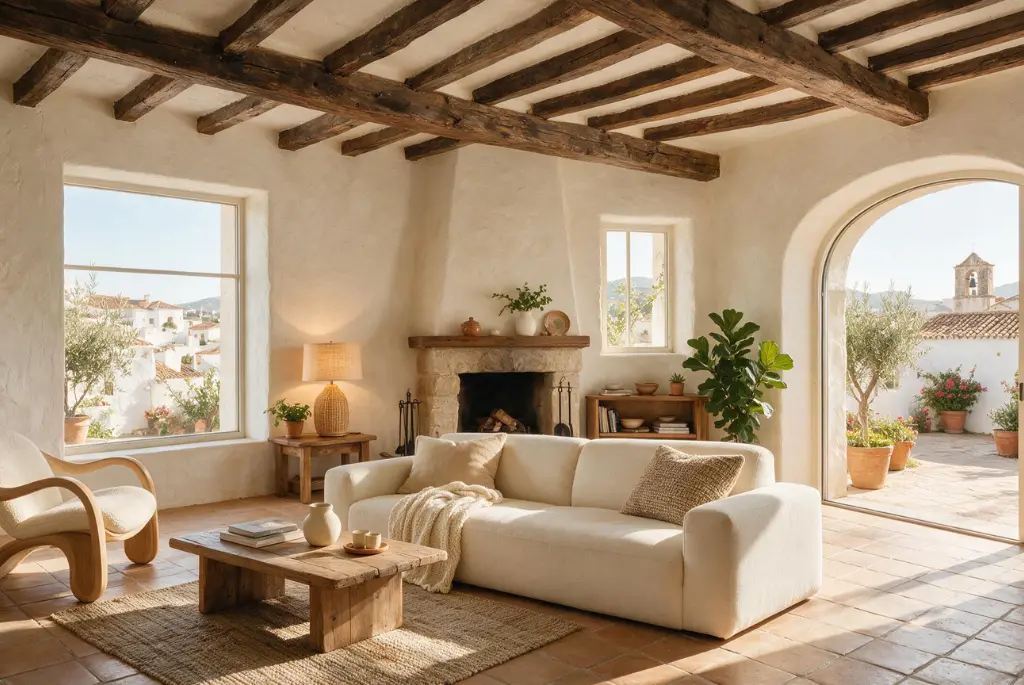
The appeal of modern Spanish interior design comes from contrast.
Traditional Spanish spaces often draw their character from stucco, timber beams, terracotta, ironwork, ceramic tiles and strong connections to outdoor spaces. The contemporary interpretation keeps those ingredients but edits them. Furniture becomes cleaner, decorative objects are used with greater restraint, and architectural details are given room to breathe.
The result is neither completely rustic nor strictly minimalist.
A modern sofa can sit beneath exposed timber beams. A simple stone fireplace can share a room with a sculptural contemporary chair. Handmade ceramics can occupy an otherwise streamlined kitchen.
That tension between periods is what gives the style its personality.
The Architecture Comes First
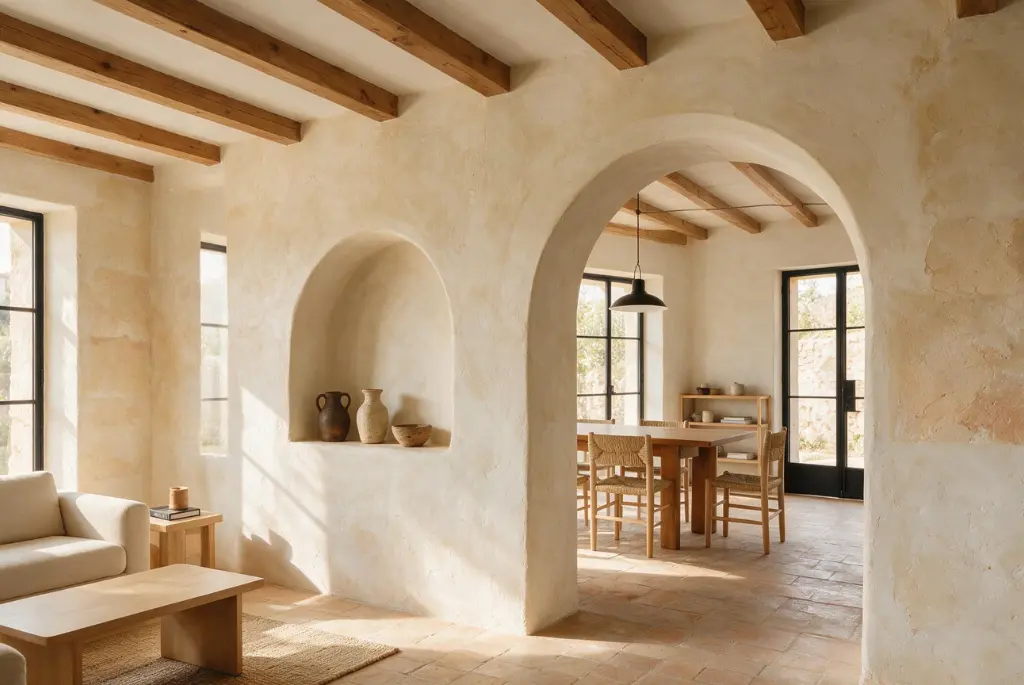
One of the most important things to understand about modern Spanish interior design is that it starts with the bones of a room.
Rather than trying to create the aesthetic through accessories alone, look first at walls, ceilings, openings, floors and fireplaces. Spanish-inspired interiors are often defined by architectural elements such as arches, stucco, terracotta, wood beams and iron.
Arches Without the Excess
Arches are probably the detail most people associate with Spanish interiors. In a contemporary home, however, they work best when used sparingly.
An arched doorway between a living room and dining area can soften the transition between spaces. A shallow arched niche can frame a collection of ceramics. Even a curved alcove can introduce the same architectural language without turning the room into a themed interior.
The important thing is proportion.
One carefully considered curve can have more impact than a room full of them.
Walls with a Little Imperfection
Perfectly flat painted walls can make an interior feel visually sterile. Plaster and limewash-style finishes offer another possibility, catching daylight unevenly and creating subtle movement across the surface.
The colour does not need to be dramatic. Warm white, cream, sand, and pale clay can be enough.
The attraction lies in the surface itself.
Materials That Feel Grounded
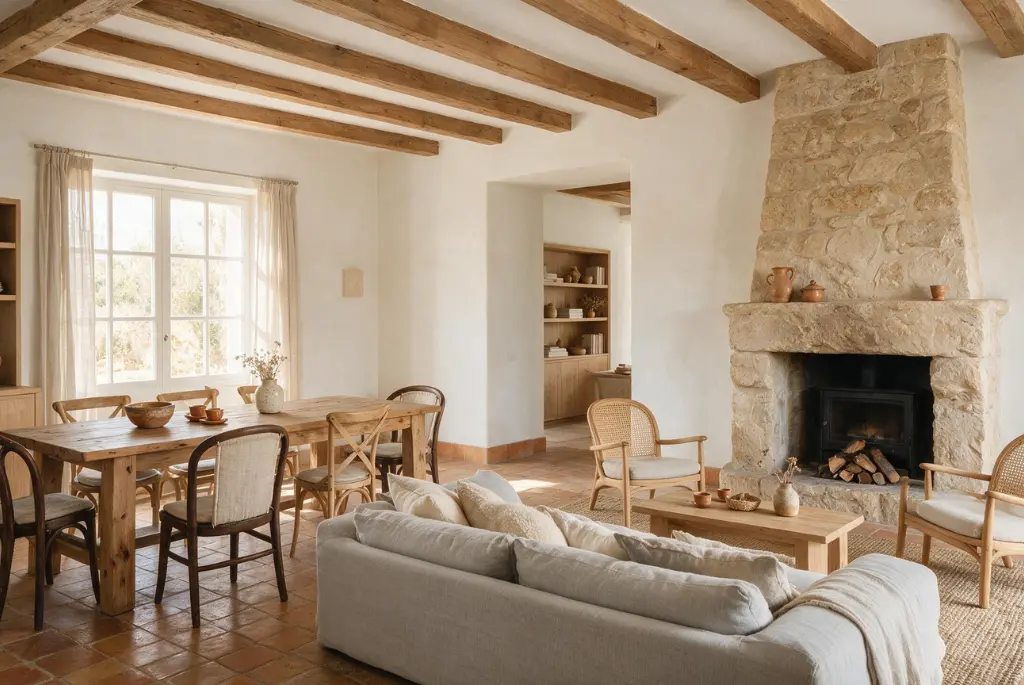
Natural materials are central to modern Spanish interior design because they provide the texture and warmth that prevent contemporary spaces from feeling too polished. Timber, stone and terracotta are particularly effective foundations.
Timber
Wood brings an immediate sense of age and permanence.
It can appear as exposed ceiling beams, a dining table, cabinetry, flooring or a single substantial piece of furniture. Darker timber creates a stronger contrast against pale walls, while lighter oak gives the room a more relaxed contemporary character.
There is no need to match every wooden surface. Slight variations in tone can make the interior feel collected rather than showroom-perfect.
Terracotta
Terracotta brings the colour of sun-baked earth indoors.
It works beautifully as flooring, around fireplaces or through smaller decorative pieces. The natural variation found in terracotta is part of its appeal, particularly when paired with smooth plaster and simple contemporary furniture.
If a full terracotta floor feels too strong, a smaller application can achieve a similar effect through planters, vessels or selected tiles.
Stone
Stone introduces visual weight.
A stone fireplace, countertop or occasional table can become a quiet focal point, particularly when surrounded by softer materials such as linen, wool or cotton.
The contrast is important. Hard surfaces feel more inviting when they are balanced by things that look and feel comfortable.
A Palette Inspired by the Landscape
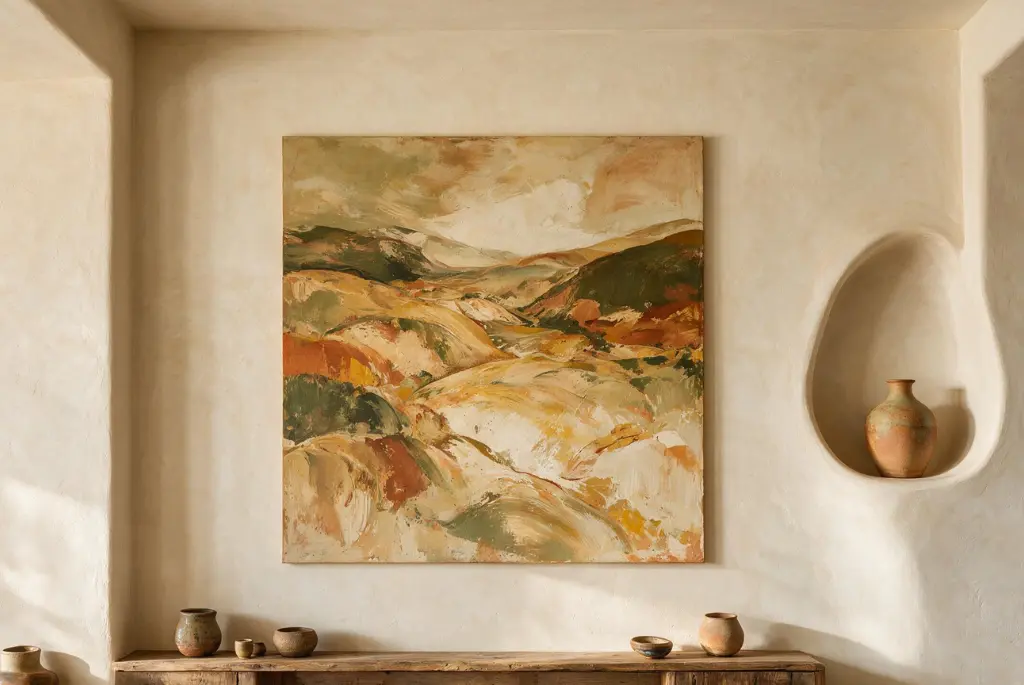
The colours associated with modern Spanish interior design tend to feel as though they have been softened by sunlight.
Terracotta, olive, saffron, rust, sandy beige and warm white form a natural starting point, while deeper greens and blues can provide occasional contrast.
The trick is not to use every colour at once.
A successful room might begin with warm ivory walls, add walnut furniture and introduce terracotta through a rug or ceramic vase. Another could use olive green upholstery against pale plaster.
Think of the palette as layers rather than blocks of colour.
| Base | Supporting tones | Accent |
| Warm white | Sand and beige | Terracotta |
| Cream | Walnut and tan | Olive |
| Pale plaster | Natural stone | Rust |
| Soft beige | Aged wood | Deep blue |
| Warm grey | Linen and clay | Muted green |
This keeps the room visually calm while allowing the warmer colours to have their moment.
Texture Does the Heavy Lifting
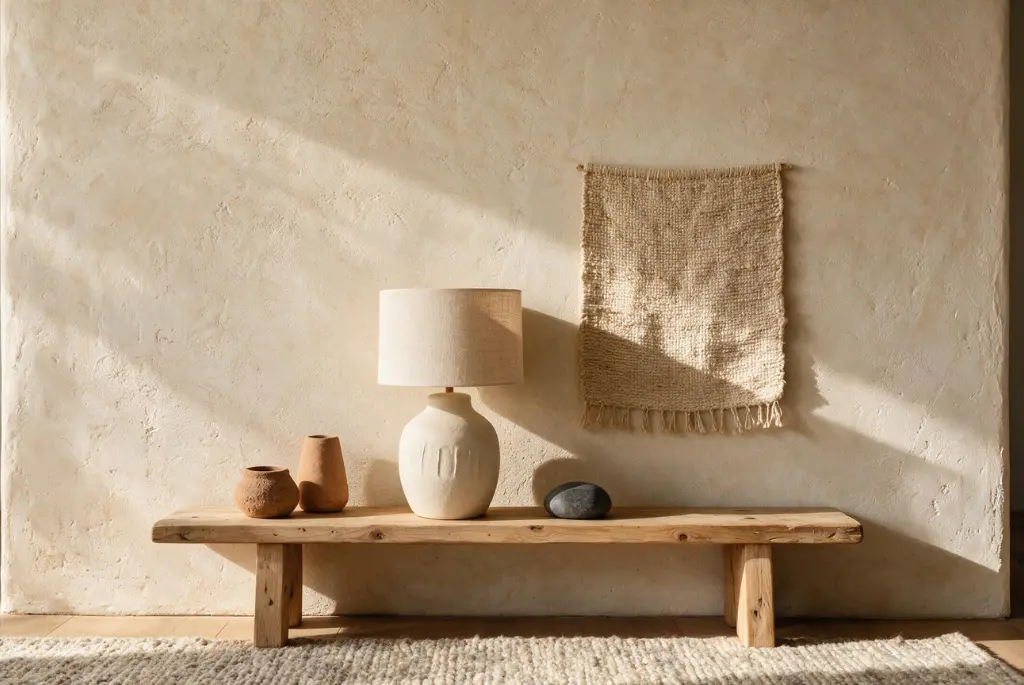
Colour may establish the palette, but texture gives modern Spanish interior design its depth.
Consider what happens when a smooth plaster wall sits behind a rough timber console. Add a linen sofa, a woven rug, a ceramic lamp and a slightly weathered wooden table. None of those pieces needs to be particularly elaborate. Together, however, they create a room that feels tactile and layered.
Natural fibres work particularly well here. Linen, cotton, wool, jute and woven materials can soften stone, wood and metal.
The contrast should be noticeable but not chaotic.
A room becomes richer when the eye has different surfaces to move across.
Furniture with a Story
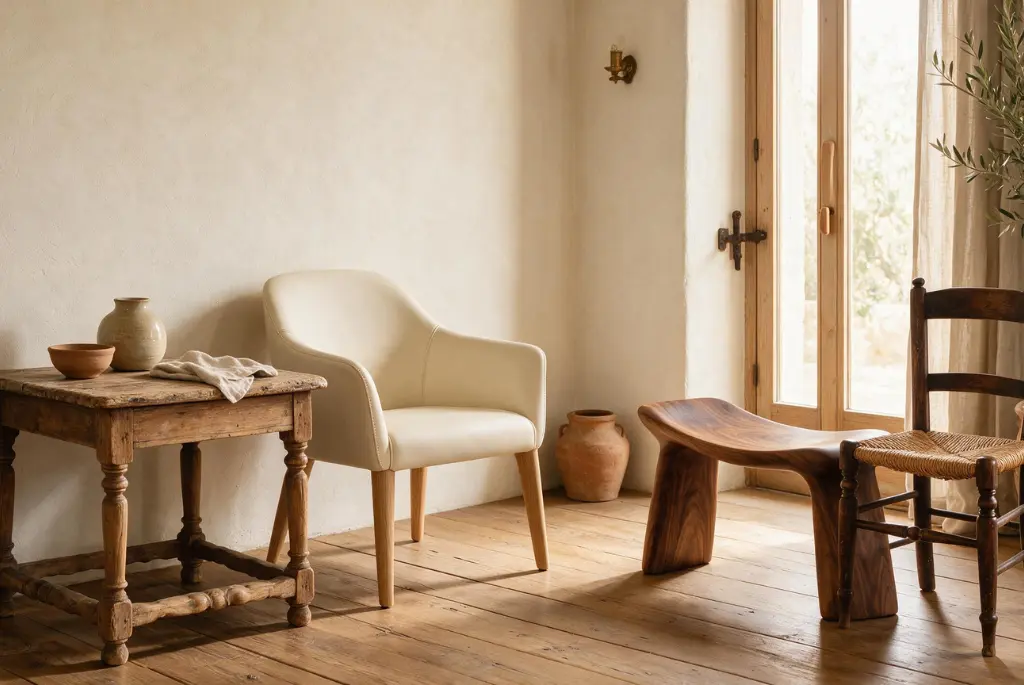
Furniture is where the modern interpretation becomes more relaxed.
Rather than filling a room with matching pieces, combine contemporary silhouettes with vintage or handcrafted furniture. This mix is central to spanish modern design, where older pieces can bring character while newer ones provide comfort and function.
Imagine a clean-lined cream sofa paired with an old wooden side table. Or a contemporary dining table surrounded by chairs with woven seats.
The furniture does not have to be Spanish-made to work. What matters is its material, shape and relationship with the rest of the room.
A few pieces with visible craftsmanship are usually more effective than a large collection of decorative reproductions.
Light Changes Everything
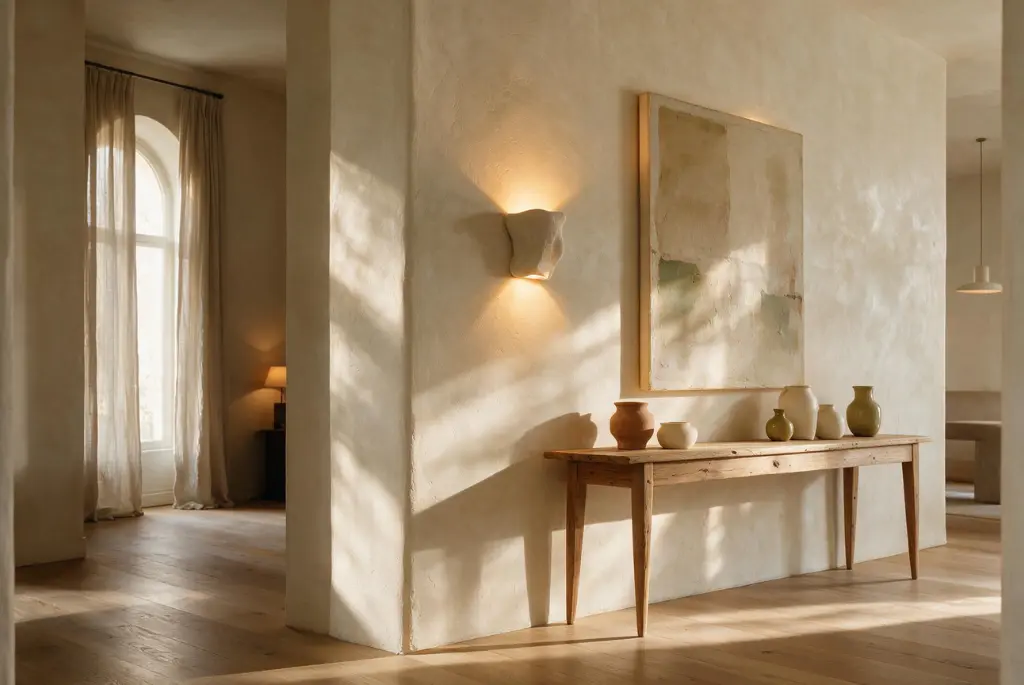
Natural light is an important part of modern Spanish interior design.
Large windows, skylights and mirrors can help distribute daylight, while lightweight curtains soften direct sunlight without making rooms feel enclosed. At night, layered lighting can shift the atmosphere from bright and social to quiet and intimate.
Think Beyond the Ceiling Light
Instead of relying on one central fixture, combine several sources:
- Wall sconces for soft background light
- Table lamps for smaller pools of illumination
- Pendant lights above dining tables or kitchen islands
- Accent lighting for artwork or architectural features
- Dimmable fixtures for evening flexibility
Lighting should reveal the materials rather than flatten them.
A textured plaster wall looks completely different under a warm wall sconce than it does under a bright overhead fixture.
The Fireplace as a Focal Point
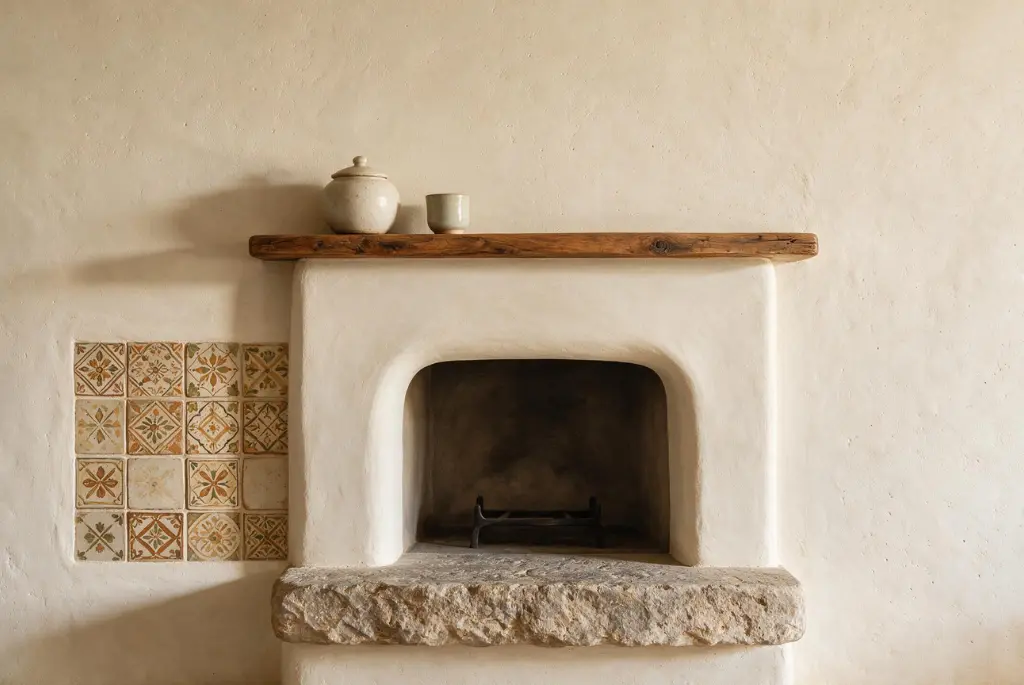
A fireplace can anchor an entire Spanish-inspired living room.
The contemporary approach is usually more restrained. Rather than covering the surround with multiple decorative objects, let the shape and material of the fireplace speak for themselves.
A simple plaster surround can look striking against a textured wall. A stone fireplace can bring weight to a pale room. A timber mantel can introduce another layer of warmth.
The principle is simple: if the architecture already has character, it does not need to be overwhelmed by decoration. Fireplaces and other strong architectural features are frequently used as focal points in contemporary Spanish-inspired interiors.
Tile, but with Restraint
Ceramic tile has a long association with Spanish interiors, but contemporary spaces tend to use it more selectively.
A patterned backsplash can become the visual centre of a kitchen. Handmade tiles can frame a fireplace or add interest to a bathroom. A small section of decorative flooring can define an entrance without dominating the entire house.
This is where restraint matters.
A beautiful tile deserves space around it. When every surface competes for attention, the craftsmanship becomes harder to appreciate.
Bringing the Outside In
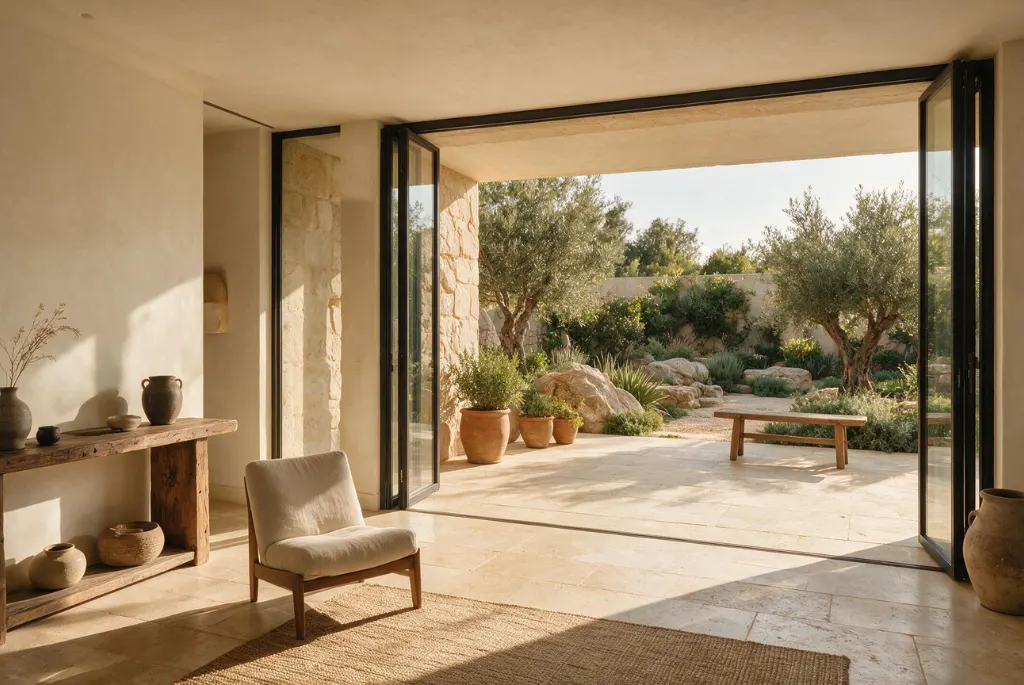
The connection between indoor and outdoor living is another important part of the style.
Spanish contemporary interiors often use open layouts, large openings and patios or terraces to create continuity between the home and its surroundings. Decorilla highlights this relationship through large sliding or folding doors and visually continuous flooring, while contemporary Spanish architecture also frequently uses courtyards to connect rooms with daylight, vegetation and outdoor space.
Not every home has a Mediterranean courtyard, of course.
A balcony can still become part of the composition. So can a garden, terrace or even a generously planted window.
Repeat materials where possible. A stone floor inside can visually relate to a terrace outside. Similar colours can help make the transition feel intentional.
Room by Room
The versatility of modern Spanish interior design becomes clearer when it moves beyond the living room.
Living Room
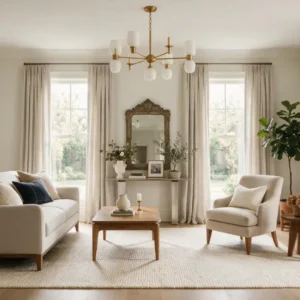
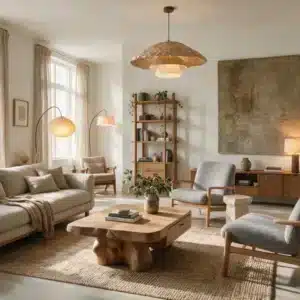
Begin with warm walls and one substantial natural material, such as timber or stone.
A neutral sofa, low wooden table, woven rug and a few ceramic objects are enough to establish the mood. Add a vintage chair or carved cabinet for contrast.
Keep the centre of the room relatively open. The space should encourage conversation and movement rather than feel arranged purely for photographs.
Kitchen
The kitchen is an ideal place for the style’s old-meets-new character.
Combine contemporary appliances and practical cabinetry with natural timber, stone countertops or handmade-look tiles. Open shelving can provide space for ceramics, wooden serving boards and glassware.
If the cabinetry is modern and simple, the materiality can provide the warmth.
Bedroom
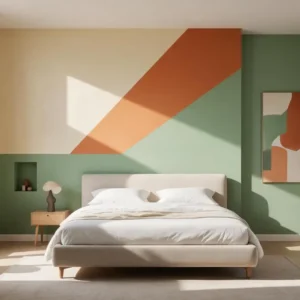
Bedrooms benefit from the quieter side of the palette.
Use warm white walls, linen bedding, timber bedside tables and a muted terracotta, olive or rust accent. A woven pendant or ceramic lamp can add another layer without making the room feel busy.
The objective is comfort first.
Bathroom
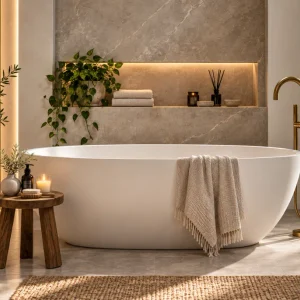
Bathrooms can be particularly effective when the materials are allowed to do the decorating.
Think plaster-like walls, stone, timber and handmade ceramic tiles. Keep the hardware simple and introduce black or aged metal sparingly.
A small plant in a terracotta pot can soften an otherwise hard material palette.
Old and New Together
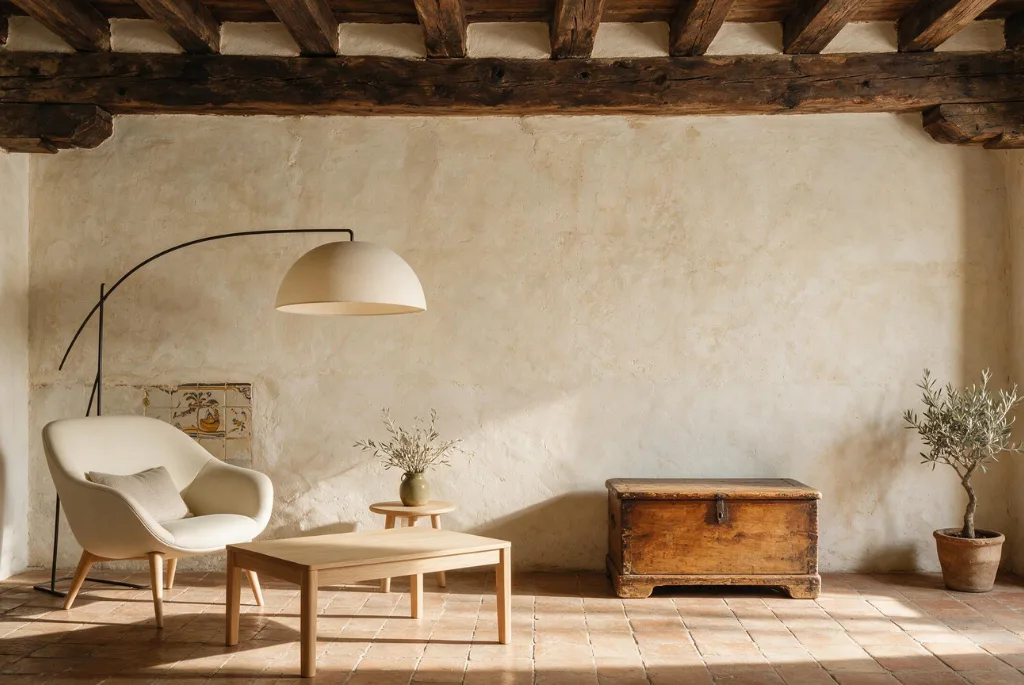
The best spanish modern interior design does not try to hide the age of traditional elements.
Instead, it places them beside contemporary pieces.
| Traditional influence | Modern interpretation |
| Exposed timber beams | Clean-lined timber furniture |
| Terracotta flooring | Selective terracotta accents |
| Stucco walls | Soft plaster or limewash |
| Ornate ironwork | Minimal metal lighting |
| Decorative ceramic tile | Focused backsplash or niche |
| Antique furniture | Vintage piece beside modern seating |
| Courtyard | Indoor-outdoor living |
| Traditional fireplace | Simple architectural focal point |
The contrast gives the interior its energy.
A contemporary sofa looks more interesting beside an aged wooden chest than beside another perfectly new piece.
A Little Greenery
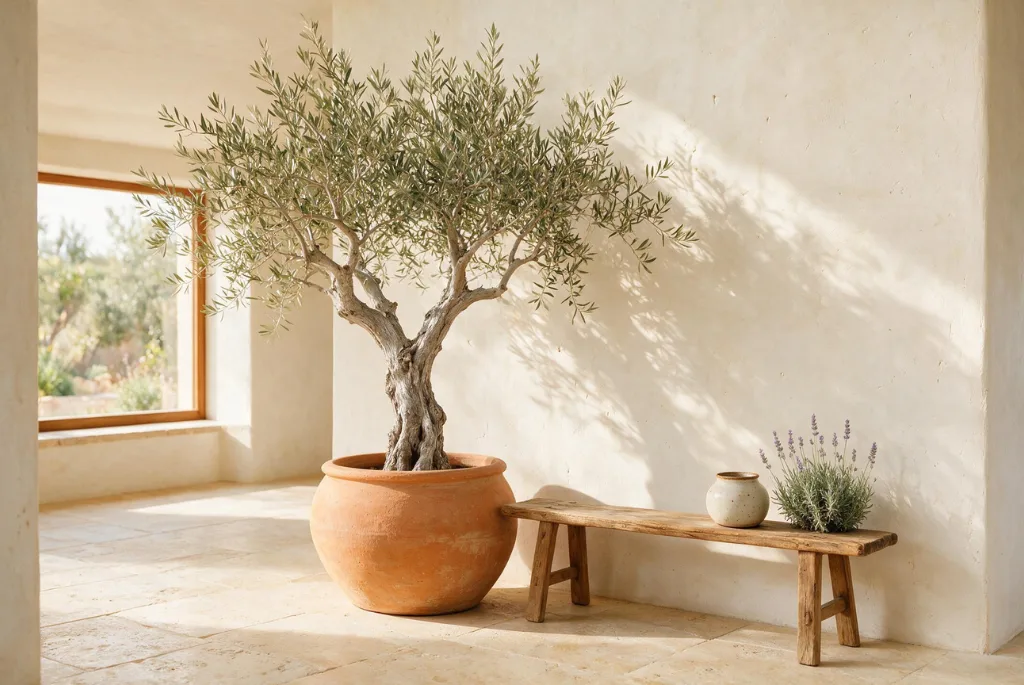
Plants can bring another layer of life into the room.
Mediterranean references such as olive trees, lavender and citrus plants can reinforce the connection with the landscape, while simpler greenery works equally well in apartments. Decorilla also recommends using terracotta planters to echo the material palette of Spanish architecture.
Again, restraint helps.
One large plant can have more impact than several small ones scattered around the room.
Common Mistakes
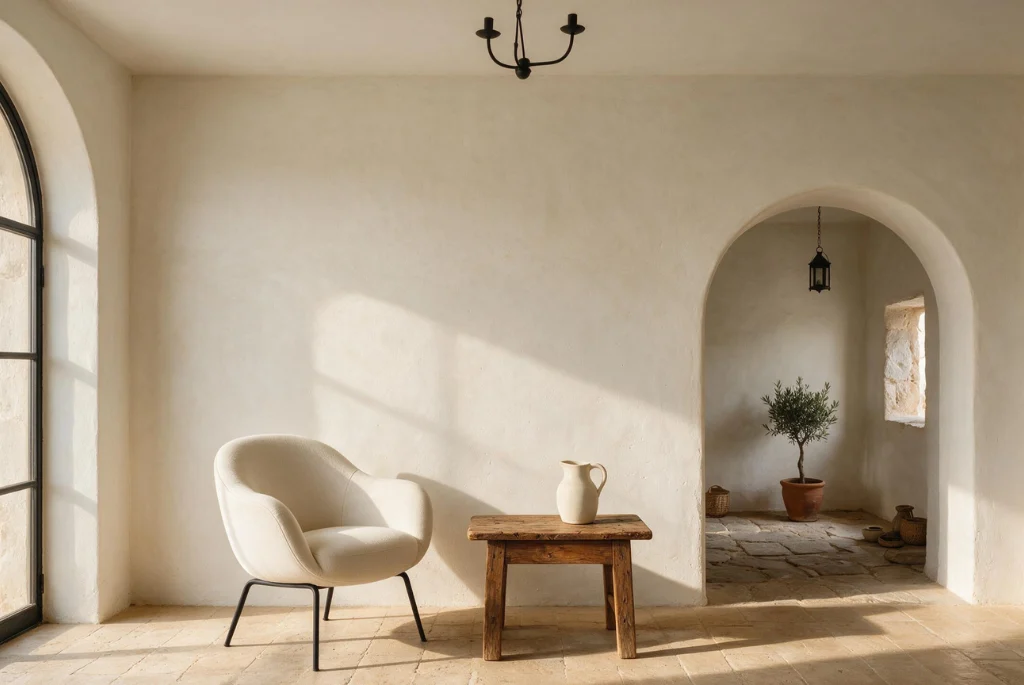
The easiest way to lose the character of modern Spanish interior design is to treat it like a checklist.
Adding an arch, terracotta tiles, black iron, patterned ceramics and rustic furniture does not automatically create a convincing interior.
Too Much Rustic Detail
If every piece looks aged, the room can begin to feel like a set rather than a home.
Balance rustic materials with contemporary furniture.
Too Many Colours
Earthy colours work beautifully together, but they still need hierarchy. Choose a dominant neutral, one or two supporting tones and a smaller accent.
Overusing Arches
Curves should have a reason. Repeating them in every doorway, mirror and piece of furniture can make the design feel overly deliberate.
Matching Everything
A perfectly coordinated room can lose the relaxed quality that makes the style appealing.
Allow different wood, fabric, and furniture periods to coexist.
Also read: 70s Kitchen: Bring Retro Charm Into a Modern Home
Making the Look Work in a Modern Home
You do not need a Spanish-style property to introduce the aesthetic.
Start with the elements that are easiest to change:
- Warm up the wall colour.
- Add one substantial timber piece.
- Introduce linen or woven textiles.
- Bring in terracotta through pottery or flooring.
- Replace harsh lighting with warmer layered sources.
- Add one vintage or handcrafted piece.
- Use greenery to soften the room.
If the home already has architectural details such as beams, brick, arches or a fireplace, let them remain visible rather than covering them with unnecessary decoration.
That is often where the most convincing transformation begins.
Creating a Home That Feels Timeless
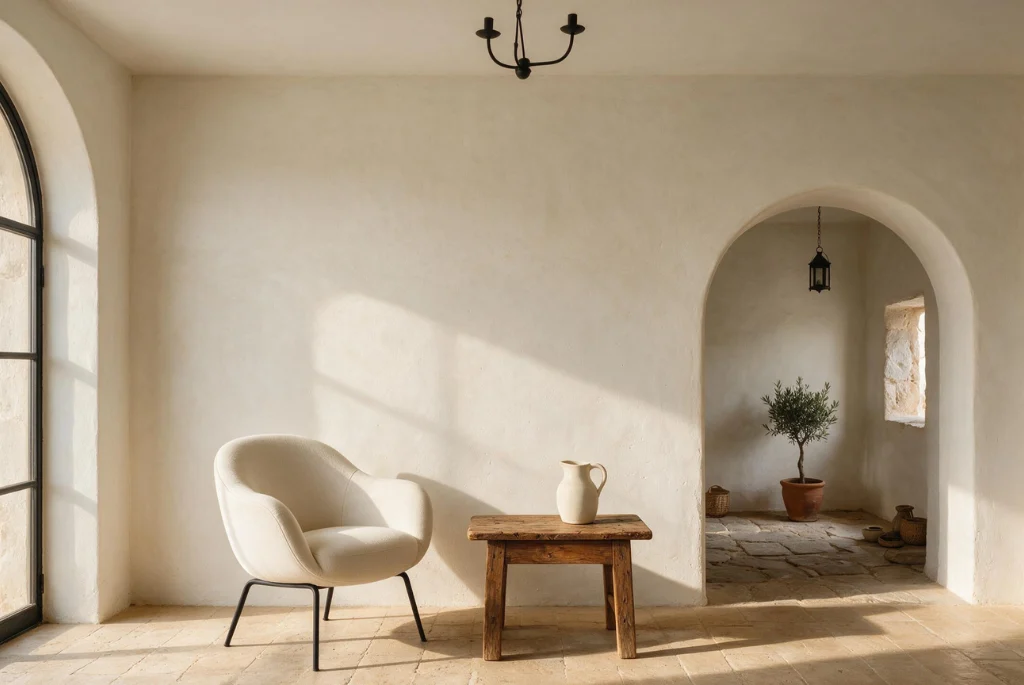
What makes modern Spanish interior design so appealing is its sense of balance.
It does not ask a contemporary home to become rustic, nor does it strip traditional details of their character. Instead, it allows the two languages to sit together. Rough timber can meet clean upholstery. A handmade tile can sit beside modern cabinetry. A centuries-old architectural idea can feel perfectly natural in a new apartment.
There is also something refreshingly human about the style.
It leaves room for imperfections, objects collected over time and materials that become better with age. The result is not a room that looks untouched. It is a room that looks lived in.
For homeowners looking beyond fleeting trends, modern Spanish interior design offers a more enduring approach: build around natural materials, let architecture lead, bring in texture, keep the palette warm and give meaningful pieces enough space to be noticed.
The goal is not to make a home look Spanish.
It is to make it feel warm, considered, and genuinely lived in.
FAQs
Modern Spanish interior design combines traditional Spanish architectural and material influences with contemporary furniture, cleaner lines and a more restrained approach to decoration. Natural materials, earthy colours, texture and architectural details such as arches and timber beams are central to the look.
Yes. The style can translate well into apartments because it does not depend on large rooms. Warm walls, streamlined furniture, natural textures, carefully selected ceramics and good lighting can create the atmosphere without taking up much space.
Timber, terracotta, stone, ceramic, plaster, linen, wool and iron are particularly useful. Combining hard materials such as stone with softer textiles creates the layered quality associated with the style.