The living room is where life unfolds. It’s where families gather after a long day, friends come together over coffee, and quiet evenings turn into cherished memories. More than just another room in the house, it’s a reflection of your personality, lifestyle, and the way you love to live.
This is why planning is important for your living room interior design. A good living room design goes beyond the furniture or décor; it should be an inviting space, functional for your everyday living, and adaptable to your changing needs. If you’re redesigning or starting new, the right choices will completely change the atmosphere.
Everything from choosing the best furniture arrangement to coordinating textures, lighting, and colors, layering, and other elements that help establish equilibrium and comfort in the environment works together to create the right space. The best part? You don’t need to spend a lot or remodel to see a big difference. The best design decisions are usually the simplest.
Use this guide to combine vintage styling philosophies with modern living ideas and inspiration to create a unique living room that blends style with your everyday needs. If you have been searching for interior design ideas for living room that incorporate relaxed comfort, you have come to the right place.
Why Living Room Interior Design Matters More Than You Think
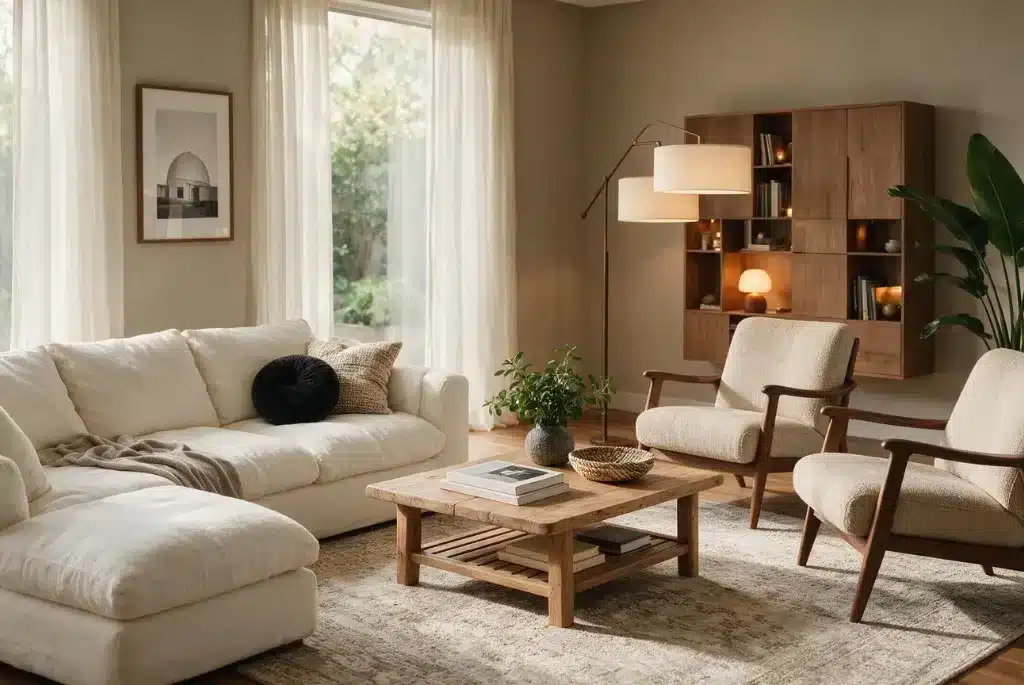
Designing your home begins with how you design your living room. Being the most frequented and, in most cases, the largest area in your home, it is the most important area to design intentionally.
A living room interior design combines comfort and functionality. Typical designs have furniture arranged around the television and décor in empty corners. A good design considers how people will move through the space and interact with one another.
For instance, a small space would likely feature multifunctional furniture and creative storage. In contrast, a larger space would have larger furniture, such as couches, as well as more substantial lighting and separate areas for different conversations. The ideal design considers the people and their lifestyle, rather than thoughtless adherence to styles.
The living room also helps establish a large part of the home’s emotional feel, in addition to its practical functions. Soft lighting and warm colors create a relaxing, comforting environment, while the materials of the furniture and the room as a whole enhance the emotional feel. Synthetic materials really can’t evoke comfort the same way as natural materials.
The goal isn’t to create a room that simply looks good in photographs. It’s about designing a space that feels inviting every single day.
The Building Blocks of a Beautiful Living Room
Before choosing paint colours or shopping for decorative accessories, it’s important to understand the essential elements that make a living room both practical and visually appealing.
Start with a Functional Layout
Every successful living room begins with a layout that supports everyday living.
Think about how the room will be used. Will it primarily serve as a family gathering space, an entertainment area, a reading nook, or perhaps a combination of all three? Answering these questions helps determine where furniture should be placed and how people will move comfortably throughout the room.
Instead of having all the pieces against the walls, with sofas and chairs pushed together. Leave enough open space between the pieces and chairs to make the room easy to walk around and maintain the open layout.
Choose Furniture That Fits the Space
One of the most common decorating mistakes is selecting furniture that’s either too large or too small for the room.
A sectional sofa may look stunning in a spacious open-plan home but overwhelm a compact apartment. Similarly, undersized furniture can make a large living room feel disconnected and unfinished.
Consider the size of an object or group of objects relative to the objects they will be placed with or around before making a selection. To avoid a clashing effect, pieces such as accent chairs, coffee tables, side tables, and entertainment units should work together as a cohesive set of furniture.
Comfort should remain just as important as appearance. Since this is a room designed for everyday living, every piece should support both relaxation and functionality.
Create Balance Through Colour and Texture
Colour sets the mood, but texture gives a room its personality.
Neutral palettes continue to remain popular because they provide flexibility and timeless appeal. Shades like warm white, beige, soft grey, taupe, and muted earth tones create a calm foundation that allows furniture and décor to stand out naturally.
To avoid neutral spaces feeling one-dimensional, different materials should be added throughout the room. Wood, linen, wool, glass, metal, ceramic, and natural stone can be combined in the room to enhance the richness of the design with added texture, a combination that wouldn’t be possible with other design color palettes.
This thoughtful combination of colours and textures is what transforms a simple room into one that feels warm, inviting, and professionally designed.
Popular Living Room Interior Design Styles to Inspire Your Home
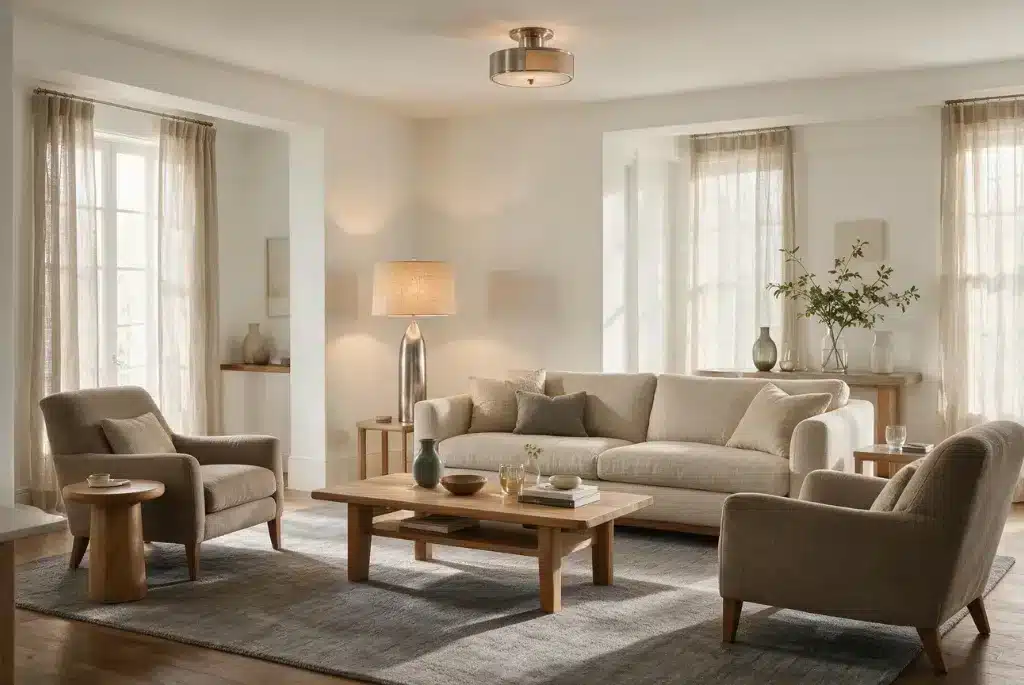
The style you select establishes the groundwork for all subsequent design choices. This style influences your selection of furniture, lighting, color, décor, and the space’s ambiance. Instead of attempting to integrate all possible trends, target a style that resonates with your individual preferences and personality and is also in keeping with the architectural elements of your home.
Here are some timeless styles that continue to shape modern living room interior design.
Modern Minimalist
If you appreciate clean lines and clutter-free spaces, modern minimalist interiors are an excellent choice.
This style uses simple yet solid designs to achieve a minimalistic aesthetic. With neutral tones, smart furniture design (with hidden storage), and thoughtful yet few pieces, this style creates a space that is both cozy and sophisticated. Rather than stuffing space full, this style chooses the pieces more selectively and intentionally.
Introducing the warmth of natural wood tones and light, along with softly lit, textured fabric and wood, is a good way to counter the unwanted clean, clinical aesthetic of this style.
Scandinavian Comfort
Scandinavian decor is a great design approach for homes of all sizes because it marries functionality and coziness.
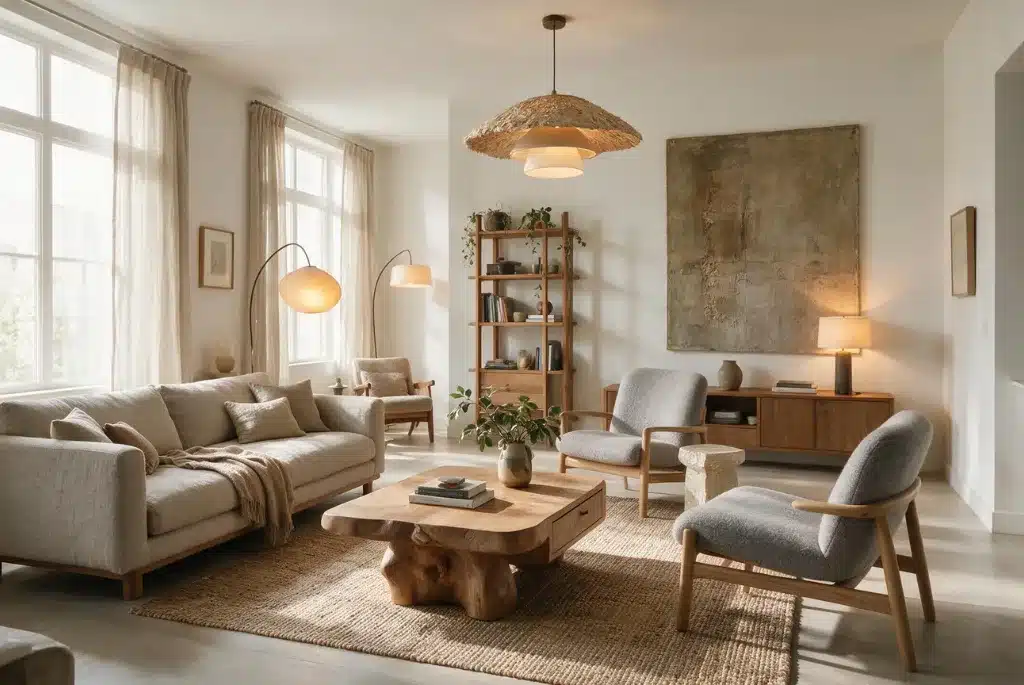
The style favors bright, open spaces with natural light, light-colored timber, comfortable, textural seating, and soft-hand textiles. Touches of color and plants accent and bring life to the inevitable white walls.
This style proves that simple design can still feel inviting and lived-in.
Contemporary Elegance
Contemporary living rooms evolve with current design trends while maintaining a refined aesthetic.
Curved furniture, statement lighting, oversized artwork, textured walls, and sophisticated neutral palettes are commonly used to create visual interest. Rather than following one strict design rule, contemporary interiors blend different materials and forms in a balanced way.
The finished product is a modern-looking living room that won’t look dated in a few short years.
Rustic and Organic
Rustic-inspired interiors are always in vogue for homeowners who appreciate natural materials and earthy tones.
The combination of wooden beams, stone textures, woven accessories, and handcrafted decor with an accent of houseplants will help pull together a natural design style.
Focusing more on comfort and less on ‘perfect’ styling and decor creates an opportunity for the design style’s natural imperfections to highlight the room’s overall benefits.
Smart Interior Design Ideas for Living Room Spaces
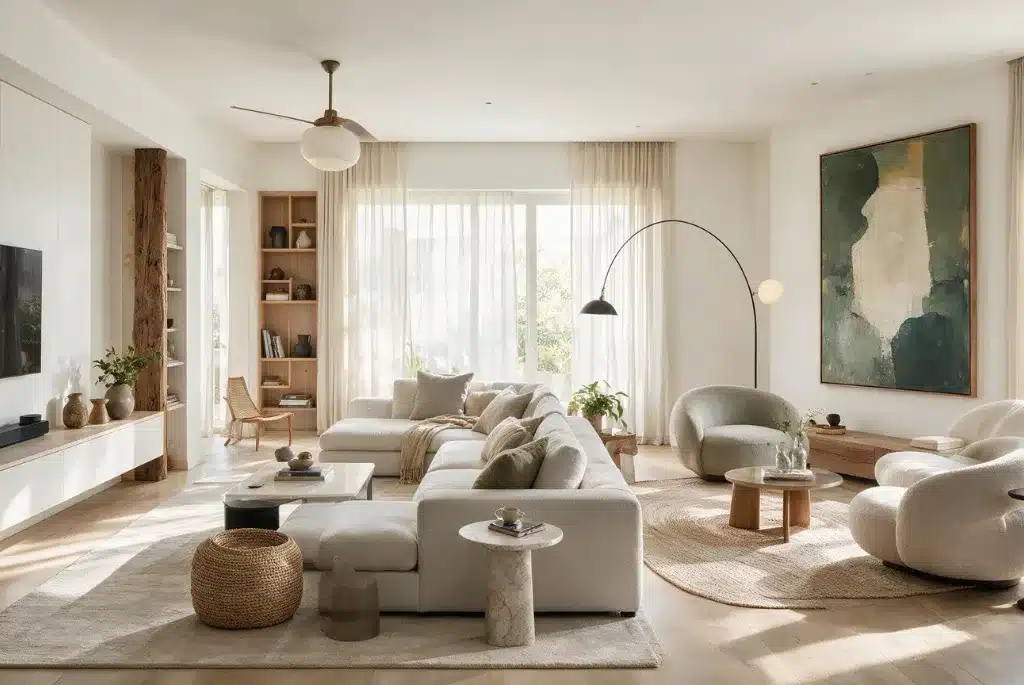
Diverse designs are possible for different types of living rooms. These designs can maintain the room’s functionality while styling it attractively.
These interior design ideas for living room spaces are practical, timeless, and suitable for different home layouts.
Define Functional Zones
Large living rooms often feel empty when everything is grouped into one area.
Divide the space into different zones. Create a main seating area with a coffee table. Create a reading corner with an accent chair and a floor lamp. Use a console behind the sofa to separate the spaces without building a wall.
This approach makes the room feel organised while improving how people use it.
Layer Your Lighting
Lighting should never rely on a single ceiling fixture.
A well-designed living room combines multiple light sources to create flexibility throughout the day.
Consider using:
- Ceiling lights for overall illumination
- Floor lamps beside seating areas
- Table lamps for ambient lighting
- Wall sconces to highlight artwork or architectural details
Layered lighting allows you to adjust the atmosphere depending on the occasion, from bright family gatherings to cosy evenings.
Introduce Statement Pieces Carefully
A well-decorated living room should have a focal point.
You can focus on one or two things rather than many decorative items. These can include: an artwork that takes up a lot of space, a sculptural coffee table, an armchair that makes a statement, or a room light that is a focal point.
These statement pieces naturally draw attention while preventing the room from feeling cluttered.
Bring Nature Indoors
Natural elements instantly make interiors feel more welcoming.
Large indoor plants, fresh flowers, wooden furniture, stone accessories, or woven baskets soften modern interiors and introduce texture. Even a small amount of greenery can improve the overall atmosphere while adding colour organically.
The key is to strike a balance—allow nature to complement the space rather than dominate it.
Mix Textures Instead of Colours
If you prefer neutral interiors, texture becomes your strongest design tool.
Combine varieties of leather or stone with different metals or wood/bucule. This mixes textures to add depth and sophistication without using daring hues.
When different textures work together, the room feels visually rich while maintaining a cohesive appearance.
Interior Designing Tips for Living Rooms That Always Work
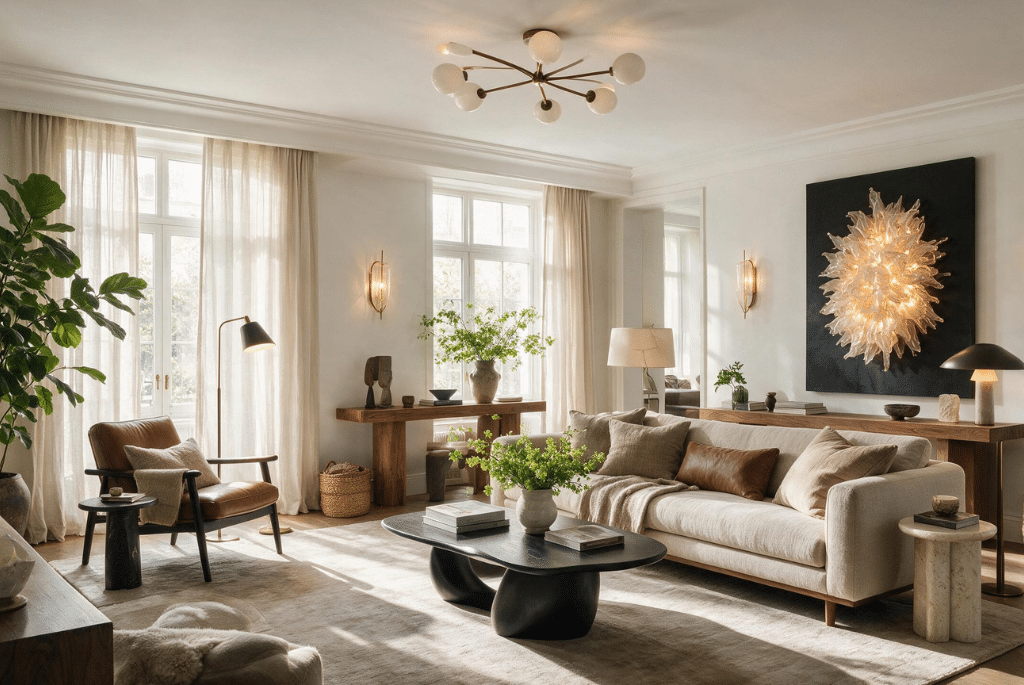
Designing a beautiful living room isn’t about following every trend you see online. The most inviting spaces are built on timeless design principles that continue to look elegant year after year.
These interior design ideas for living room for a new or refreshing setup can be both beautiful and functional.
Choose a Colour Palette Before Buying Furniture
One of the biggest mistakes homeowners make is purchasing furniture first and thinking about colours later.
Instead, decide on your colour palette at the beginning of the design process. A cohesive palette helps every element—from sofas and rugs to curtains and artwork—feel connected.
If you feel uncertain about starting with your shades, a great way to begin is a neutral-based background with popping accent colors for personality. Some accent colors could be earthy greens, deep charcoal, navy, terracotta, or mustard, and they won’t distract from the room’s overall aesthetic.
A well-planned colour scheme also makes it easier to update your décor over time without replacing large furniture pieces.
Invest in Quality Seating
The sofa is often the largest and most frequently used piece of furniture in a living room. Rather than choosing one based solely on appearance, prioritise comfort, durability, and quality craftsmanship.
Look for upholstery that is easy to maintain and cushions that provide adequate support and fit your lifestyle. Performance fabrics may suit families with children and/or pets better, while more luxurious finishes may suit formal living spaces better.
Complement your main seating with accent chairs, ottomans, or benches to create flexible seating options for guests.
Don’t Overlook Storage Solutions
A stylish living room can quickly lose its charm when everyday essentials are left scattered around.
Smart storage keeps the room organised without compromising on aesthetics. Consider furniture that serves multiple purposes, such as coffee tables with hidden compartments, media units with closed cabinets, or elegant shelving that displays books and decorative objects together.
Keeping surfaces relatively clutter-free allows your carefully chosen décor pieces to stand out while making the room feel more spacious.
Create Layers with Accessories
Accessories are what make a living room feel personal rather than staged.
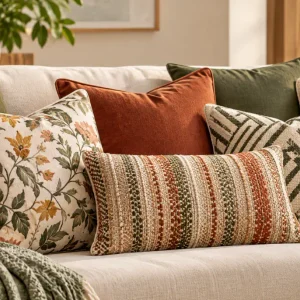
Use layered cushions and throws that create balance in color and texture. Choose art that is inspirational to you and objects that reflect your personality. Use mirrors in smaller rooms to create the illusion of more space. Candles, books, and ceramics can all add a cozy feel to your space.
The goal isn’t to fill every available surface. Instead, choose fewer pieces that have greater visual impact.
Common Living Room Design Mistakes to Avoid
Even the most expensive furniture can’t compensate for poor planning. Avoiding a few common mistakes can make a significant difference in the final outcome of your living room interior design.
Using Furniture That’s Out of Scale
While small-sized furniture gets dwarfed in large rooms, large furniture overstretches small rooms.
Before shopping for furniture, always measure all the dimensions in your room. It is also best to leave enough walking room in your room. Balancing everything in your room is more important than the accommodating nature of the furniture arrangement.
Ignoring Natural Light
Natural light has the power to completely transform an interior.
To avoid blocking windows, choose lighter window treatments, arrange furniture to reflect daylight, and use lighter, brighter wall and furniture colors. Consider using space-saving furniture or window treatments.
A well-lit living room feels larger, fresher, and more welcoming throughout the day.
Following Trends Too Closely
Trends are exciting, but they don’t always stand the test of time.
Rather than designing your entire living room around the latest colour or furniture style, build your space using timeless foundations. Neutral sofas, quality wooden furniture, and classic layouts can easily be refreshed with seasonal accessories, artwork, or textiles.
The approach modernizes your home and minimizes the need to redesign it often.
Forgetting About Comfort
A beautifully designed room will not be appreciated if it is not lived in.
Consider things like:
- Is there enough seating for the family and guests?
- Can people move about easily and comfortably?
- Is the lighting appropriate for all the activities that take place in the room?
- Are the items that are used most often easy to access?
When comfort and functionality are considered alongside aesthetics, the result is a living room that feels as good as it looks.
How to Personalize Your Living Room Without Making It Feel Cluttered
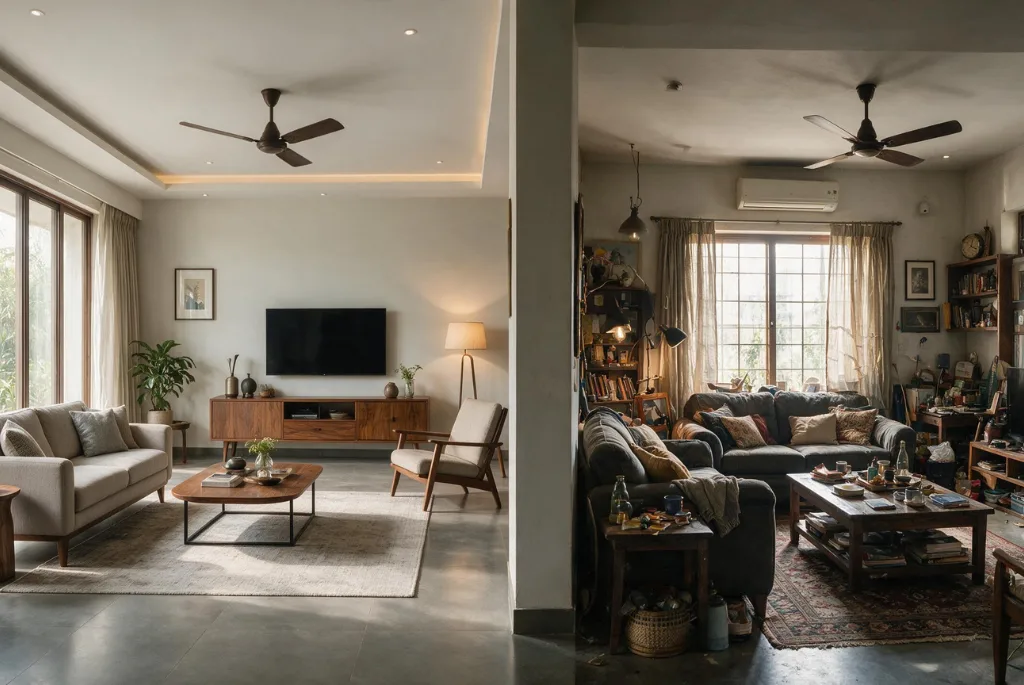
A beautifully designed living room should reflect the people who live in it. While it’s easy to recreate a space from Pinterest or Instagram, adding personal touches is what transforms a house into a home.
Intentional decoration populates your space with meaningful belongings without filling every available surface. Instead of a haphazard collage that lacks coherence and balance, personal belongings and decor may be intentional to warm and invite guests.
Display Meaningful Artwork
Artwork is one of the easiest ways to introduce personality into your living room.
Whether it’s abstract paintings, black-and-white photography, framed travel memories, or handcrafted pieces, wall art adds character while creating a focal point. Instead of covering every wall, choose one or two larger pieces that complement your colour palette and furniture.
Incorporate Books and Decorative Objects
Books instantly add an air of sophistication to a living room. Coffee tables, console tables, and various types of shelves can all display books and should be accompanied by decorative items such as vases, candles, sculptures, and bowls.
Different heights and textures of decorative items should be integrated, but ensure adequate spacing between items so the display does not appear cluttered.
Bring Life with Indoor Plants
Plants are essential when decorating indoors.
Floor plants take up a lot of space and can fill empty corners. Smaller plants are better for tables and shelves. Plants make a room look good and can also be used for their calming effect and the texture they add.
Choose plants that suit your maintenance routine and the amount of natural light available.
Refresh with Seasonal Accents
You don’t need to redesign your living room every year to keep it looking fresh.
Tossing in a new throw blanket, seasonal flowers, or a new cushion cover, and changing decorative accessories, can quickly alter the room’s atmosphere. Any of these changes can help your living room adapt to each new season without a complete redesign.
An intentional approach to living room interior design means the finished product will not merely be a collection of furniture but one that reflects your way of living and the uniqueness of your personality.
FAQ
Begin by understanding how you use the space. Account for your daily activities and the number of people who occupy the space. Consider the overall ambience you wish to create. If you establish the room’s purpose, you will have an easier time planning the layout and choosing furniture and colors.
To make a room feel more spacious, choose furniture that suits the room’s size and shape, use light-colored furniture that lets natural light in, reflect natural light with mirrors, and avoid overcrowding with unnecessary items. Bringing in furniture with multiple purposes and smart storage options can also help.
Materials like natural wood and stone, along with good quality (but affordable) furniture, are timeless choices. These furnishings will balance a space and add a pop of color for whatever statement art you choose. You can always add (or subtract) smaller pieces to keep things aligned with your personal style and what’s trending.