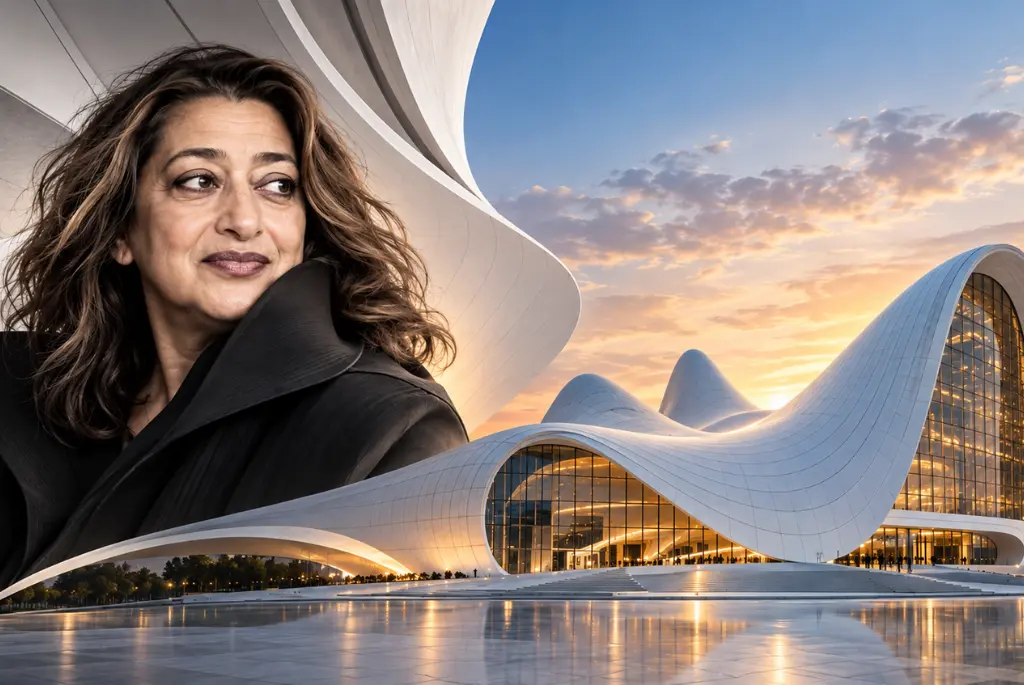
Discover the story of Zaha Hadid, her revolutionary architectural vision, and the iconic buildings that transformed contemporary design across the world.
The benefit here is that architecture has always reflected the ambitions of civilization, without making it overly complicated. It’s important to understand that each era leaves behind constructions that tell narratives of technology, culture, and human resourcefulness. When you run into issues, among the architects who have transformed the nomenclature of modern architecture, Zaha Hadid is in a distinct family. Their constructions rarely follow. The strength of this approach is that, instead, they seem to flow like landscapes, undulations, or works of prowess, maintaining simplicity and clarity.
A good solution is that, despite her limitations in engineering and creativity, she became the First woman to win the prestigious Pritzker Architecture Award and inspired a raw genesis of designers, from museums and operas.
The main point is that this article explores Zaha Hadid’s liveliness, philosophy, and creations and provides an usher to their architectural legacy.
Who Was Zaha Hadid?
Zaha Hadid was an Iraqi-British architect celebrated for transforming contemporary architecture through bold geometric forms and fluid design. Born in Baghdad in 1950, she initially studied mathematics before moving to London to pursue architecture at the Architectural Association School of Architecture.
One thing worth noting is that their First drawings were rather nonfigurative rather than traditional. Basically, many people thought their thoughts were impossible to create; clip engineering could not easily produce such complex bends. This is definitely worth considering: rather than compromising her vision, she continued to experiment until digital modeling and modern technology caught up with her imagination.
It’s important to understand that in 2004, she became the First woman to gain the Pritzker Architecture Award, often called the Nobel Prize in Architecture. Throughout her career, she.
Quick facts
| Detail | Information |
| Full name | Zaha Mohammad Hadid |
| Born | 31 October 1950, Baghdad, Iraq |
| Nationality | Iraqi-British |
| Profession | Architect |
| Famous style | Neo-futurism |
| Pritzker Prize | 2004 |
| Legacy | Founder of Zaha Hadid Architects |
Her work continues to influence architects worldwide through the practice she established, Zaha Hadid Architects, which remains one of the most innovative design studios today.
The Journey of Zaha Hadid Architect
What stands out is that being a world-renowned designer has not been easy. In the eighties, many of Zaha Hadid Architect designs were supported by external attention, but they were not developed. This is a strong point: critics admired their creativity, but developers viewed their concepts as too ambitious and technically risky.
It’s important to understand that everything changed in the nineties when advances in computer-aided design enabled engineers to construct the complex geometries they had imagined years before.Their First major projects.
What actually works is that instead of processing buildings as isolated objects, it approached them as everyday surroundings. The walls merged into roofs, storeys became landscapes, and interiors privileged motion rather than rigid establishment, making it feasible to create a more efficient process. As the data reveals, are you looking to make things easier? Simply put, this philosophy has become the main lineament of his architectural career.
Milestones in her career
- Graduated from the Architectural Association in London.
- Founded Zaha Hadid Architects in 1980.
- Designed internationally acclaimed museums and cultural centers.
- Became the first female Pritzker Prize winner.
- Received the Royal Gold Medal from RIBA in 2016.
Her journey is often viewed as a story of persistence, proving that visionary ideas sometimes need decades before the world is ready to build them.
What Makes Zaha Hadid Design Different?
What’s interesting here is that the Zaha Hadid Design series is often linked to melted architecture, dramatic curves, and futuristic spaces; their work is much more than strange forms. In other words, looking at this, each curve serves a spatial purpose and directs movement in a building.
1. Fluid Geometry
Rather than relying on rectangles and symmetry, her buildings appear to flow naturally. Inspired by rivers, landscapes, and geological formations, she replaced rigid corners with continuous surfaces.
2. Dynamic Movement
Walking through one of her buildings feels similar to following a carefully choreographed path. Staircases, corridors, and open spaces connect seamlessly, encouraging exploration instead of confinement.
3. Technology Meets Art
Her projects relied heavily on digital modeling, allowing architects and engineers to calculate thousands of unique structural components with remarkable precision. This integration of technology made previously impossible forms achievable.
4. Light as a Design Material
Natural light plays a central role in her interiors. Skylights, curved ceilings, and expansive glass façades create constantly changing patterns throughout the day, making buildings feel alive.
Instead of decorating architecture, she allowed the structure itself to become the artwork.
10 Iconic Buildings Designed by Zaha Hadid
These projects represent some of the most influential works in modern architecture.
1. Heydar Aliyev Center, Azerbaijan
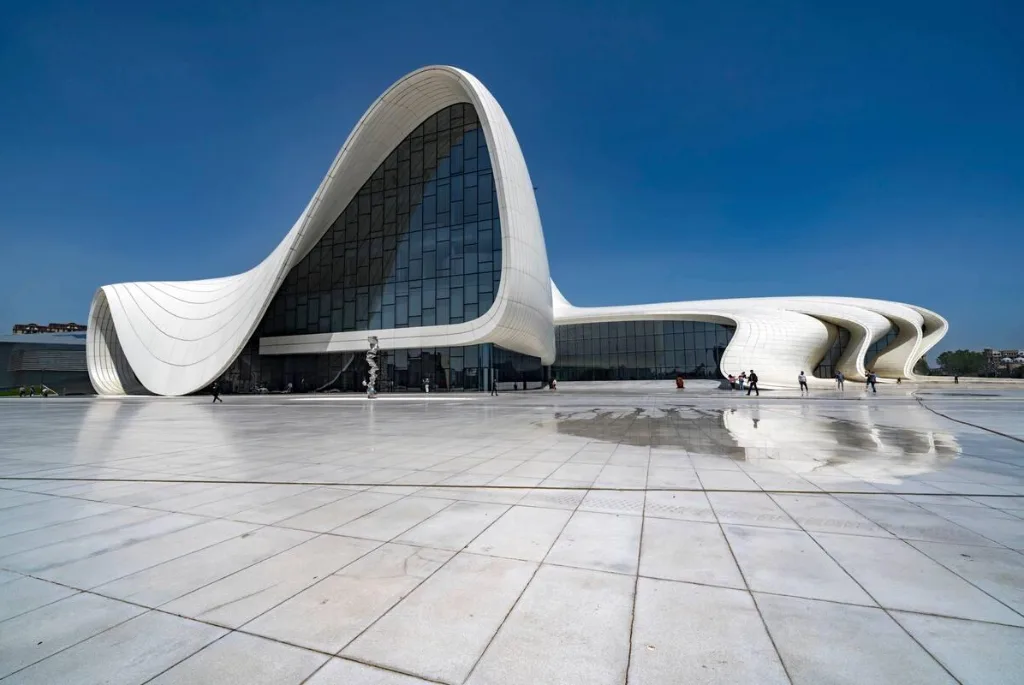
Perhaps the most recognizable project by Zaha Hadid, the Heydar Aliyev Center challenges the traditional idea of monumental public architecture. The building rises from the ground without visible interruption, creating a continuous white surface that folds into walls and roof.
Completed in Baku, it functions as a cultural center featuring exhibition halls, museums, and performance spaces. Its smooth geometry symbolizes openness and cultural transformation, making it one of the world’s most photographed architectural landmarks.
2. MAXXI Museum, Rome
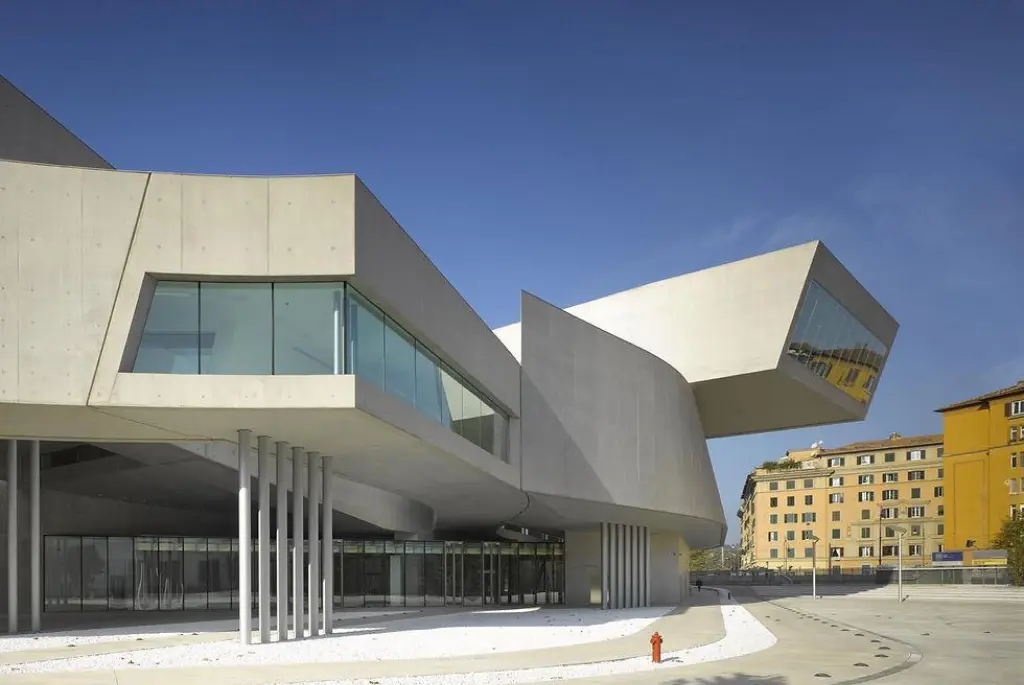
The National Museum of 21st Century Arts demonstrates how contemporary museums can become experiences rather than simple galleries. Intersecting concrete ribbons create dramatic circulation routes, allowing visitors to discover exhibitions from multiple perspectives.
Instead of rigid rooms, the museum offers flexible spaces that adapt to changing artistic installations.
3. Guangzhou Opera House, China
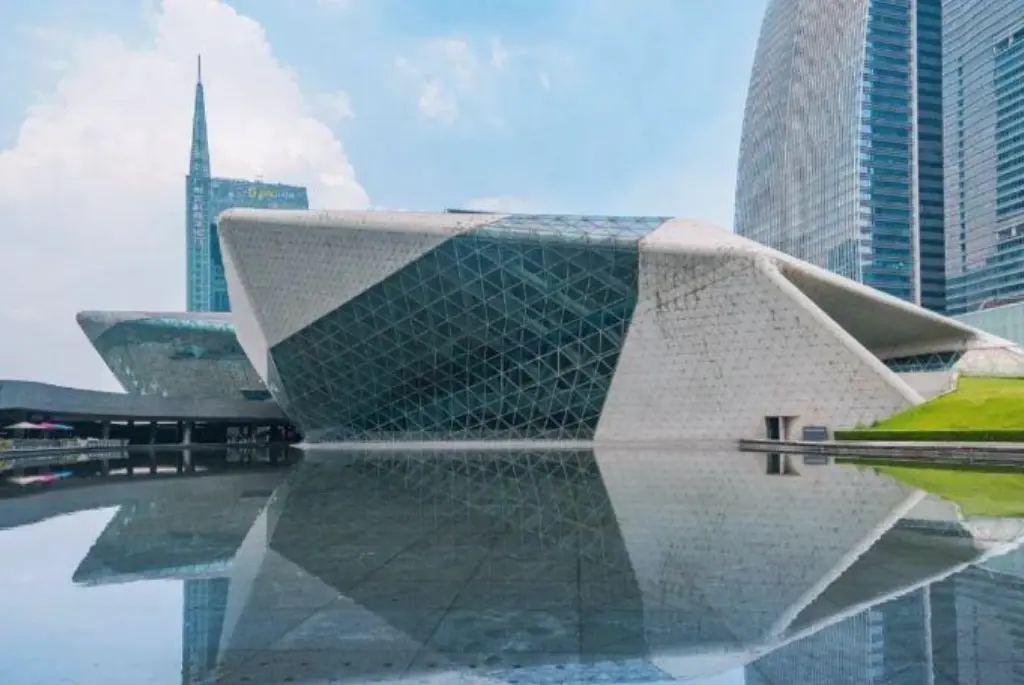
Inspired by river stones shaped through erosion, this opera house appears like two polished boulders resting beside the Pearl River. Its crystalline façade and flowing interior acoustics combine engineering with sculptural elegance.
The project established Guangzhou as an international cultural destination while showcasing the possibilities of computational architecture.
4. London Aquatics Centre, United Kingdom
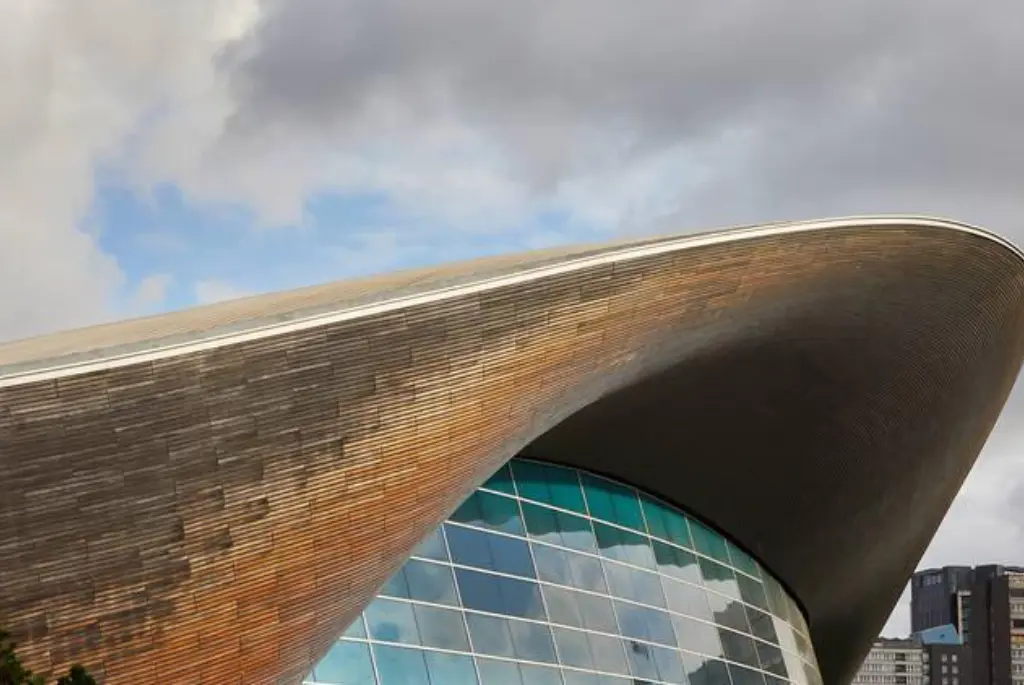
Designed for the 2012 Olympic Games, this aquatic complex features a sweeping roof resembling a wave suspended above the pools. The dramatic structure isn’t merely aesthetic—it efficiently spans the enormous interior without excessive supporting columns.
After the Olympics, the venue was adapted into a public sports facility, proving that iconic architecture can remain practical for everyday communities.
5. Galaxy SOHO, Beijing
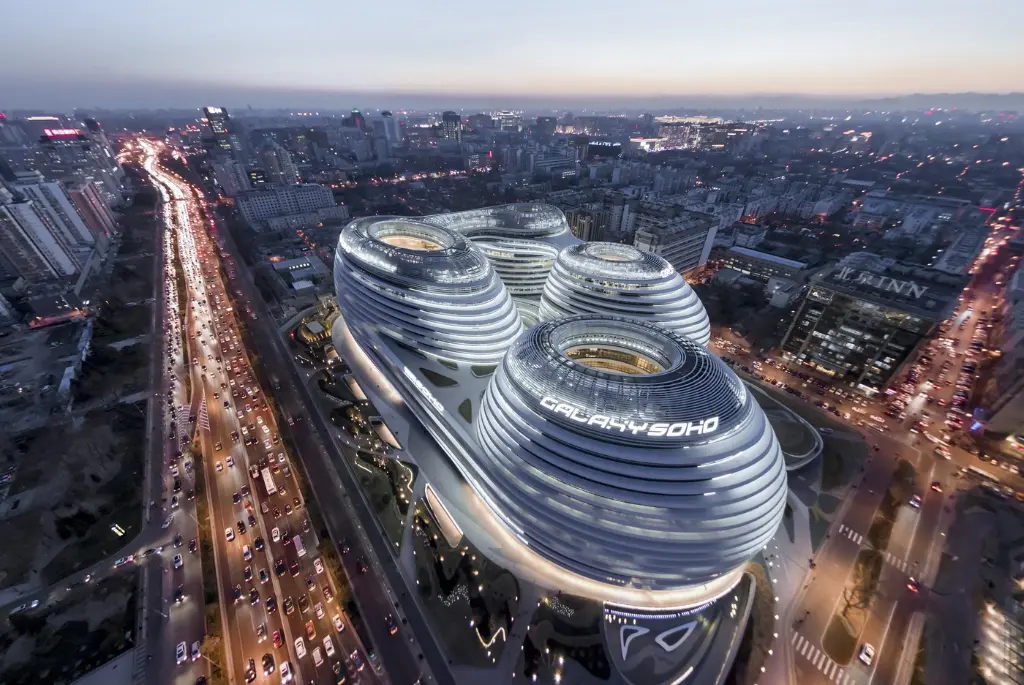
Galaxy SOHO consists of interconnected rounded volumes linked by bridges and terraces. Rather than traditional city blocks, the development creates a flowing urban landscape where offices, retail spaces, and public plazas merge together.
Its organic composition reflects Zaha Hadid’s design principles at an urban scale.
6. Galaxy SOHO, Beijing
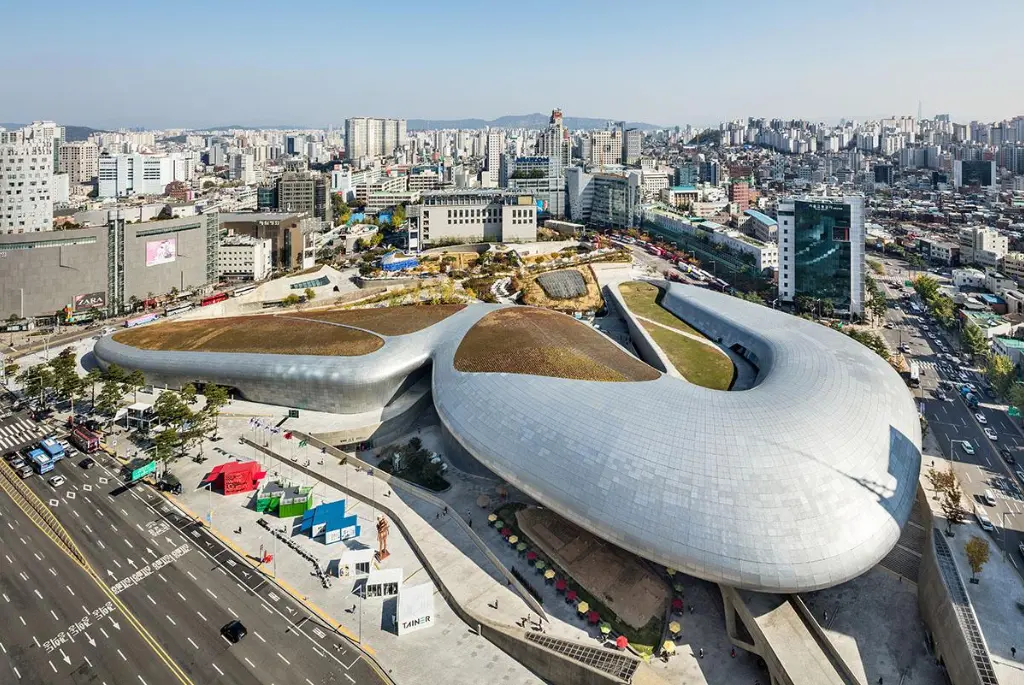
This futuristic cultural complex transformed a historic district into one of Seoul’s creative hubs. Covered with thousands of uniquely fabricated aluminum panels, the building demonstrates how digital manufacturing can produce highly complex architectural forms.
Today it hosts fashion exhibitions, conferences, museums, and international design events.
7. Riverside Museum, Glasgow
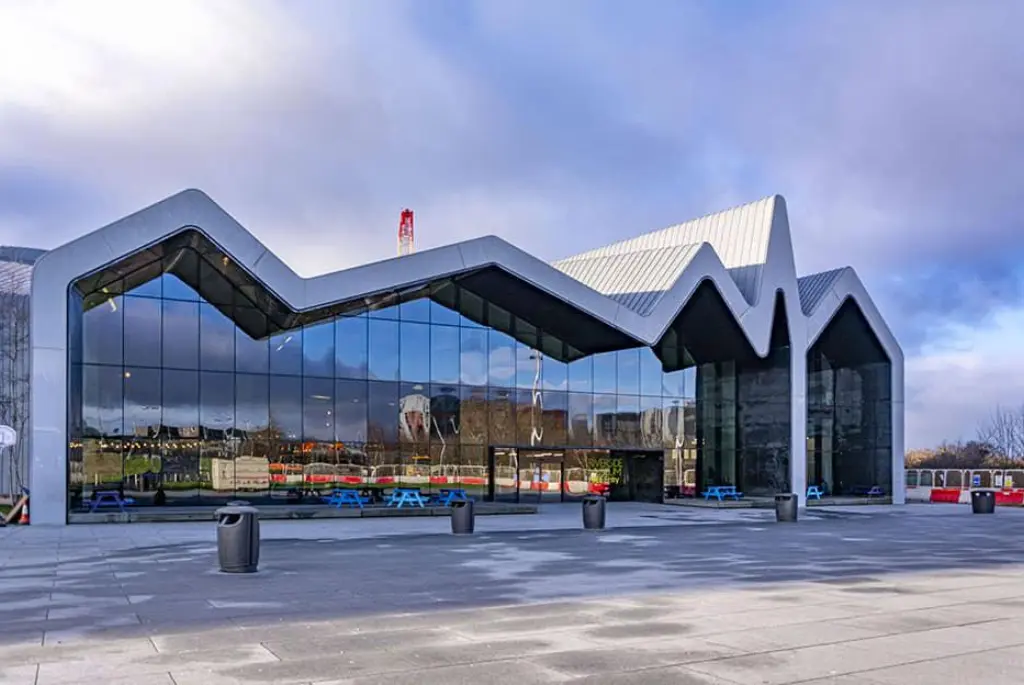
Located along the River Clyde, the Riverside Museum features a striking zigzag roof that resembles waves meeting the shoreline. The dramatic profile creates expansive interior exhibition spaces for Scotland’s transport history while connecting the museum visually with its waterfront setting.
8. Wangjing SOHO, Beijing
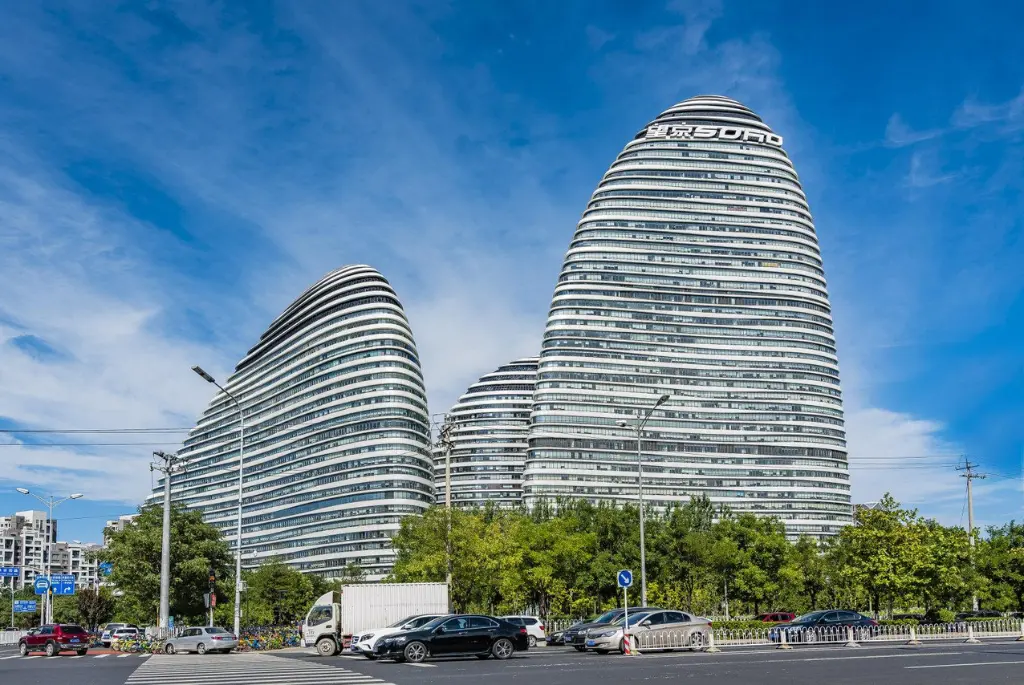
These three flowing office towers resemble wind-shaped pebbles rising from the landscape. Their aerodynamic forms reduce visual heaviness despite their considerable height, creating an elegant skyline unlike conventional skyscrapers.
9. CMA CGM Tower, Marseille
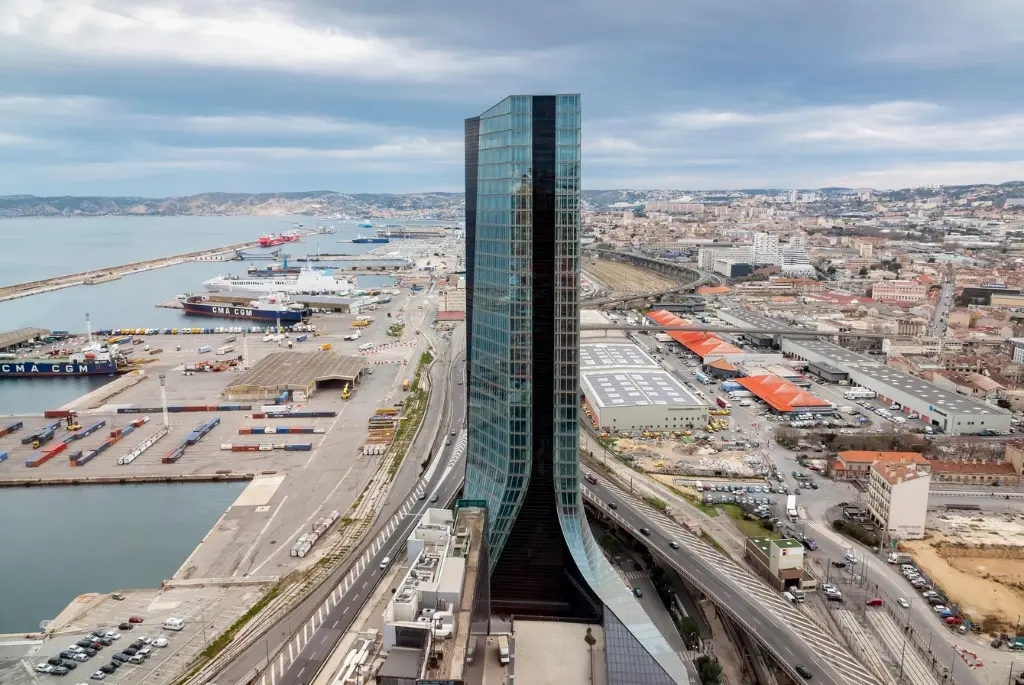
As the headquarters of a global shipping company, this tower reflects movement through its gently twisting glass façade. The building demonstrates how corporate architecture can achieve sophistication without relying on excessive ornamentation.
10. Al Janoub Stadium, Qatar
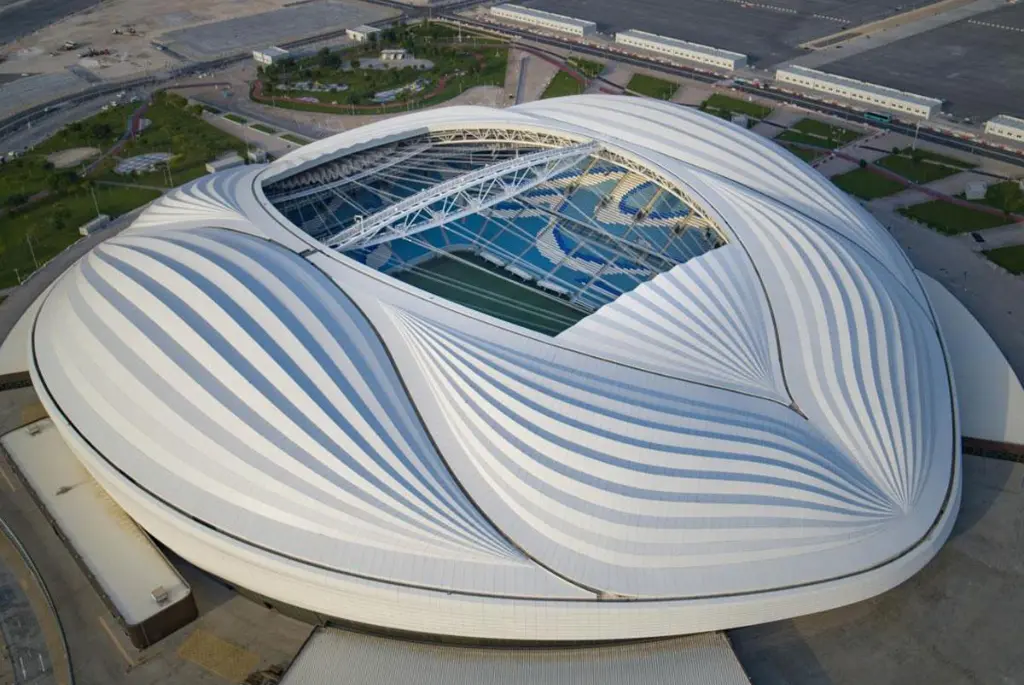
Designed for international football tournaments, the stadium draws inspiration from the traditional sailing boats of the Arabian Gulf. Its retractable roof improves climate comfort while the flowing exterior celebrates regional maritime heritage through contemporary architecture.
Common Features Found Across Her Buildings
Although every project is unique, several design principles appear consistently throughout her portfolio.
| Architectural Feature | Purpose |
| Curved geometry | Creates fluid visual movement |
| Open interiors | Encourages flexible public use |
| Large skylights | Maximizes natural daylight |
| Digital fabrication | Enables complex construction |
| Sculptural façades | Makes the structure itself the identity |
| Integrated landscape | Connects buildings with surroundings |
These characteristics helped establish a recognizable architectural language without making her projects feel repetitive.
How Zaha Hadid Changed Modern Architecture
Before her influence, many contemporary buildings emphasized minimalism through straight lines and simple boxes. Zaha Hadid demonstrated that complexity could coexist with functionality. Her projects encouraged architects to think beyond conventional geometry and embrace digital design as a creative partner rather than merely a drafting tool.
Her impact extends beyond aesthetics:
- Universities now teach computational design inspired by her methods.
- Engineers developed new construction techniques to realize complex curves.
- Cities began investing in iconic cultural architecture as part of urban regeneration.
- More women entered architecture seeing successful female leadership at the highest level.
Her legacy is therefore both architectural and cultural.
Awards and Global Recognition
Throughout her remarkable career, she received numerous honors acknowledging her contribution to architecture.
- Pritzker Architecture Prize (2004)
- Stirling Prize (2010, 2011)
- Royal Gold Medal (2016)
- Praemium Imperiale for Architecture
- Dame Commander of the Order of the British Empire
These achievements reflect decades of innovation rather than a single celebrated project.
The Lasting Legacy of Zaha Hadid
A unique aspect is that after his death in 2016, Zaha Hadid’s influence continues to turn. Basically, their architectural legacy remains alive and continues to inspire challenging projects in Asia, Europe, the Middle East, and North America. New generations of designers are studying them not because they need to imitate their curves, but because they admire their willingness to challenge conventionalities, which allows for better results.
The main point is that it has shown that architecture can be emotional without sacrificing precision, losing aesthetic functionality, and remaining futuristic while staying linked to human experience.
Basically, more than creating beautiful constructions, it has varied the agency people have over what constructions can become.
FAQs
A unique aspect is that among Zaha Hadid’s most typical buildings are the Heydar Aliyev Center in Azerbaijan, the MAXXI Museum in Italy, the Guangzhou Opera House in China, the London Aquatics Centre in the United Kingdom, and the Dongdaemun Design Plaza in South Korea. In simple terms, these monuments show their typical melted architecture and design.
One Thousand Museum in Miami is considered one of Zaha Hadid’s most expensive completed buildings, with construction costs estimated at approximately US$500 million.
For a general-knowledge architecture blog, you could also mention that the Heydar Aliyev Center in Azerbaijan had an estimated cost of about US$250 million and is widely regarded as her most iconic project.
You can find virtual tours of Zaha Hadid’s buildings on official museum websites, cultural institution platforms, and the Zaha Hadid Architects website. Many iconic projects also offer interactive 360° views, digital exhibitions, and detailed architectural walkthroughs online.