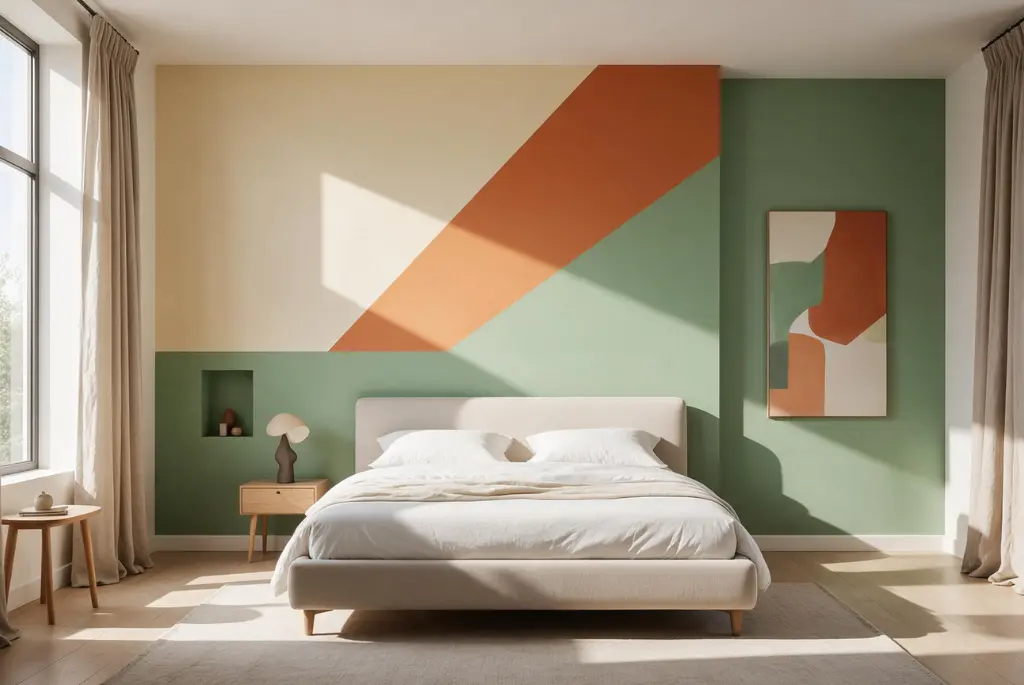
Your bedroom wall colour combination can change the entire personality of the room. The right pairing can make a small bedroom feel larger, turn a plain wall into a focal point, or create a calm retreat at the end of a long day.
But choosing two colours is not as easy as just picking two colours you like. The magic is in the way they play with your furniture, lighting, flooring, textiles and the size of the room.
From earthy neutrals and gentle pastels to dramatic dark-and-light combos, here are innovative bedroom wall colour ideas that may make your area look intelligently created, not just painted.
1. Let the Bed Wall Do the Talking
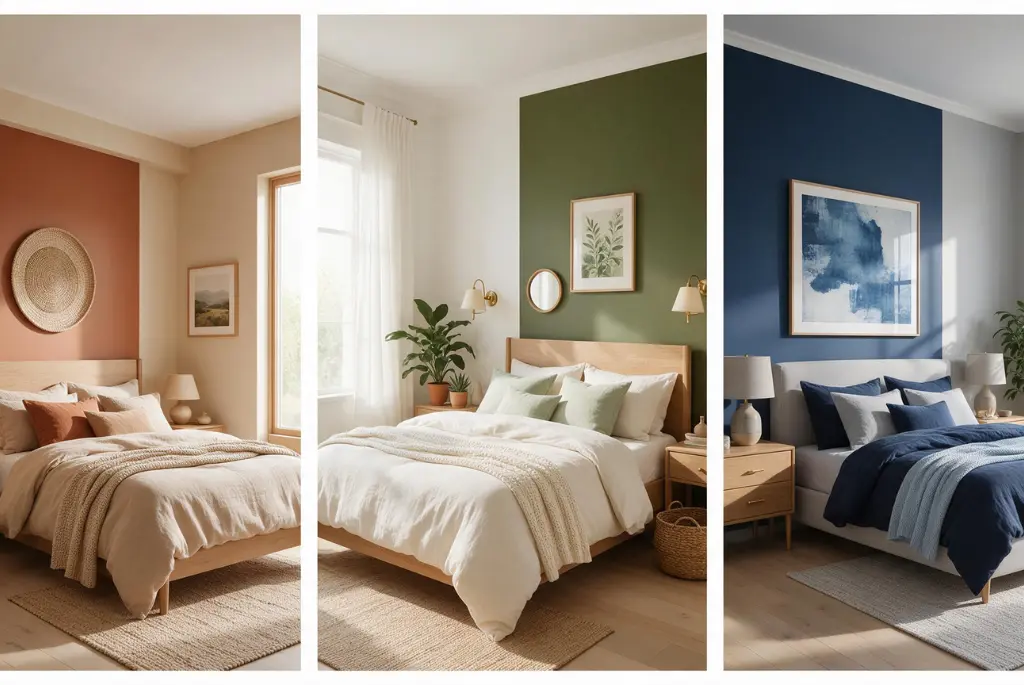
If you want an instant transformation without repainting the entire bedroom, start with the wall behind the bed.
Warm Beige + Terracotta
A terracotta feature wall in a warm beige bedroom looks earthy, inviting and effortlessly modern. Finish the design with wooden furniture, linen bedding and woven textures.
Design trick: Paint three walls beige; use terracotta exclusively behind the bed. This makes a natural centre of attention without closing the room in.
Olive Green + Warm White
Olive green brings the outdoors in, while warm white prevents the colour from becoming too heavy.
This pairing works particularly well with:
- Light or medium-toned wood
- Cane furniture
- Cream bedding
- Indoor plants
- Brass or antique-gold accents
For a bedroom inspired by nature, this is one of the most versatile combinations to try.
Navy Blue + Soft Grey
Want something more moody? Use rich navy and soft grey.
Navy is a nice feature wall, especially behind a light upholstered bed. Grey walls on the other sides balance the colour.
The result is sophisticated rather than dramatic-and especially effective in bedrooms with plenty of natural light.
2. Try Colour Combinations That Feel Unexpected
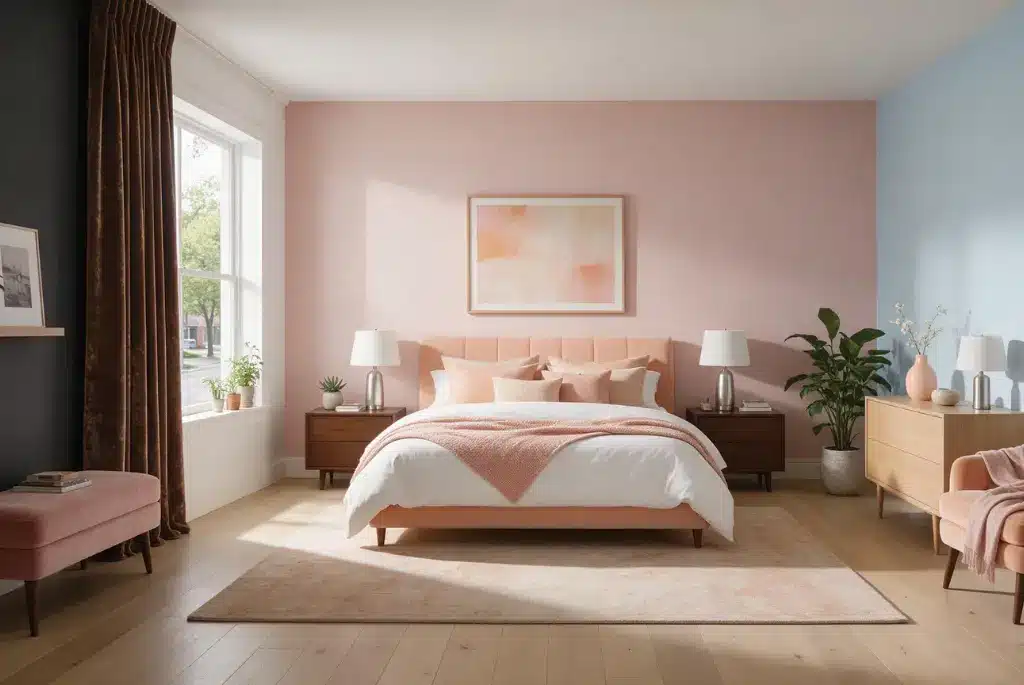
The safest combinations are easy to love, but unexpected pairings can give your bedroom much more personality.
Dusty Pink + Chocolate Brown
Forget the sickly sweet pink bedrooms. A subdued dusty pink with cocoa brown seems classy, warm and current.
Pink on the walls, and through brown:
- Wooden furniture
- Curtains
- Cushions
- Rugs
- Bedside tables
The combination works particularly well when both shades have slightly muted undertones.
Powder Blue + Soft Peach
For a lighter, more playful bedroom, combine powder blue with soft peach.
Blue is cool, peach is warm. Use the two colours in unequal proportions, with one colour being the main colour and the other an accent colour.
Or how about this? Powder blue walls + peach headboard + neutral bedding.
It creates a contrast without becoming visually noisy.
Charcoal + Blush
Dark charcoal walls can be scary but if you match them with blush pink you have an interesting balance.
The charcoal gives depth. It’s softened with blush.
Add white bedding, light wood and minimal metallic elements to prevent the space feeling too gloomy.
3. Choose the Palette According to the Mood
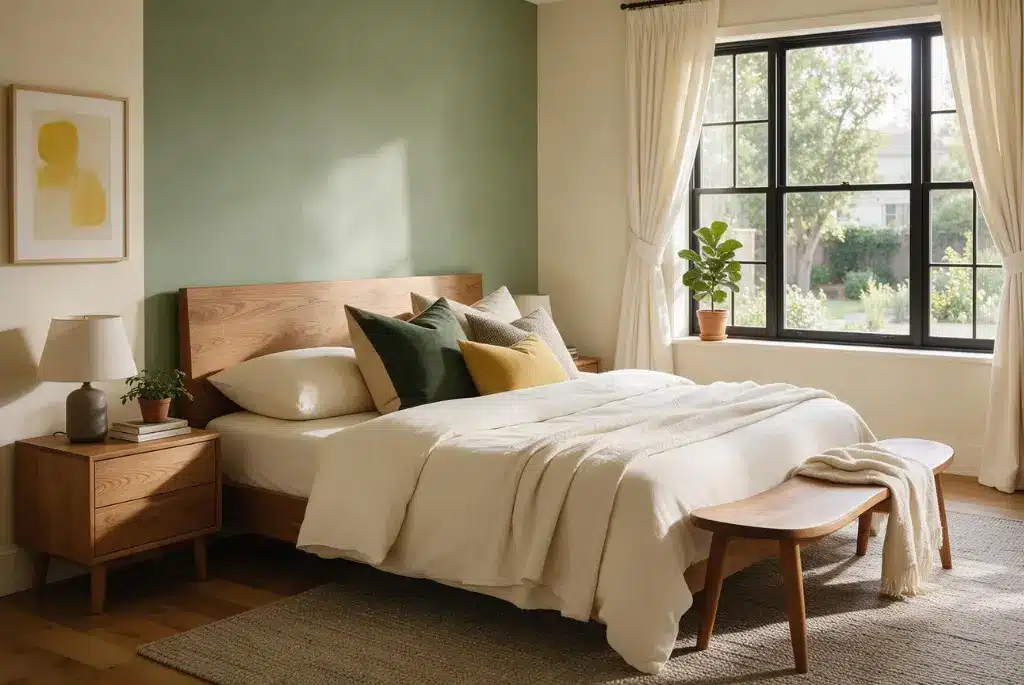
Colour does more than decorate a bedroom. It influences how the space feels.
For a Calm Bedroom: Sage + Cream
Sage green and cream are natural partners for a relaxing bedroom. The combination feels soft without being boring.
Use sage behind the bed and cream on the remaining walls. Finish with cotton bedding, wooden furniture, and greenery.
For a Luxurious Bedroom: Deep Green + Beige
Deep forest green coupled with warm beige can add richness to an otherwise conventional bedroom.
The trick is not to overdo the contrast. Opt for warm beige instead of glaring white and bring in natural items to keep the palette grounded.
For an Energetic Bedroom: Mustard + Off-White
Mustard yellow brings personality to a bedroom, but using it on every wall can become overwhelming.
Instead, use mustard as an accent and balance it with off-white walls. Add artwork, cushions, or a rug in similar warm tones to connect the palette.
For a Minimal Bedroom: Greige + White
Greige—the middle ground between grey and beige—is perfect for minimalist interiors.
Pair it with warm white instead of a bright, cool white. The subtle difference between the shades creates dimension while maintaining a clean appearance.
4. Think Beyond Two Plain Walls
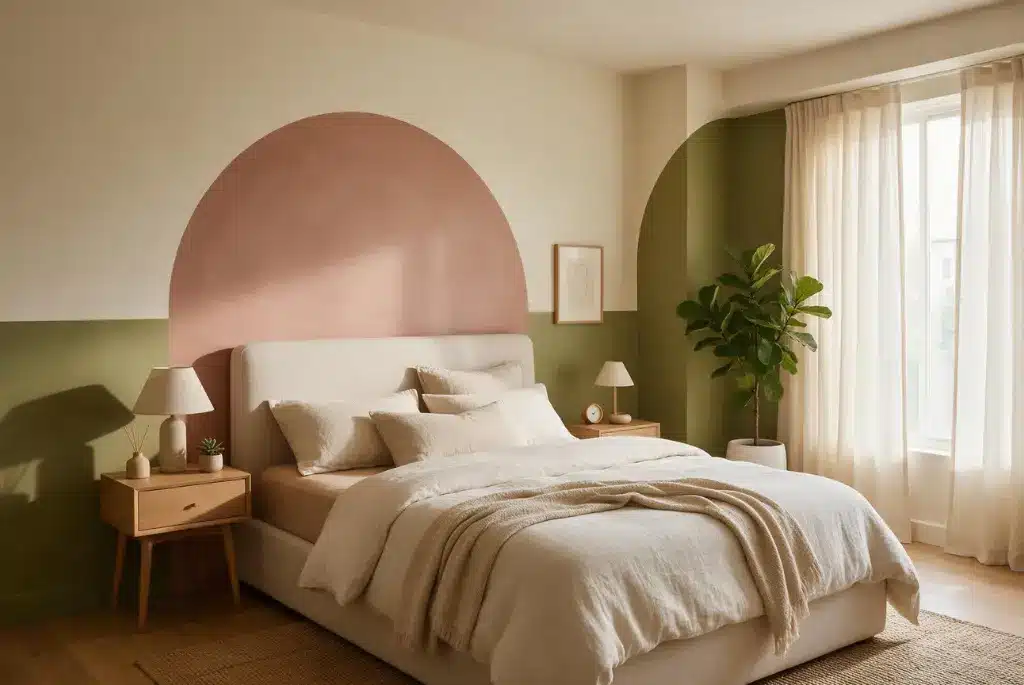
A creative bedroom wall colour combination doesn’t always mean painting one wall blue and another wall white.
You can use paint to create visual architecture.
Half-Wall Colour Blocking
Paint the lower half of the wall in a deeper shade and keep the upper half light.
For example:
Lower: muted olive
Upper: warm ivory
This can visually anchor furniture and give the bedroom a contemporary feel.
Painted Arch
Painted arches behind the bed might be an immense piece of art.
Paint an arch in rust, terracotta, dusty rose or muted green on a neutral wall.
Put the bed right in front of it and keep the surrounding décor plain.
Two-Tone Vertical Split
Want something more modern? Divide one wall vertically.
Pair:
Warm white + muted blue
or
Beige + olive
The split can sit directly behind the bed or slightly off-centre for a more artistic effect.
Colour-Wrapped Corner
Instead of stopping the accent colour at one wall, continue it around the corner.
This creates a cocoon-like effect and works particularly well in reading corners or bedrooms with an unusual layout.
5. Match the Wall Colours With the Rest of the Room
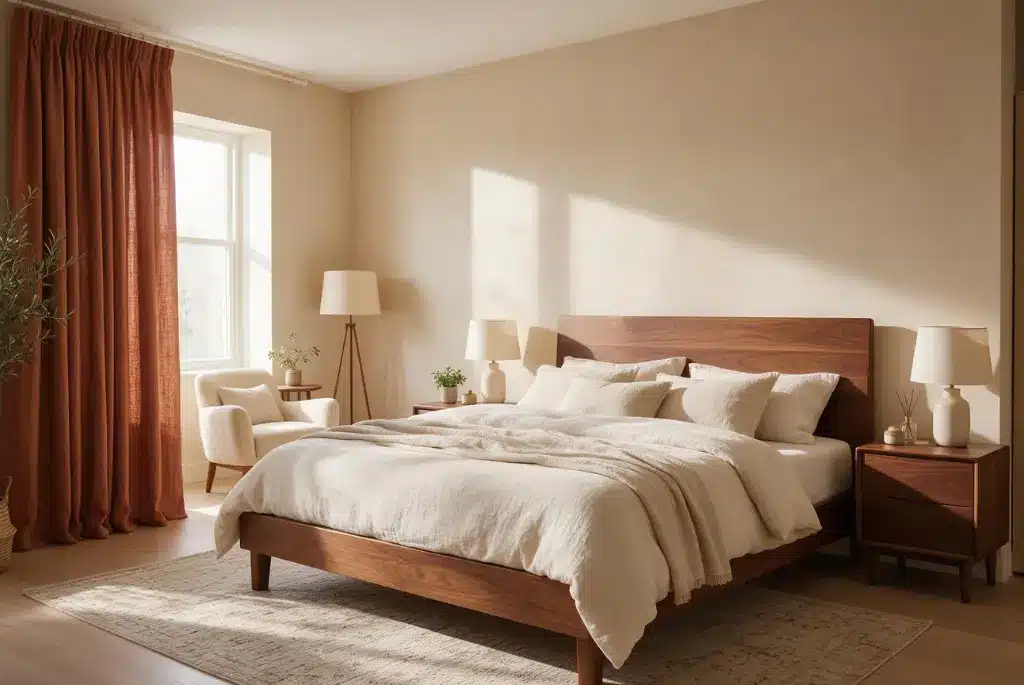
The best wall paint colour combination for bedroom interiors doesn’t exist in isolation.
Look around the room before choosing your shades.
Match the Wood
Got a walnut bed or a dark wooden wardrobe?
Beautiful complements are warm beige, subtle green, ivory, terracotta and gentle taupe.
For pale oak or light wood furniture, try powder blue, sage, warm white or dusty pink.
Match the Curtains
Your walls don’t need to match your curtains exactly.
Instead, look for a relationship between the two.
For example:
Sage wall + cream curtains
Beige wall + rust curtains
Powder blue wall + white curtains
Warm white wall + olive curtains
This creates coordination without making the room look overly planned.
Match the Lighting
Natural daylight can make colours appear very different from how they look on a paint card.
Rooms with limited sunlight generally benefit from warmer colours such as:
- Cream
- Beige
- Peach
- Soft terracotta
- Warm white
Bright bedrooms can handle cooler shades such as:
- Sage
- Blue
- Grey
- Olive
- Deep green
Always test a small patch before committing to the full wall.
6. Best Wall Colour Combinations for Different Bedroom Styles
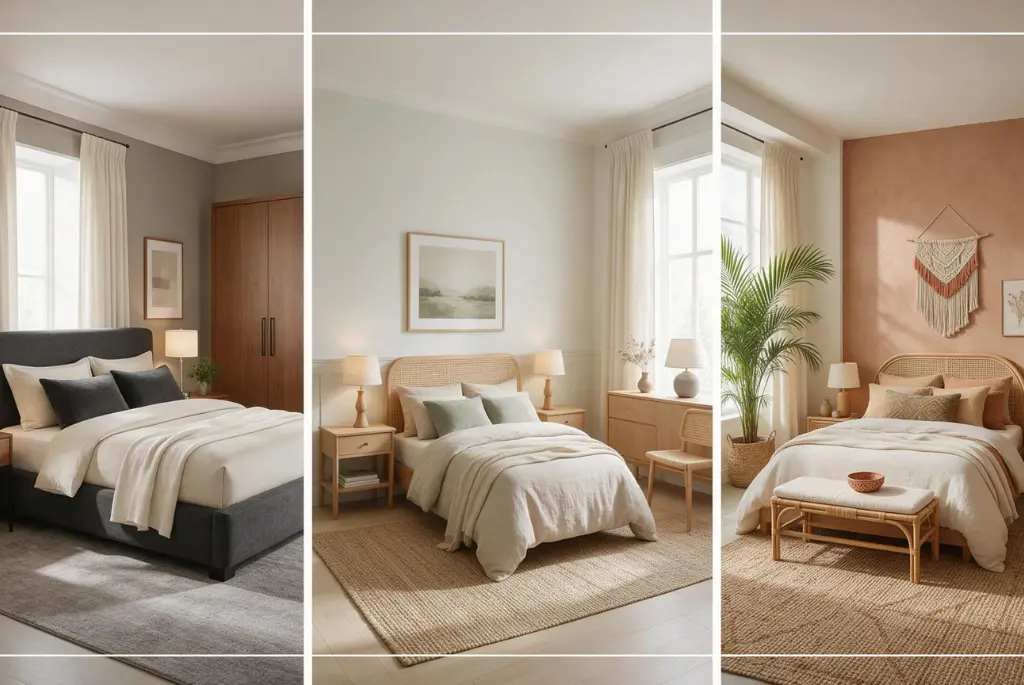
Your bedroom’s design style can make choosing colours much easier.
Modern Bedroom
Try:
Charcoal + White
Greige + Warm White
Navy + Light Grey
Keep furniture streamlined and décor minimal.
Scandinavian Bedroom
Choose:
Soft Grey + White
Sage + Cream
Pale Blue + Warm White
Natural wood, simple textiles, and plenty of daylight will complete the look.
Boho Bedroom
Go warmer with:
Terracotta + Beige
Olive + Cream
Rust + Sand
Layer the colours with cane, jute, macramé, plants, and textured fabrics.
Japandi Bedroom
Japandi interiors look best with understated palettes.
Consider:
Taupe + Off-White
Sage + Beige
Warm Grey + Cream
Keep the walls quiet and allow wood, texture, and form to create visual interest.
Contemporary Luxury Bedroom
For a more sophisticated look, try:
Deep Green + Beige
Navy + Ivory
Chocolate Brown + Cream
Use restrained metallic accents, plush fabrics, and clean furniture shapes to elevate the palette.
Quick Guide: Which Combination Should You Pick?
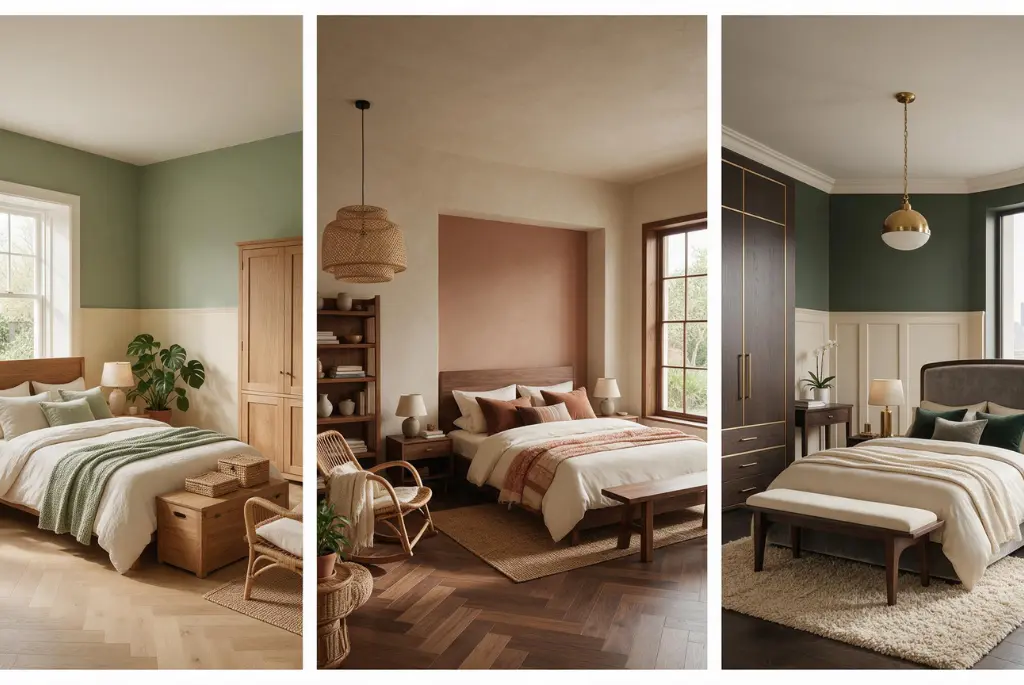
| Bedroom Look | Wall Colour Combination |
| Calm & natural | Sage + Cream |
| Warm & earthy | Terracotta + Beige |
| Modern | Charcoal + White |
| Luxurious | Deep Green + Beige |
| Minimal | Greige + Warm White |
| Playful | Powder Blue + Peach |
| Dramatic | Navy + Soft Grey |
| Boho | Olive + Sand |
| Japandi | Taupe + Off-White |
| Contemporary | Chocolate Brown + Cream |
Small Bedroom? Use Colour Strategically
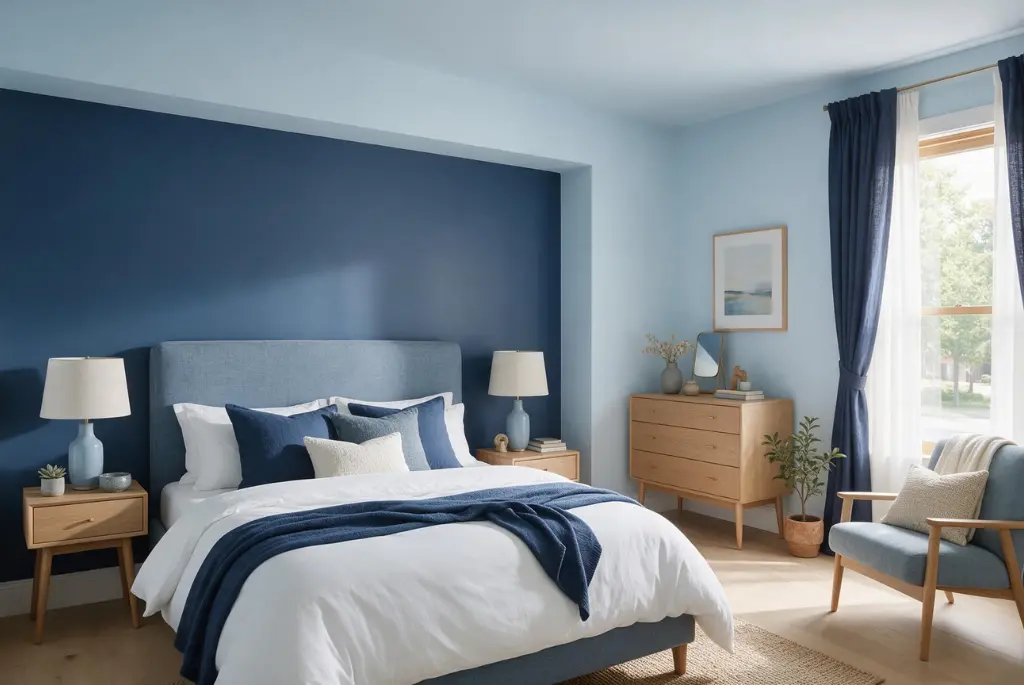
A small bedroom doesn’t mean you have to stick to plain white.
The secret is controlling contrast.
Lighter combinations such as warm white + cream, beige + soft grey, or pale blue + white can help maintain an airy appearance.
But if you love dark colours, don’t automatically eliminate them.
A deep green or navy accent wall behind the bed can actually add depth and make the room feel intentional. Keep the remaining walls lighter and avoid overcrowding the space with heavy furniture.
Another smart trick is to match the ceiling with the lighter wall colour. This creates a smoother visual transition and can make the room feel more open.
How to Make Your Colour Combination Look More Expensive
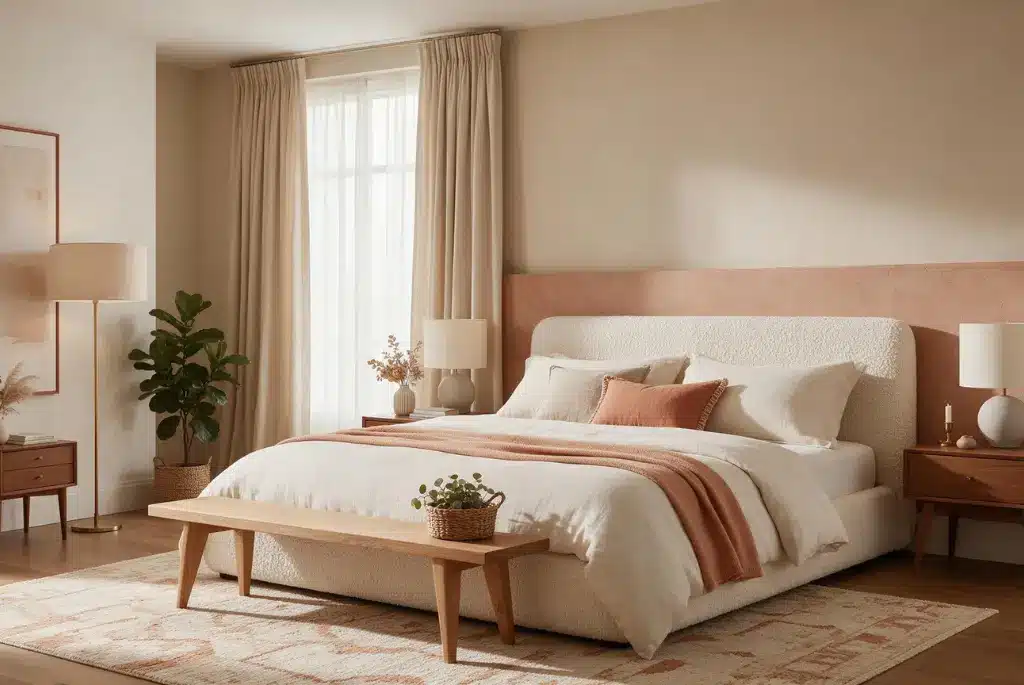
You don’t need expensive décor to make a bedroom look luxurious. A thoughtful palette can do much of the work.
Choose colours with similar undertones.
For example, warm beige works better with warm white than with an icy white. Similarly, muted green pairs naturally with earthy browns and creams.
Then repeat the wall colours subtly around the room.
If the accent wall is terracotta, introduce the same shade through a cushion, artwork, rug, or throw.
This creates a visual thread.
And don’t forget texture. A simple beige bedroom can look remarkably sophisticated when combined with linen, wood, boucle, woven fabrics, and soft lighting.
Colour gives the room its personality. Texture gives it depth.
Final Design Tip: Don’t Chase Trends
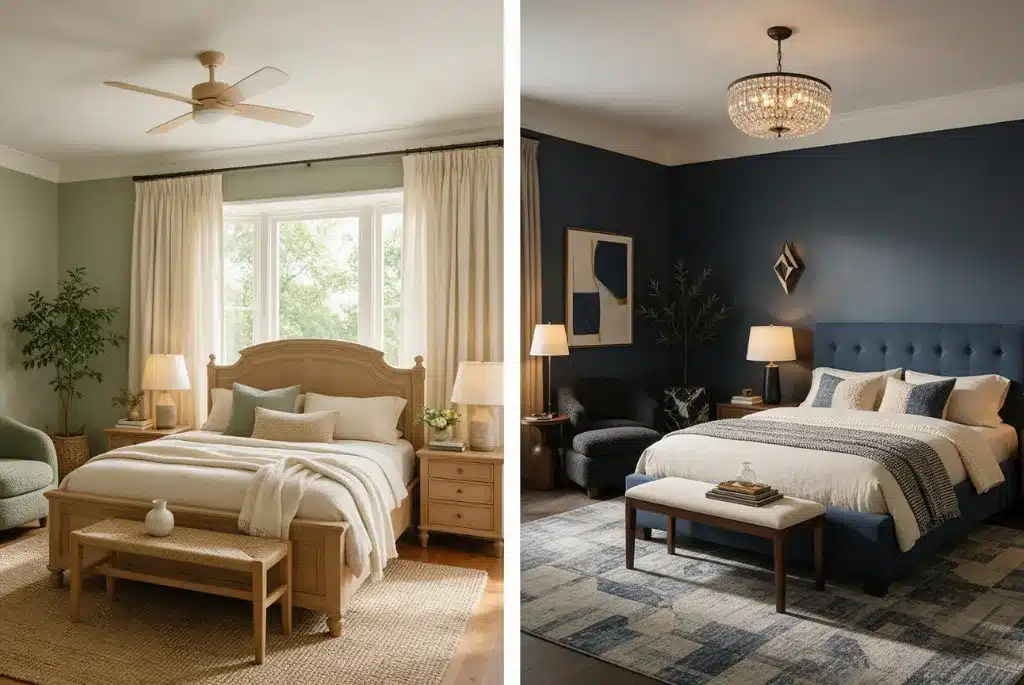
The ideal bedroom wall colour combination may not be the one topping social media this month.
Consider how you want your bedroom to feel when you enter into it each day.
Want it nice and quiet? Go for gentle, nature-inspired colours.
You want it dramatic? Go deeper with navy, charcoal or forest green.
Want it happy? Try peach, dusty pink or mustard.
Classic huh? Use beige, cream, warm white, taupe or light grey as the basis of your palette.
The goal isn’t to find two colours that simply look good together. It’s to create a palette that works with the light, furniture, textures, and personality of your bedroom.
That is when a wall stops being just a wall—and becomes part of the design.
FAQs:
Sage green is one of the most beautiful bedroom colours, creating a calm and sophisticated feel. Pair it with warm cream or beige for a soft, elegant look.
For a richer style, try deep green with warm neutrals.
Yes. Very bright reds, neon shades, and overly intense oranges can feel stimulating rather than restful. Also avoid using too many dark colours in a small bedroom, as they can make the space feel enclosed. Soft, muted shades like sage, beige, warm white, and dusty blue are usually more relaxing.
For a beautiful, balanced bedroom, these three combinations work especially well:
Sage Green + Warm Cream + Light Wood — calm and natural.
Navy Blue + Soft Grey + White — elegant and contemporary.