Pick up any real estate brochure these days and you will notice something. Every master bedroom seems to come with an ensuite bathroom. It has become one of those features that buyers simply expect, like walk-in closets or open plan living.
But here is the thing. Lots of people use the term without really knowing what makes an ensuite different from a regular bathroom. And when it comes time to design one, the options can feel overwhelming.
This guide walks you through everything you need to know. From the basic ensuite bathroom meaning to practical design ideas that actually work in real homes.
So What Does Ensuite Bathroom Meaning Actually Cover?
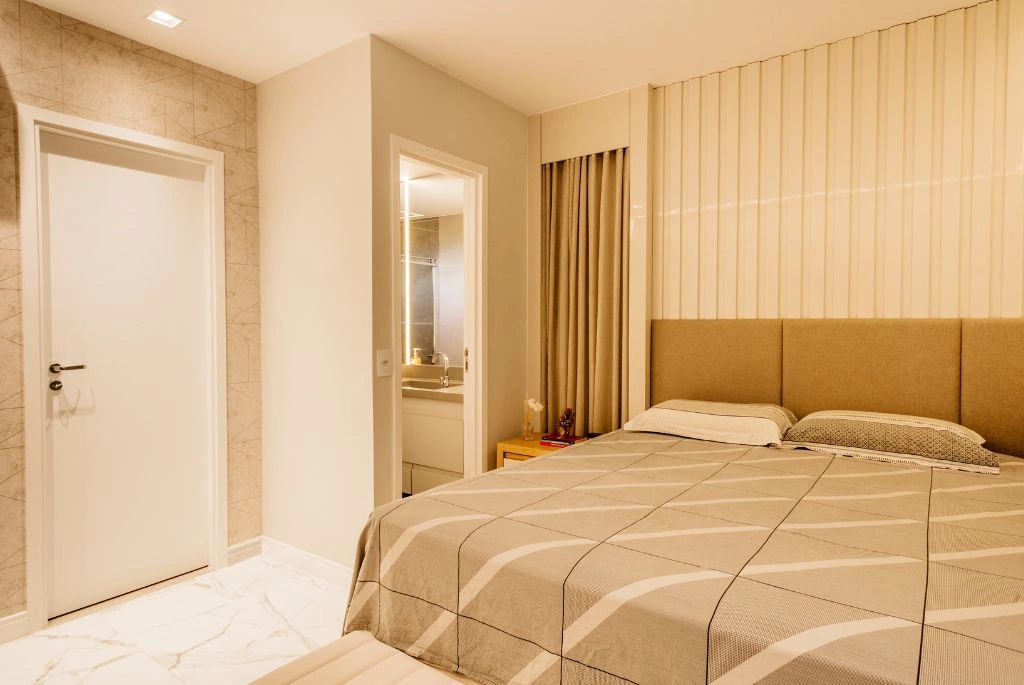
The word comes from French. En suite translates to “in sequence” or “following.” In plain English, it means a bathroom that connects directly to a bedroom. No hallway access. No shared entrances. Just a door from the bedroom straight into the bathroom.
Seems simple enough. But the ensuite bathroom meaning has expanded over the years. These days, when people talk about ensuites, they expect more.
Here is what typically defines one:
- Direct access: You walk from bedroom to bathroom. That is it.
- Privacy: Only the people sleeping in that bedroom use it.
- Full amenities: Shower, toilet, sink at minimum. Often a tub too.
- Personal space: Not for guests. Not for kids. Just for you.
Designer Laura Jenkins puts it well. She says a true ensuite bathroom means having everything you need without ever leaving your suite. Shower, sink, toilet, tub all right there. You start your day and end it without bumping into anyone else.
Why Bother with an Ensuite Bathroom?
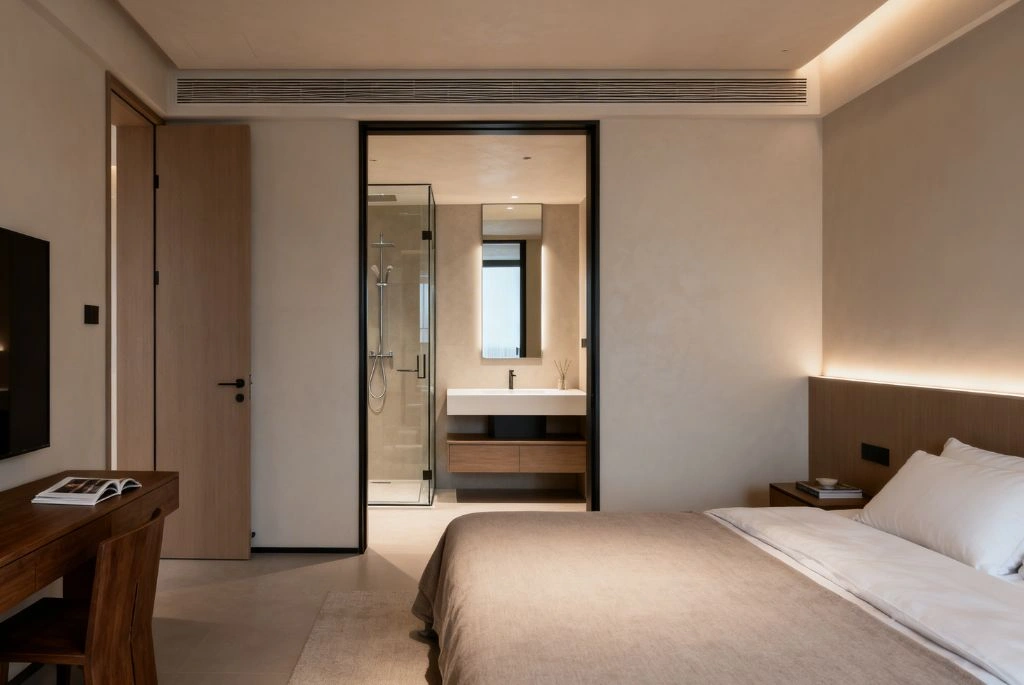
Some homeowners wonder if an ensuite bathroom is worth the space and expense. The short answer is yes for most people. But let us break down why.
The good stuff:
- Privacy matters more than you think: No one uses your toothbrush or leaves hair in your sink. The space stays yours.
- Morning routines get easier: Two people can get ready without negotiating who goes first. Game changer for couples.
- It feels luxurious: Walking from bed to shower without putting on proper clothes? That is hotel living at home.
- Resale value increases: Buyers notice an ensuite bathroom. They pay more for homes that include one.
- Guest situations improve: When visitors stay over, they use the guest bathroom. Your private space stays private.
- Guest situations improve: When visitors stay over, they use the guest bathroom. Your private space stays private.
Designer Momoko Wong makes an interesting point about rituals. She notes that mornings and nights involve private routines. Washing faces, skincare, bathing. These tasks feel better when you know no one will walk in.
The not so good stuff:
- You need another bathroom somewhere: If the ensuite is the only bathroom, guests have to walk through your bedroom. Awkward for everyone.
- It takes up space: In smaller homes, that square footage might work better elsewhere.
- Cost adds up: Bathrooms are expensive. A good ensuite requires serious investment.
What Actually Makes Ensuite Bathroom Designs Different?
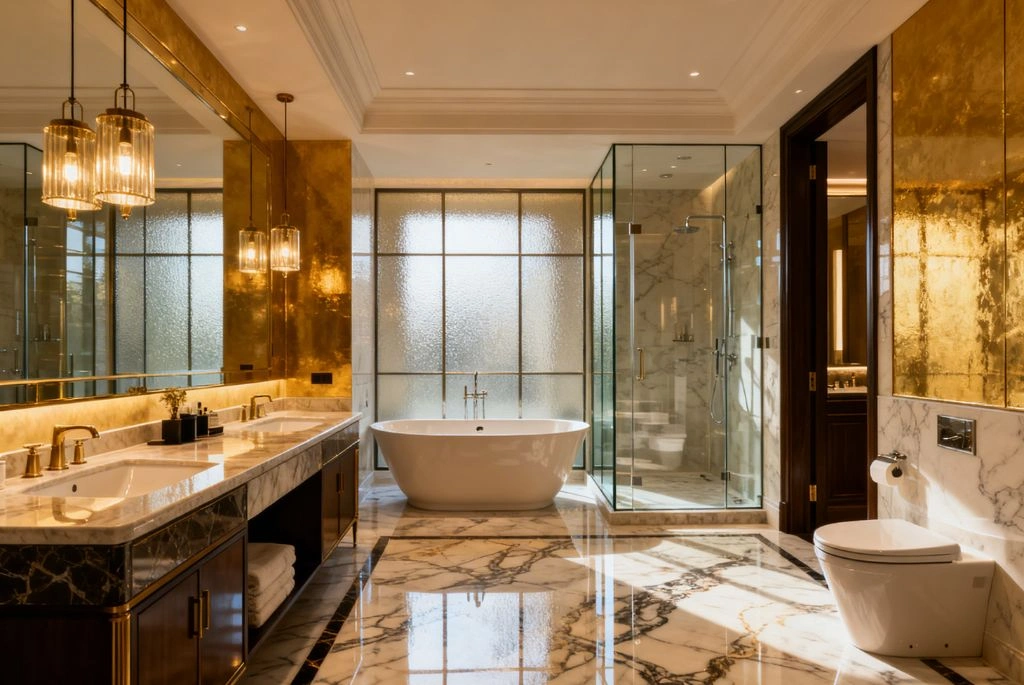
Here is where things get interesting. Ensuites are not just bathrooms positioned differently. They tend to share certain features that set them apart from standard bathrooms, and these are often seen in modern ensuite bathroom designs.
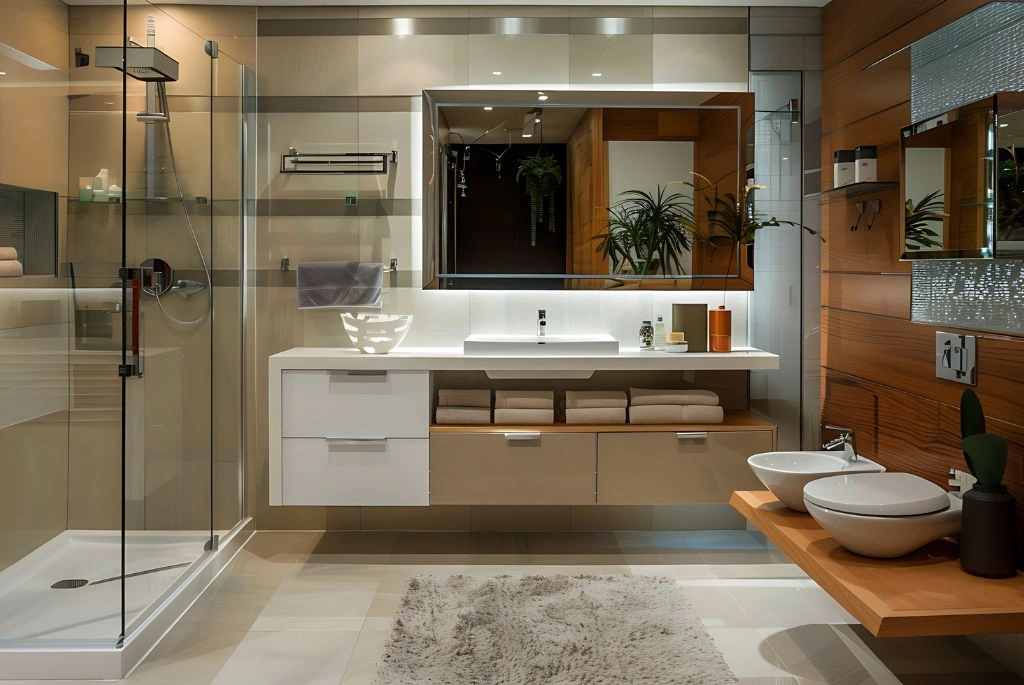
- Size matters: Ensuites usually end up being the largest bathroom in the house. Designers think of them as bonus spaces rather than necessities. They get the square footage that hallway bathrooms never do.
- Double sinks show up constantly: Two people share the bedroom, so two sinks make sense. Even if you live alone, the extra counter space never hurts.
- Separate tub and shower appear in nicer ones: Not every ensuite has both. But the luxury versions do. A freestanding tub for soaking plus a walk-in shower for quick mornings.
- Water closets are common: That means the toilet gets its own little room within the bathroom. Sounds odd but works brilliantly. One person can use the toilet while the other showers. Total privacy for both.
- Design connects to the bedroom: Not matchy matchy. Just related. Same flooring sometimes. Complementary colors. Hardware that echoes what is in the bedroom. Designer Miriam Silver Verga says they should be sisters, not twins.
Ensuite Bathroom Ideas That Actually Work
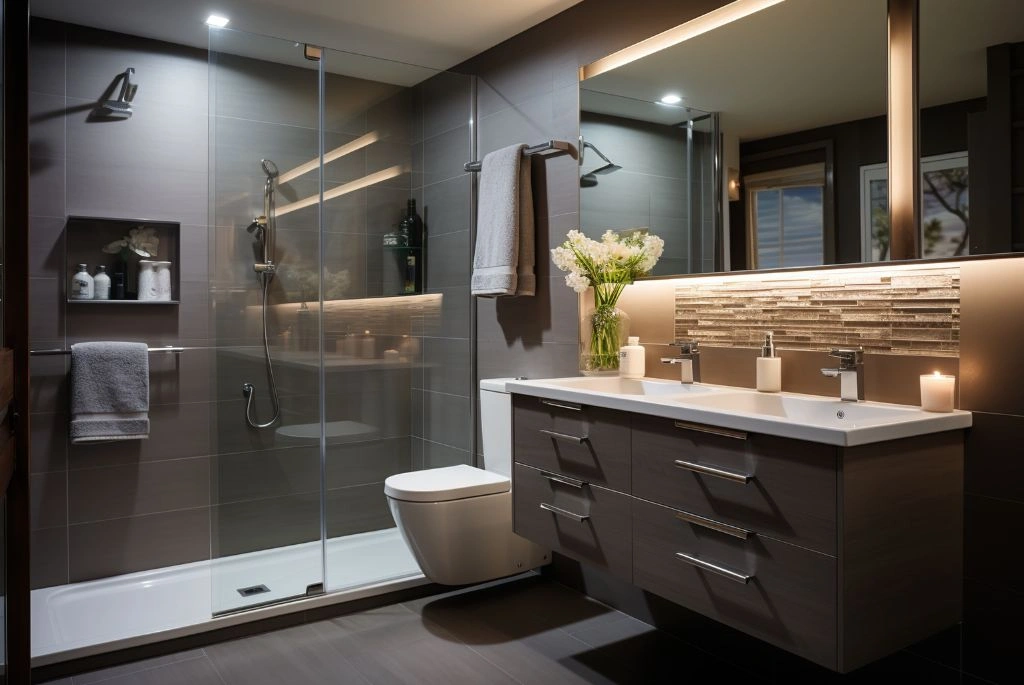
Talk to enough designers and you hear the same suggestions repeatedly. These ideas keep coming up because they deliver.
- Wet rooms deserve consideration: This means the whole bathroom is waterproofed. Shower area has no door or curb. Everything drains to a single point. Looks incredible. Cleans easily. Feels like a spa.
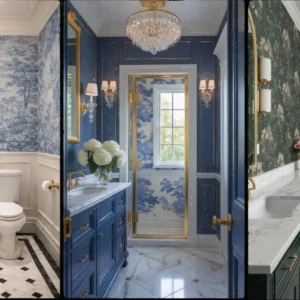
- Consistent finishes make a difference: Pick a metal finish and stick with it. Brass faucets. Brass cabinet pulls. Brass light fixtures. The repetition looks intentional rather than accidental.
- Natural light transforms spaces: If you can position the tub near a window, do it. Privacy concerns? Frosted glass solves that. Skylights work wonders for interior spaces without windows.
- Storage needs to disappear: Built-in niches in shower walls. Drawers with dividers inside. Tall cabinets for towels. When everything has a place, the room stays calm.
- Heated floors are worth the money: Stepping onto warm tiles on a cold morning never gets old. The cost is not crazy either for such a noticeable upgrade.
Many homeowners also explore coordinated ensuite bathroom suites when planning the layout. These suites combine matching basins, toilets, and bathtubs to create a consistent look throughout the space.
Small Ensuite Bathroom Ideas for Tight Spaces
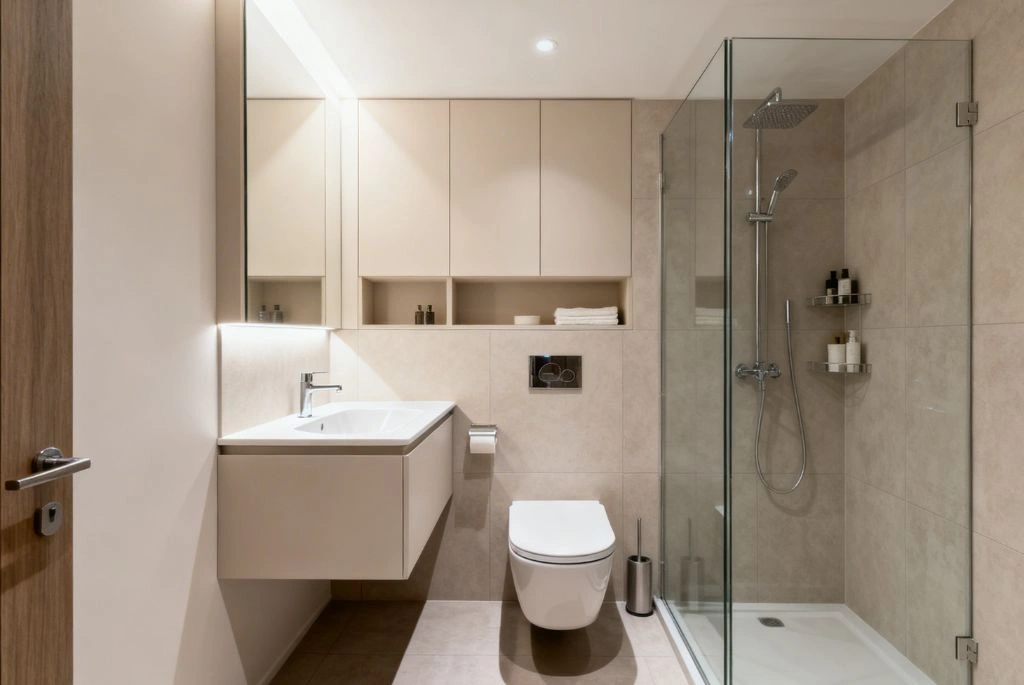
Not every home has endless square footage. City apartments and older houses often squeeze ensuites into whatever space exists. These small ensuite bathroom ideas help make compact areas work.
- Large tiles fool the eye: Big format tiles mean fewer grout lines. Fewer lines mean less visual interruption. The space reads as larger than it actually is.
- Wall hung fixtures expose floor: Vanities that mount on the wall let you see underneath. Toilets that hang leave floor visible. That visible floor tricks the brain into thinking the room is bigger.
- Glass keeps sight lines open: Frameless shower screens let you see through to the back wall. Curtains and frosted glass blocks create visual stops. You want the eye to travel.
- Light colors reflect: White, cream, pale grey. These bounce light around. Dark colors absorb light and shrink rooms visually.
- Pocket doors save real estate: Regular doors need clearance to swing open. Pocket doors slide into the wall. That clearance space becomes usable floor area instead.
Corner sinks utilize dead zones: Corners often go wasted. A corner sink turns useless space into function.
Materials Worth Considering for an Ensuite Bathroom
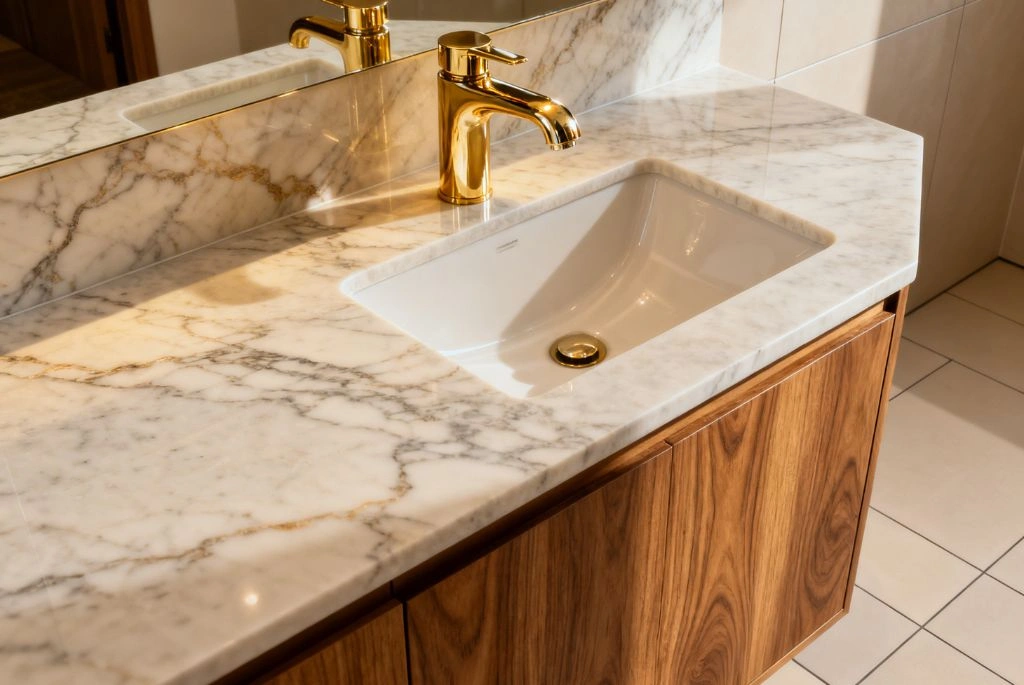
- Ensuites face tough conditions: Steam, water, cleaning products. Materials need to handle all of it while still looking good in an ensuite bathroom.
- Porcelain tile works everywhere: Modern versions look like wood or stone but perform better. Water resistant. Easy to clean. Durable as anything.
- Natural stone brings character: Marble develops patina over time. Veining looks like nothing else. But it stains and etches. You have to accept some wear.
- Quartz sits in the middle: Looks like stone. Performs like engineered material. Non porous so nothing stains it. Great for countertops.
- Wood adds warmth carefully: Teak and cedar handle moisture naturally. Other woods warp and rot. Stick to the ones meant for bathrooms.
- Brass warms up a space: Polished nickel feels traditional. Matte black reads contemporary.
Pick one and use it everywhere. Many homeowners pair these finishes with coordinated ensuite bathroom suites for a cohesive style.
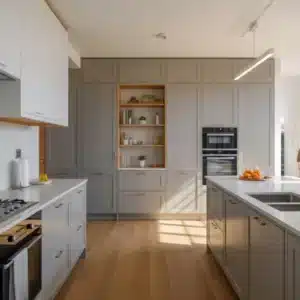
Also read: Grey Kitchen Cabinets: A Thoughtful Choice For Kitchens That Age Well
Light and Air Basics
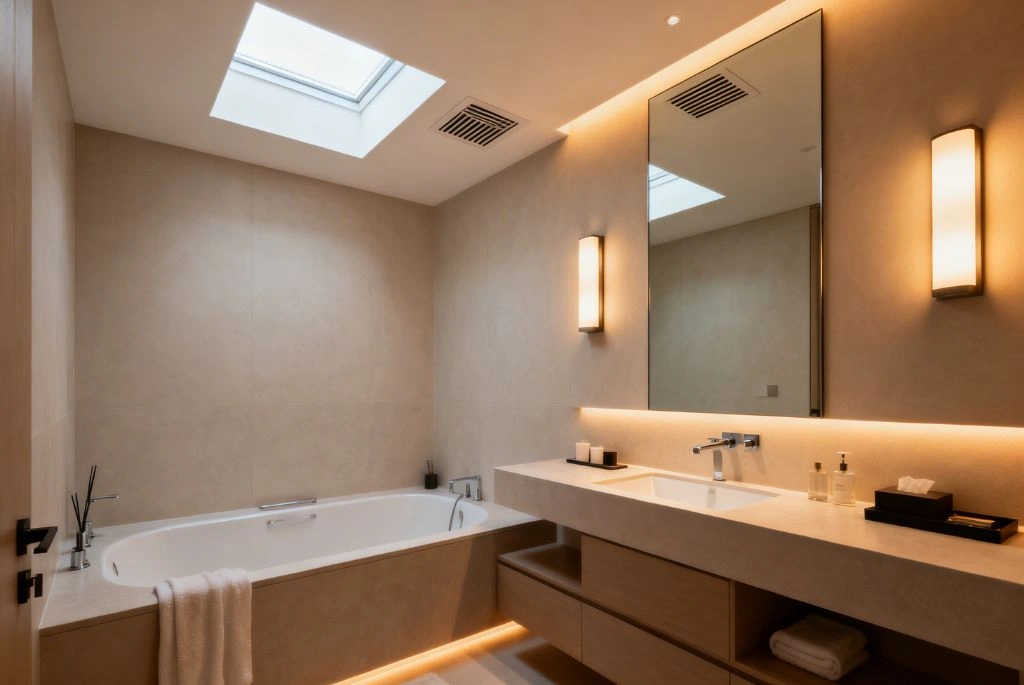
Good lighting and ventilation make or break ensuites. Ignore either and the room never feels right.
- Vanity lighting needs to be on the sides: Lights above the mirror cast shadows on your face. Lights on each side illuminate evenly. Makes a huge difference for makeup and shaving.
- Dimmers allow adjustment: Bright for morning routines. Soft for evening baths. Same lights, different feels.
- Fans need to work properly: Ensuites generate serious moisture. Undersized fans leave condensation everywhere. Get one sized for the room and vented outside.
- Humidity sensors help: Fans that turn on automatically when moisture rises. No remembering required. The room stays dry without thinking about it.
Ensuite vs Regular Bathroom
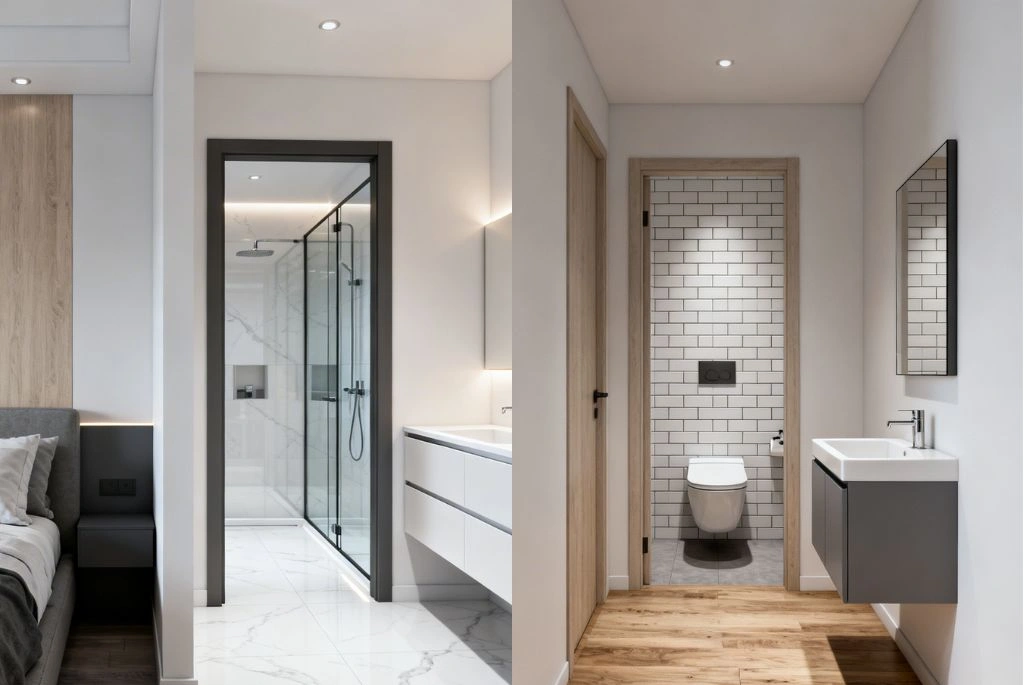
Sometimes seeing it side by side makes things clearer.
| Feature | Ensuite | Regular Bathroom |
| Location | Attached to bedroom | Off hallway |
| Who uses it | Bedroom occupants only | Everyone |
| Privacy level | Complete | Shared |
| Typical size | Larger | Varies |
| Sinks | Usually two | Usually one |
| Toilet location | Often in water closet | Open in room |
| Design | Connects to bedroom | Stands alone |
The ensuite bathroom has become standard for good reason. It offers privacy that shared bathrooms cannot match. It makes daily routines smoother. It adds real value to a home.
Understanding the ensuite bathroom helps clarify what you are actually creating. Not just a bathroom positioned differently. A private space connected to your personal quarters.
Good ensuite bathroom designs consider real life. How will two people use this at 7am? Where will wet towels go? Does the light work for putting on makeup?
Whether you have generous square footage or a compact footprint, thoughtful ensuite bathroom ideas transform ordinary spaces. Even small ensuite bathroom ideas can work beautifully with smart planning.
The investment pays off daily. Smoother mornings. More relaxing evenings. A home that works better for how you actually live.
FAQs
A regular bathroom opens onto a hallway and anyone can use it. An ensuite connects directly to a bedroom and only the people sleeping there use it. That private access is the whole point.
Yes, in most cases. Buyers view ensuites as desirable features. The return depends on quality and how well it fits with the rest of the house. A poorly done ensuite adds less value than a well executed one.
About 18 to 20 square feet can work with smart planning. You need room for a toilet, sink, and shower. Anything smaller feels cramped for daily use. Corner fixtures and wall hung pieces help maximize limited space.